choreography ISRAEL GALVÁN
Sevilla
Running time mn
|
M 6 |
T 7 |
W 8 |
T 9 |
F 10 |
S 11 |
S 12 |
M 13 |
T 14 |
W 15 |
T 16 |
F 17 |
S 18 |
S 19 |
M 20 |
T 21 |
W 22 |
T 23 |
F 24 |
S 25 |
S 26 |
M 27 |
T 28 |
W 29 |
|
El final de este estado de cosas, redux © Christophe Raynaud de Lage / Festival d'Avignon
El final de este estado de cosas, redux © Christophe Raynaud de Lage / Festival d'Avignon
El final de este estado de cosas, redux © Christophe Raynaud de Lage / Festival d'Avignon
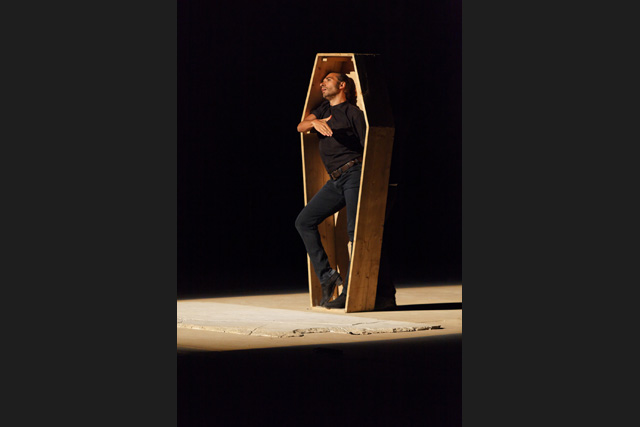
El final de este estado de cosas, redux © Christophe Raynaud de Lage / Festival d'Avignon
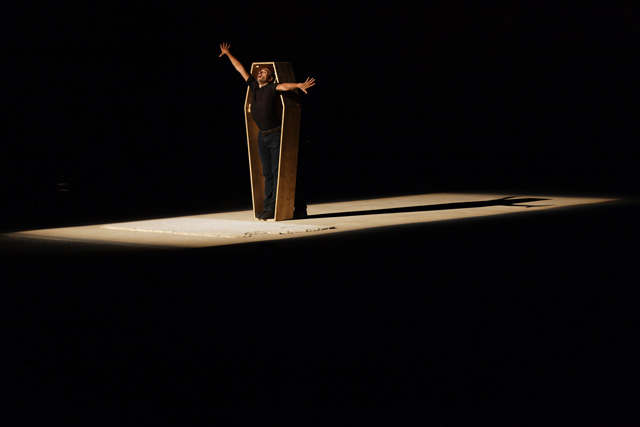
El final de este estado de cosas, redux © Christophe Raynaud de Lage / Festival d'Avignon
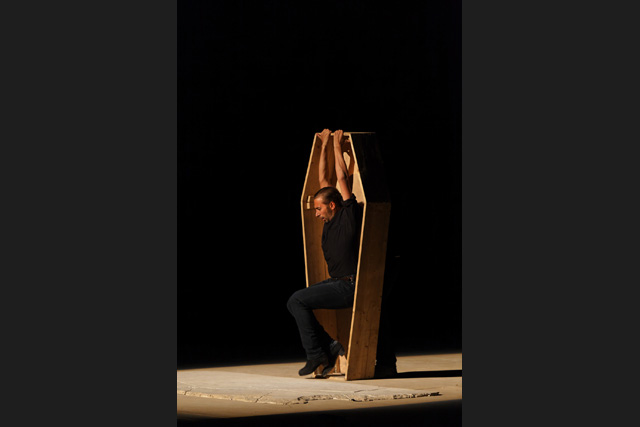
El final de este estado de cosas, redux © Christophe Raynaud de Lage / Festival d'Avignon
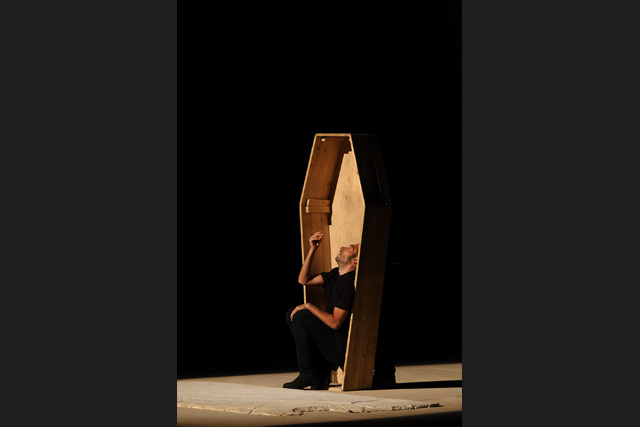
El final de este estado de cosas, redux © Christophe Raynaud de Lage / Festival d'Avignon
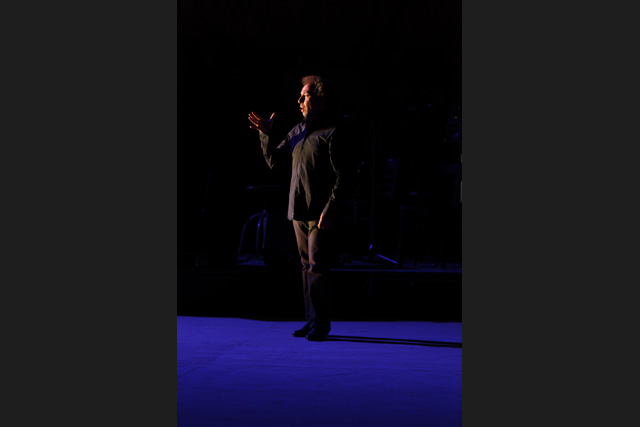
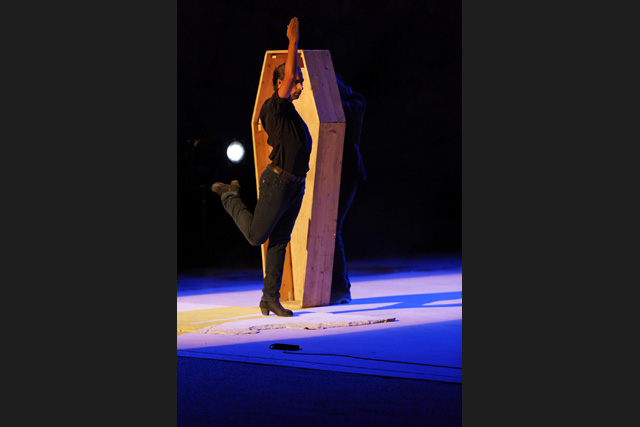
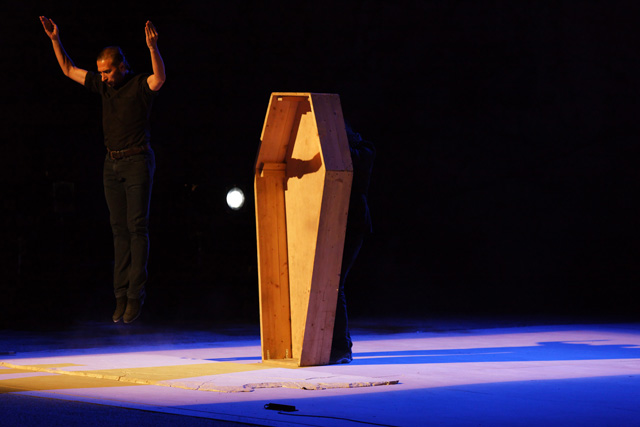
Galván goes up on a simple platform of black wood. At one end it opens in half under his weight. He dances and his steps set off a genuine earthquake, with incredibly powerful bursts. In just a few movements, seemingly the simplest, he transports and dumbfounds us at the same time. Knight of the Apocalypse, perched on a raft with a screaming maw, he immediately imposes his dark, extreme, terrible presence. In The End of this State of Things, Redux, surrounded by a dozen musicians and dancers going from the purest flamenco to the most feverish rock'n roll, he interprets the inverted mass of the Apocalypse, a black mass with its liturgy shaped by the world's violence. His body reads John's text, each step of his liberated flamenco corresponding to an interpretation of a verse, a phrase, of this great text ill from the destruction to come. “Babylon the great is fallen, it has become the place of devils, the hold of every foul spirit and a cage for every unclean and hateful bird.” On the borders of tradition and innovation, both carried and held up by the music and the songs, Israel Galván takes up the fight, gradually exhausts himself in this ritual of death, to be better reborn, pushed by the energy of the last breath, going as far as, in the end, dancing on and inside coffins in a stupendous finale. The other intuition and grandeur of this show consists, for this Seville native, in having constantly crossed the incarnated reading of this ancient text with his own life, in having plunged into today's world, where John's narrative resonates with a strange topicality. In Beirut, under the bombs of the war in 2006, the starting point for this choreographed vision; at the junction of his meetings with his family, friends and students; following the various inspirations of a man curious about everything, from the tarentella to the butoh. To a final nod in the direction of Coppola's cinema, apocalyptic as well. ADB
light meals and beverages available at the venue from 8 p.m.
choregraphy and interpretation: Israel Galván
artistic direction: Pedro G. Romero
direction: Txiki Berraondo
lighting: Ruben Camacho
sound: Felix Vázquez
scenery and accessories: Pablo Pujol, Pepe Barea
costumes: Soledad Molina/Mangas Verdes
with: Israel Galván et Inès Bacan (chant), Juan José Amador (song), Alfredo Lagos (guitar), José Carrasco (percussions), Bobote (dance, palmas, compás), Eloisa Sánchez (violin),
Orthodox : Marco Serrato (bass guitar), Ricardo Jimenez (guitar), Borja Díaz (drums),
et Proyecto Lorca : Antonio Moreno (percussions), Juan Jiménez Alba (saxophone)
video clips of "Non" from Zad Moultaka, performed by Yalda Younes