© LA COMPAGNIE DES INDES / FESTIVAL D'AVIGNON

by Robert Musil
direction
GUY CASSIERS / Toneelhuis
Antwerpen
Creation 2010
show in Dutch with French surtitles
Running time mn
Prices : from €27 to €13
|
T 6 |
W 7 |
T 8 19h 30 |
F 9 19h 30 |
S 10 19h 30 |
S 11 13h |
M 12 13h |
T 13 |
W 14 |
T 15 |
F 16 |
S 17 |
S 18 |
M 19 |
T 20 |
W 21 |
T 22 |
F 23 |
S 24 |
S 25 |
M 26 |
T 27 |
|
© LA COMPAGNIE DES INDES / FESTIVAL D'AVIGNON
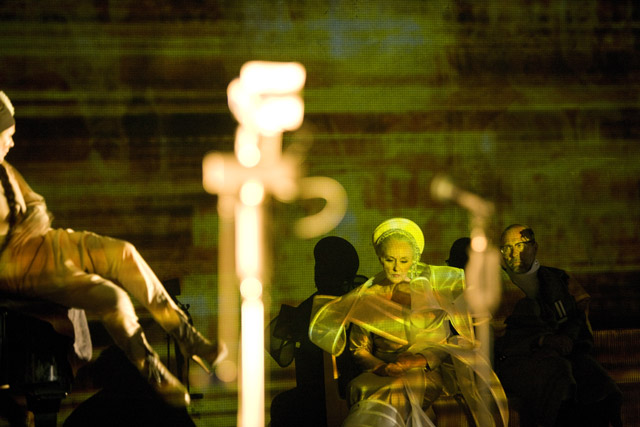
De man zonder eigenschappen I © Koen Broos
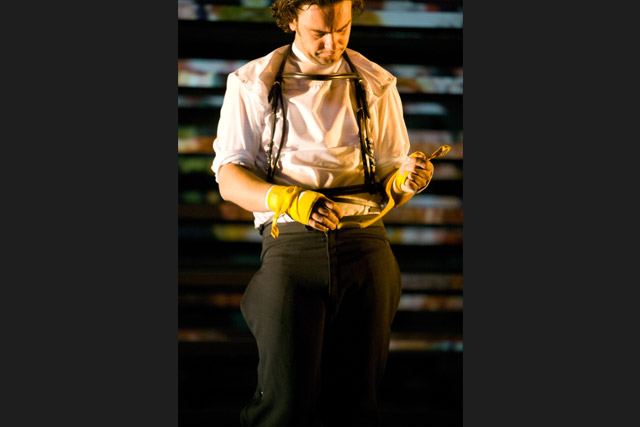
De man zonder eigenschappen I © Koen Broos
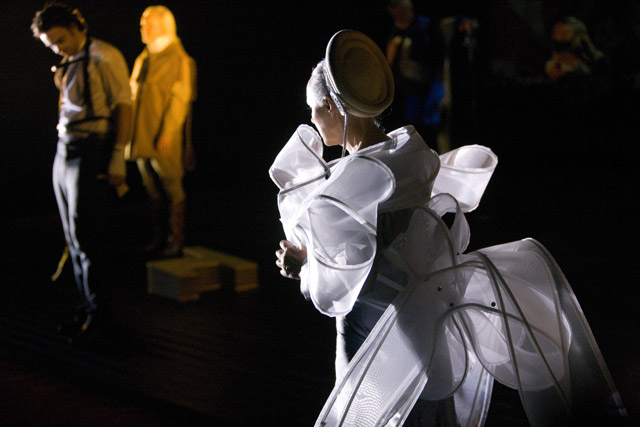
De man zonder eigenschappen I © Koen Broos
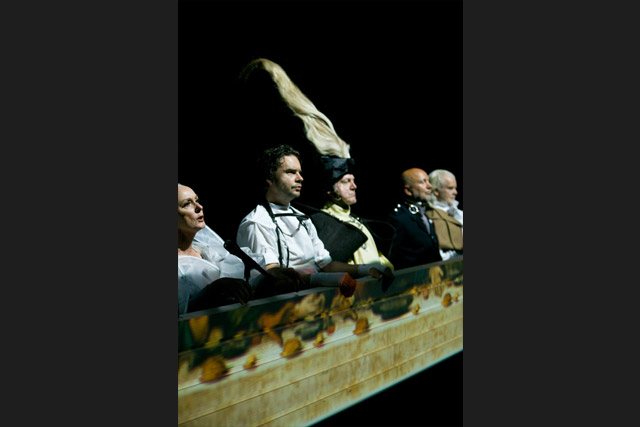
De man zonder eigenschappen I © Koen Broos
"Musil is the attempt of everything. Of everything in the world," Marguerite Duras wrote. It isn't The Man without Qualities, a tableau of the world in decomposition, a mythic text equal to Remembrance of Things Past, that would prove her wrong. Even if we had never laid eyes on the pages of this novel without narration, this philosophical political satire, this gigantic diary, we generally know that Robert Musil spent most of his life attempting to finish this work for which he planned 123 chapters although only 58 were completed. To envisage the work in its totality, its plenitude and its diversity, Guy Cassiers asked the Flemish author Filip Vanluchene to write a three-part theatre cycle, faithful to Musil's texts while permitting himself personal additions. It is the first part of this work that will be presented at the Festival d'Avignon: the one that deals the most with the political aspect of this work, the one that accurately depicts a society that has outlived itself, that of the end of an empire that is going to collapse in the torments of World War I. A period perceived as grandiose is in its death throes, without the slightest hint of a new era appearing. Politician, manufacturer, artist, soldier, psychiatrist, outlaw, femme fatale, icon compose this out-of-kilter world that surrounds Ulrich, the man without qualities, the saga's hero, who, if he had the power, would have wanted above all to "abolish reality". The characters of the Austro-Hungarian intelligentsia who bustle about him to prepare the festivities for the 70th anniversary of the emperor Franz Joseph's reign are treated with distinct irony, sometime even great coldness, which in no way prevents moments of tenderness for these beings in perdition, who "dance on the edge of a volcano". Constantly wanting to combine the theatre's sister art forms with his practice as a director, Guy Cassiers "frames" his staging with two pictorial works, The Last Supper by Leonardo da Vinci and Christ's Entry into Brussels by James Ensor, a strong image of the switch from the harmony of a system to the destructive chaos that is heralded. JFP
director Guy Cassiers
adapted by Filip Vanluchene
dramaturg Erwin Jans
scenographer, video, lighting, sound designers
Enrico Bagnoli, Diederik de Cock
image editing Frederik Jassogne
music and interpretation Johan Bossers
costumes Belgat/Valentine Kempynck, Johanna Trudzinski
with Dirk Buyse, Katelijne Damen, Gilda de Bal, Vic de Wachter, Tom Dewispelaere, Johan van Assche, Liesa van der Aa, Wim van der Grijn, Marc van Eeghem, Dries Vanhegen
production Toneelhuis
coproduction De Tijd, Centre dramatique national Orléans/Loiret/Centre, Maison de la Culture d'Amiens, Centro Dramático Nacional (Gobierno de España), Holland Festival
avec le soutien des Autorités flamandes, de la Ville d'Anvers et de la Province d'Anvers