© LA COMPAGNIE DES INDES / FESTIVAL D'AVIGNON

by Rafael Spregelburd
direction
ÉLISE VIGIER and MARCIAL DI FONZO BO
Théâtre des Lucioles
Rennes
L'Autre Scène du Grand Avignon - Vedène
Espace Bardi
Creation 2011
Running time 2h20
Prices : €27/€21/€13
"L’Entêtement" has been published by L’Arche Éditeur.
|
T 5 |
W 6 |
T 7 |
F 8 20h |
S 9 12h 30 |
S 10 20h |
M 11 12h 30 |
T 12 |
W 13 20h |
T 14 12h 30 |
F 15 20h |
S 16 |
S 17 |
M 18 |
T 19 |
W 20 |
T 21 |
F 22 |
S 23 |
S 24 |
M 25 |
T 26 |
|
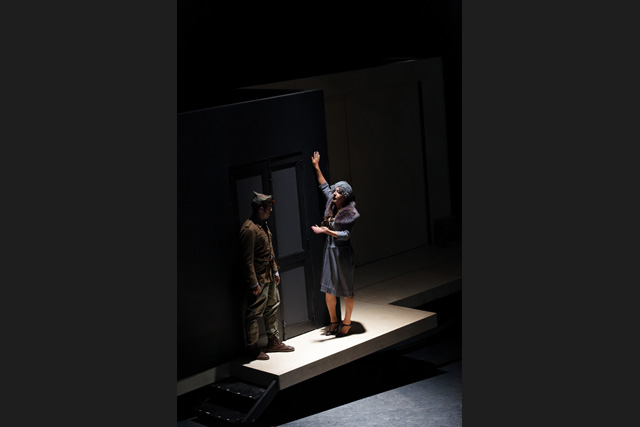
"L'Entêtement" © Christophe Raynaud de Lage / Festival d'Avignon
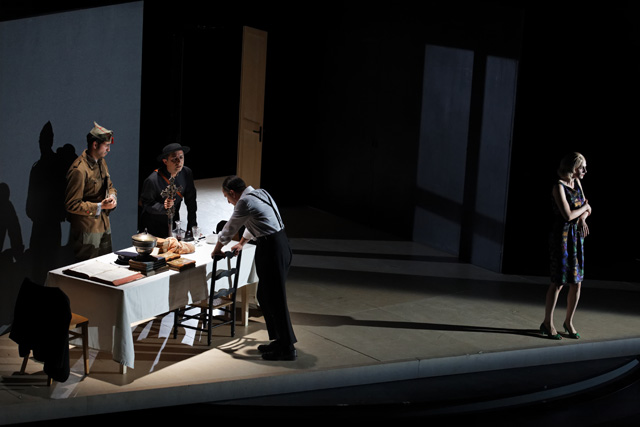
"L'Entêtement" © Christophe Raynaud de Lage / Festival d'Avignon
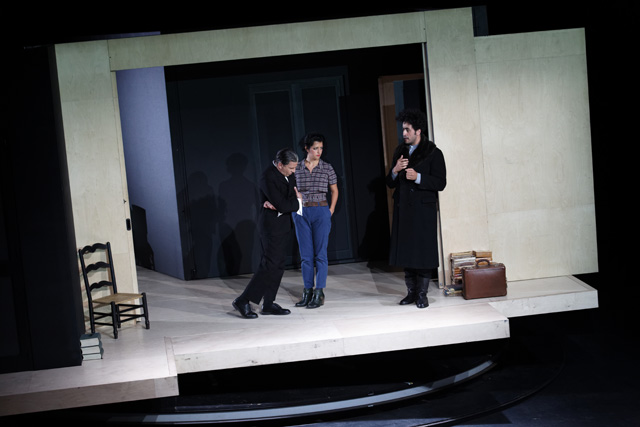
"L'Entêtement" © Christophe Raynaud de Lage / Festival d'Avignon
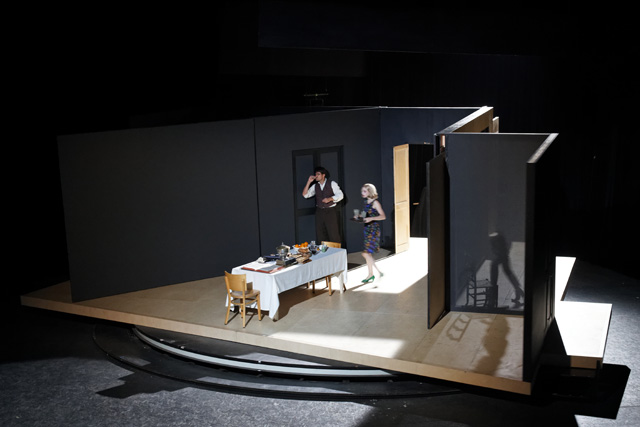
"L'Entêtement" © Christophe Raynaud de Lage / Festival d'Avignon
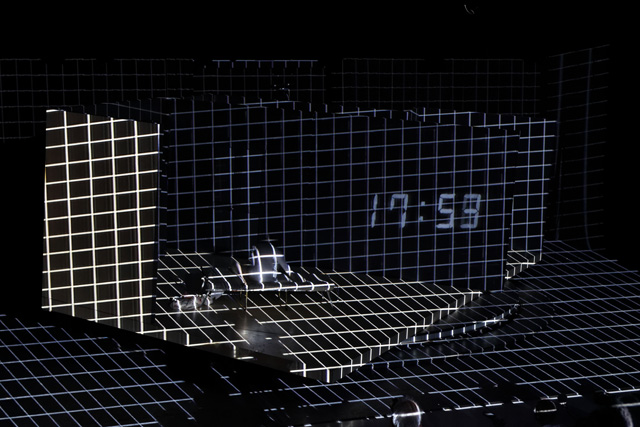
"L'Entêtement" © Christophe Raynaud de Lage / Festival d'Avignon
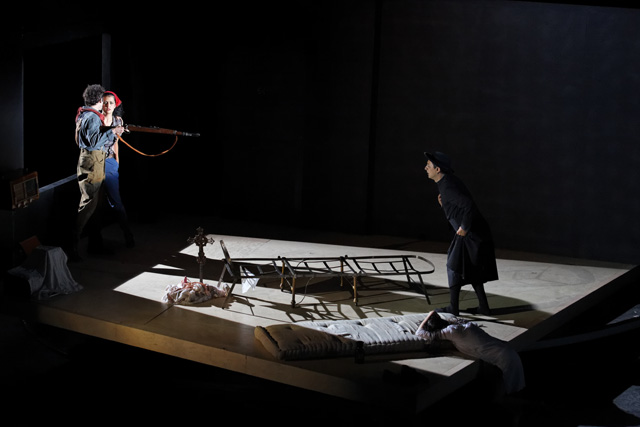
"L'Entêtement" © Christophe Raynaud de Lage / Festival d'Avignon
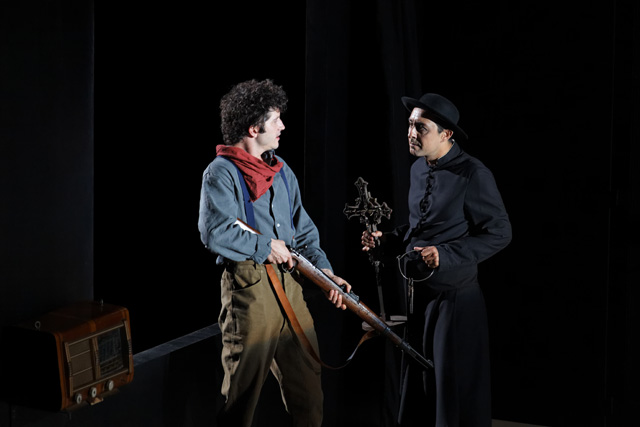
"L'Entêtement" © Christophe Raynaud de Lage / Festival d'Avignon
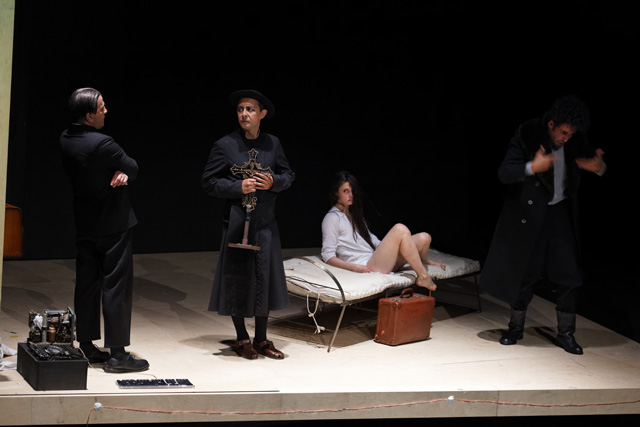
"L'Entêtement" © Christophe Raynaud de Lage / Festival d'Avignon
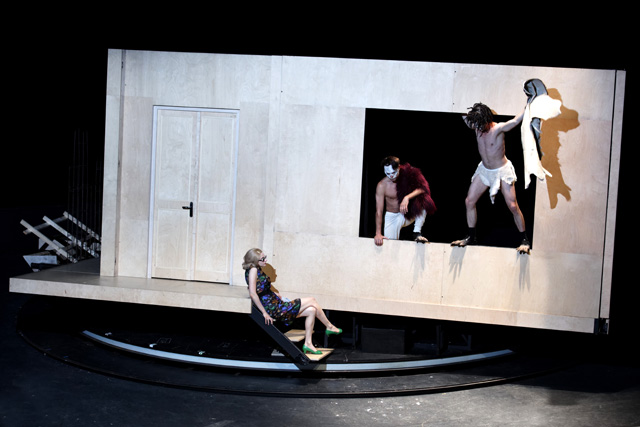
"L'Entêtement" © Christophe Raynaud de Lage / Festival d'Avignon
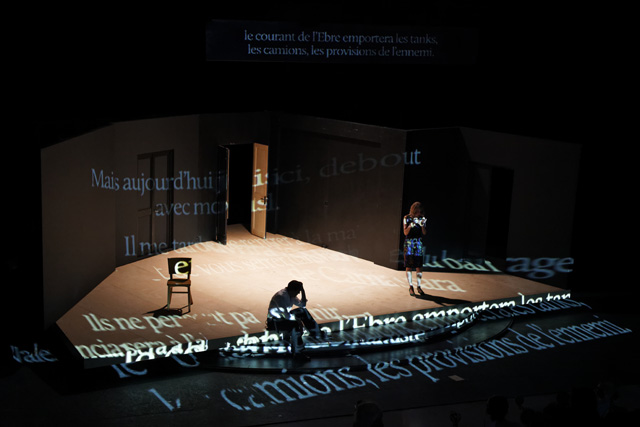
"L'Entêtement" © Christophe Raynaud de Lage / Festival d'Avignon
"L'Entêtement" © Christophe Raynaud de Lage / Festival d'Avignon
© LA COMPAGNIE DES INDES / FESTIVAL D'AVIGNON
It took Rafael Spregelburd eight years to complete his Heptalogie, a truly unique theatre work: seven plays written in reference to the painting by Hieronymus Bosch, The Seven Capital Sins, exhibited in Madrid at the Prado museum. Admired for its composition and the diversity of its possible interpretations, this picture is the allegory of a world that is cracked, of a medieval order that is broken open. This is shown through its very form, since it is fragmented in a way that it demands from the person standing in front of it to choose a perspective, knowingly taking the risk of getting lost in the fabulous wealth of its images. In imagining his huge project, Rafael Spregelburd decided to follow the spirit of this pictorial construction, by insisting on the precision of details, the rejection of an identifiable centre, the polysemy of signs that leave the door open to the spectator's imagination. Arriving at the end of his adventure, he wrote the Entêtement, his seventh and last capital sin, and set it in History. The play takes place in 1939, in Valencia, at the end of the Spanish civil war, which was also "the war of a whole world." To describe the complexity of events and the emotive power linked to this period, Rafael Spregelburd imagined a story made up of episodes, taking place in the house of a police superintendent who is a Franco supporter and who divides his time between his profession and a work that fascinates him: the invention of a universal language, the Katak "that avoids confusion and directly communicates with things." Surrounded by an English republican militiaman, a Russian translator, a French maid and a Spanish family of "phantasmagorical" piety - roles that are played by a few actors experienced in disguise - the superintendent attempts to draw up his revolutionary dictionary in the midst of conflicts of all sorts that assail him. A questioning of fascism and democracy, of the utopia of a universal language that could also become a totalitarian discourse, L'Entêtement is also a challenge for the theatre. Each of its acts starts on the same day, at the same hour, but in a different place in the house. A structure that makes it possible to tell the same story, but never in the same way, successively calling into question the actuality of the events that the spectator witnesses. With the same feeling he might experience when reading a crime novel in which "real" leads and false ones create a surprising tension.
Rafael Spregelburd is Argentine, but his career has gone beyond the borders of his country. He was first a grant holder at the Théâtre Beckett in Barcelona, before moving temporarily to London, then to Hamburg, Berlin, Stuttgart and Munich, where he worked as an author and director, but also as a translator, actor and teacher. Since the 1990s, as a playwright, he has constantly conducted a formal exploration as fertile as it is theatrically efficient. A research whose most obvious outcome is certainly found in L'Heptalogie, a set of seven plays inspired by the seven capital sins of Hieronymus Bosch, that Rafael Spregelburd redefines as Lack of Inappetence, Modesty, Extravagance, Stupidity, Panic, Paranoia and Stubbornness.
JFP
directors Élise Vigier, Marcial Di Fonzo Bo
text Rafael Spregelburd
translation Marcial Di Fonzo Bo, Guillermo Pisani
dramaturgy Guillermo Pisani
scenography and lighting Yves Bernard
music Étienne Bonhomme
costumes Pierre Canitrot
wigs and make up Cécile Kretschmar
with Judith Chemla, Jonathan Cohen, Marcial Di Fonzo Bo, Sol Espeche, Pierre Maillet, Felix Pons, Clément Sibony, Élise Vigier
production Théâtre des Lucioles
coproduction Festival d'Avignon, Théâtre de Nîmes, L'Hippodrome-Scène nationale de Douai, Festival d'Automne à Paris, Maison des Arts de Créteil, Théâtre du Beauvaisis-Beauvais, Le Maillon Théâtre de Strasbourg Scène européenne, Théâtre de Saint-Quentin-en-Yvelines Scène nationale, Théâtre Gérard Philipe CDN de Saint-Denis, Festival delle Colline Torinesi Carta Bianca programme Alcotra coopération France-Italie (Turin), Institut français de Barcelone
avec le soutien du Festival GREC de Barcelone, du CENTQUATRE-Paris et de HighCo
Par son soutien, l'Adami aide le Festival d'Avignon à s'engager sur des coproductions.