© LA COMPAGNIE DES INDES / FESTIVAL D'AVIGNON

conception MARKUS ÖHR
INSTITUTET and NYA RAMPEN
Malmö - Helsinki - Berlin
L'Autre Scène du Grand Avignon - Vedène
Show in German and English with French surtitles
Running time 3h
Prices : €28/€22/€14
|
S 7 |
S 8 |
M 9 |
T 10 |
W 11 |
T 12 |
F 13 |
S 14 16h |
S 15 20h |
M 16 |
T 17 20h |
W 18 20h |
T 19 20h |
F 20 |
S 21 |
S 22 |
M 23 |
T 24 |
W 25 |
T 26 |
F 27 |
S 28 |
|
Tale of Love © Christophe Raynaud de Lage / Festival d'Avignon
Tale of Love © Christophe Raynaud de Lage / Festival d'Avignon
Tale of Love © Christophe Raynaud de Lage / Festival d'Avignon
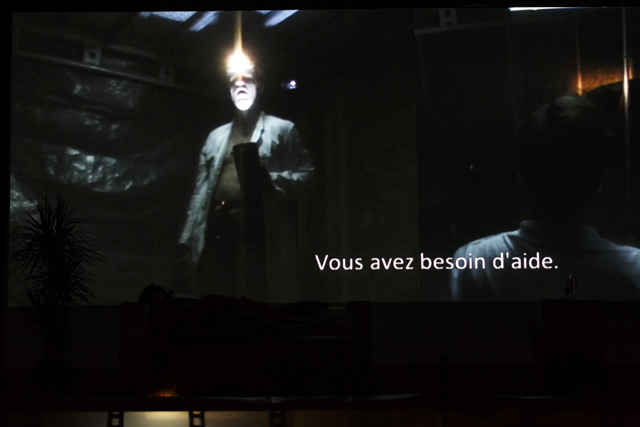
Tale of Love © Christophe Raynaud de Lage / Festival d'Avignon
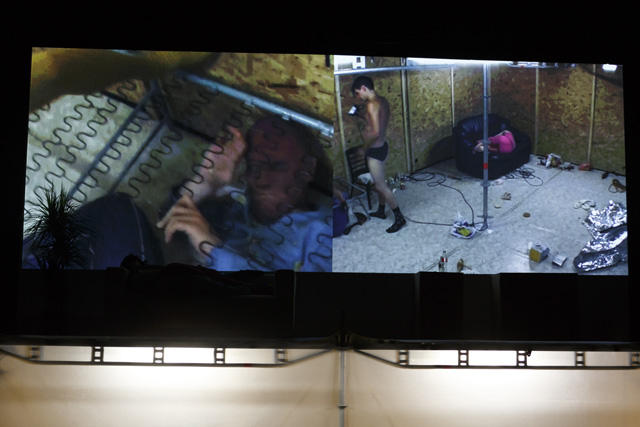
Tale of Love © Christophe Raynaud de Lage / Festival d'Avignon
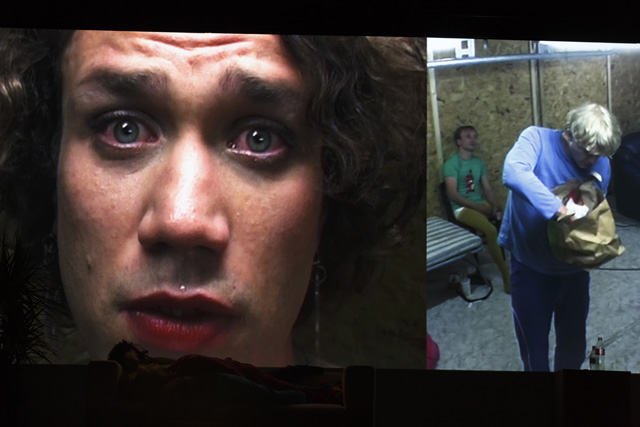
Tale of Love © Christophe Raynaud de Lage / Festival d'Avignon
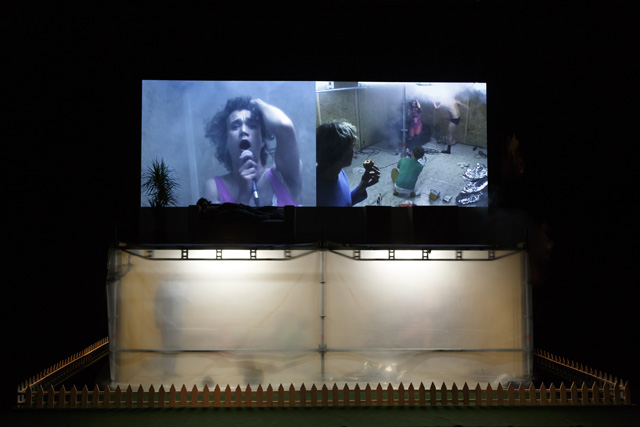
Tale of Love © Christophe Raynaud de Lage / Festival d'Avignon
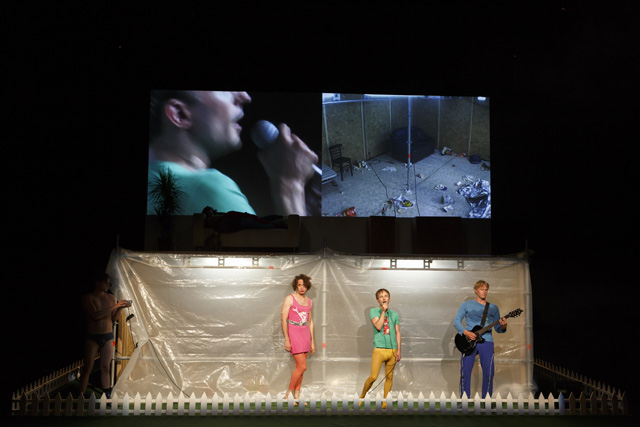
Tale of Love © Christophe Raynaud de Lage / Festival d'Avignon
© LA COMPAGNIE DES INDES / FESTIVAL D'AVIGNON
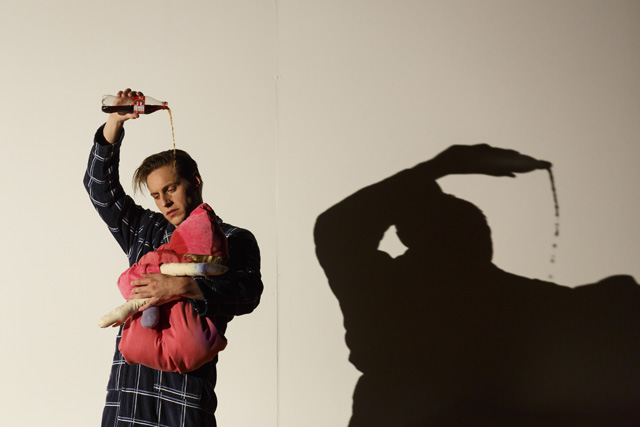
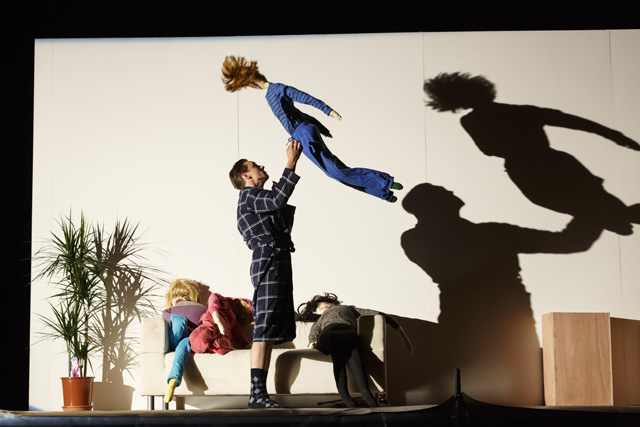
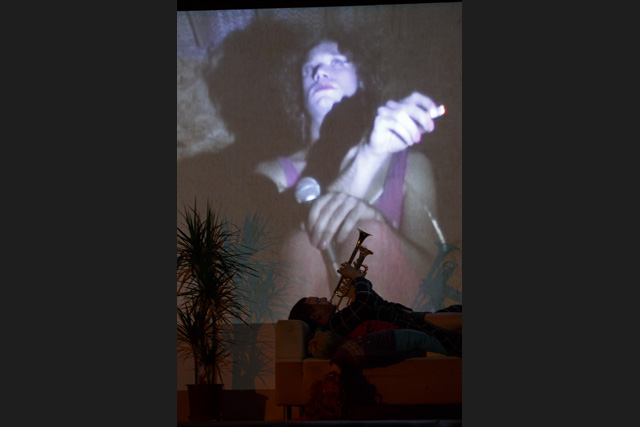
In 2008, the world discovered the Fritzl affair: for 24 years, unknown to everyone, this Austrian sequestered, in the basement of his house, his daughter Elisabeth and three of the seven children born from his incestuous rapes. For Markus Öhrn and his companions, if Josef Fritzl is indubitably a monster, he is nevertheless this father, this ordinary pensioner, totally integrated into the social life of his city of Amstetten. This scandalous and terrifying combination is neither fortuitous nor innocent. Markus Öhrn asserts it straight out: the Fritzl case is a symptom as monstrous and grotesque as “the romantic love” on which the family model is founded. He reveals the dark side of it that underlies it, that impulsion for the exclusive and absolute possession of the other, which can go as far as denying him or her as a subject. This Love Story does not try to edify us as to resolve this macabre ambivalence. On stage, the news item is emptied of its narrative, freed from any sensationalism, to better allow the disturbing familiarity ooze out. Markus Öhrn's theatrical tools are intentionally elementary, but his way of arranging them is formidably subtle. For him, it is in the ordinary that familiar demons manifest themselves most directly. With two cameras, a few rostrums and a plastic tarpaulin, he leads us to the threshold of the underground part of the family home, an experimental dump in which four actors, both hidden by the tarpaulin and overexposed by the video are enclosed. Stuck in this ante-purgatory, rather than incarnating the characters, they engage in intentionally regressive role-playing, pushing the archetypal figures to their buffoonish paroxysm. The delirium of “total power” of the Western patriarch definitively appears in all its puerile inanity when “Papa Fritzl” starts to play the humanitarian doctor in a fantasized Africa. Cleverly intertwined, a masquerade, a diffraction of presences and dilation of time plunge us into a floating space where dread and hilarity dangerously mingle. The disturbing emotion that wells up from it is not its least trap. SC
direction, scenography, video
and photography Markus Öhrn
text Anders Carlsson
music Andreas Catjar
costumes and accessories Pia Aleborg
lighting Daniel Goody
with Elmer Bäck, Anders Carlsson, Jakob Ohrman, Rasmus Slätis
production Markus Öhrn, Nya Rampen, Institutet
coproduction Studiobühne Köln (Cologne), Ballhaus Ost (Berlin), Baltic Circle International Festival (Helsinki), Inkonst (Malmö)
with the support of the Swedish Arts Council (Kulturrådet), the Swedish Cultural Foundation in Finland, the Swedish-Finnish Cultural Foundation, Kultur Skåne, Malmö Culture Committee, Nordic Culture Point (Kulturkontakt Nord), of the Goethe-Institut and of the Finnish Institut