© LA COMPAGNIE DES INDES / © FESTIVAL D'AVIGNON

direction MILO RAU
International Institute
of Political Murder
Köln - Zürich - Kigali
Auditorium du Grand Avignon-Le Pontet
Show in French
and Kinyarwanda with French surtitles
Running time mn
Prices : from €28 to €14
|
F 5 |
S 6 |
S 7 |
M 8 |
T 9 |
W 10 |
T 11 |
F 12 |
S 13 |
S 14 |
M 15 |
T 16 |
W 17 |
T 18 |
F 19 |
S 20 |
S 21 16h |
M 22 16h |
T 23 16h |
W 24 16h |
T 25 |
F 26 |
|
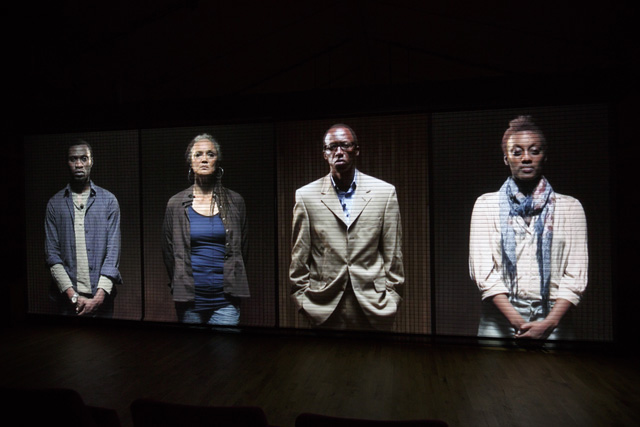
Hate Radio © Christophe Raynaud de Lage / Festival d'Avignon
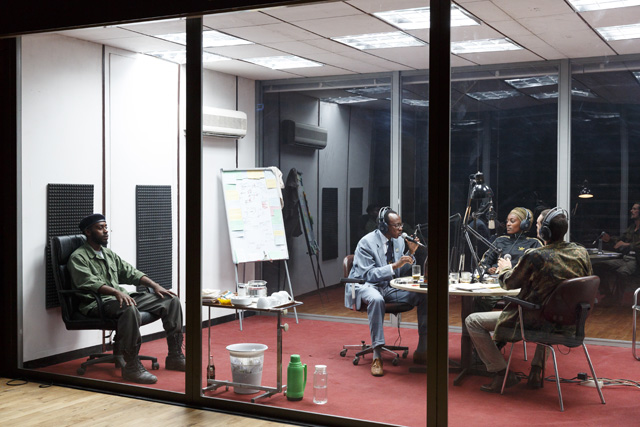
Hate Radio © Christophe Raynaud de Lage / Festival d'Avignon
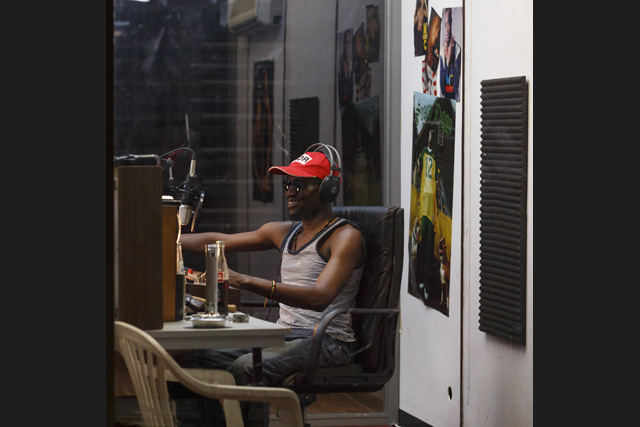
Hate Radio © Christophe Raynaud de Lage / Festival d'Avignon
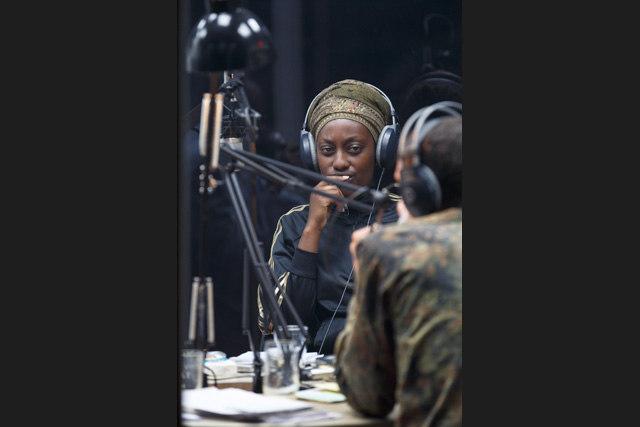
Hate Radio © Christophe Raynaud de Lage / Festival d'Avignon
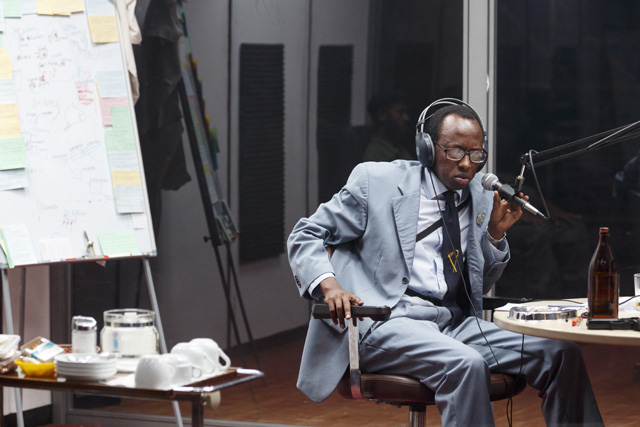
Hate Radio © Christophe Raynaud de Lage / Festival d'Avignon
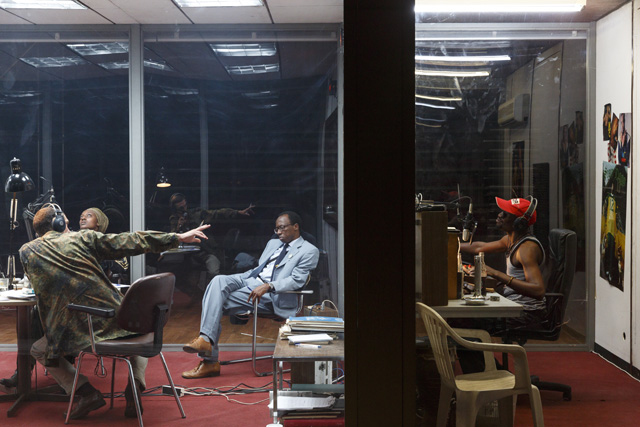
Hate Radio © Christophe Raynaud de Lage / Festival d'Avignon
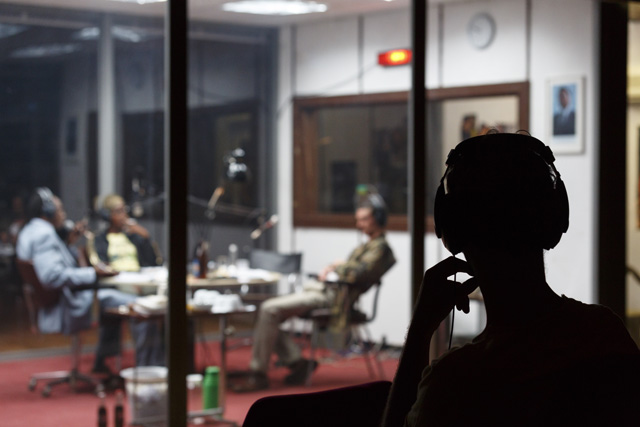
Hate Radio © Christophe Raynaud de Lage / Festival d'Avignon
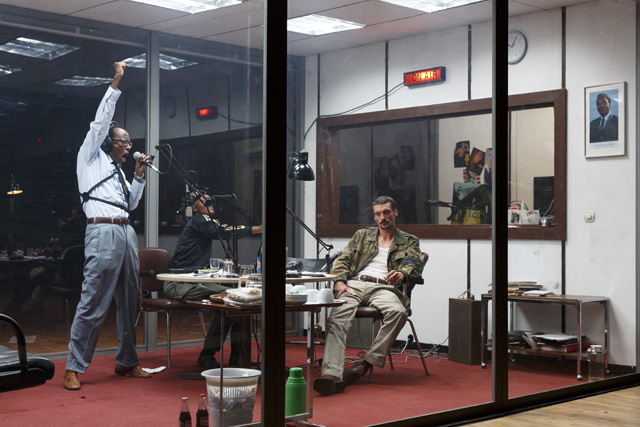
Hate Radio © Christophe Raynaud de Lage / Festival d'Avignon
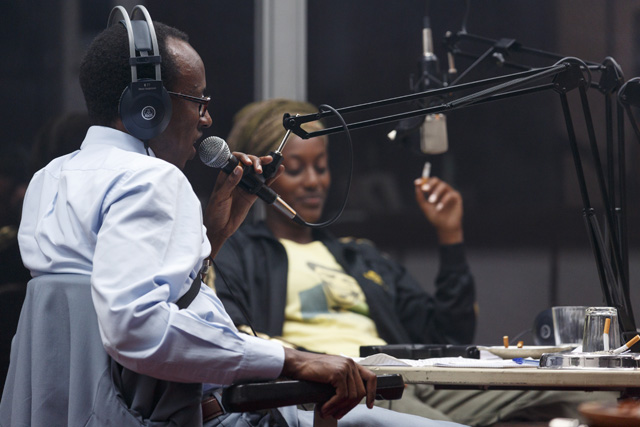
Hate Radio © Christophe Raynaud de Lage / Festival d'Avignon
© LA COMPAGNIE DES INDES / © FESTIVAL D'AVIGNON
Can words kill? Do they have the force of a weapon or perhaps even more? Hate Radio recounts the ordinary day of the journalists of Radio-Télévision Libre des Mille Collines in 1993 in Kigali, the capital of Rwanda, at the time when the horrific genocide that would strike hundreds of thousands of moderate Tutsis and Hutus began. By plunging us into their recording studio, Milo Rau communicates to us, in a hyper-realistic setting behind closed doors without any escape hatch, the ordinary hate and excitement, blended with an incredible lightness, of these “criminals of words”. It is in the joy of captivating music, the best hits of the 1990s – that their exterminating thinking develops. Thinking that plays with words, distorting their meaning to reach the subconscious of the listeners, who guess what is hidden behind the subtle pleasantries reducing the “enemies” to the state of “cockroaches” or “concrelats”. The hunt for pests is open in this studio where, between two calls for the massacre, people drink, smoke, laugh, dance on this volcano spitting a lava of blood. Everything is true in this arena Milo Rau has recreated: the words were spoken, the characters exist and all of them recounted their action during the trials that took them to prison. Interpreted by actors who themselves were affected by these events, they are there, near us, in the glass cage of this radio of hate where postmodern genocide was invented. Transformed into listeners, we are swept into the bloody hysteria of these demonic manipulators. Shouted out by a theatre that permits us to apprehend racism through its consequences, and that calls out, relentlessly, to our vigilance. JFP
text and direction Milo Rau
dramaturgy Jens Dietrich, Milena Kipfmüller
scenography and costumes Anton Lukas
video Marcel Bächtiger
sound Jens Baudisch
direction assitant Mascha Euchner-Martinez
scientific collaboration Eva-Maria Bertschy
with Afazali Dewaele, Sébastien Foucault, Estelle Marion, Nancy Nkusi, Diogène Ntarindwa
production IIPM - International Institute of Political Murder
coproduction Hauptstadtkulturfonds Berlin, Pourcent culturel suisse Migros, Pro Helvetia Fondation suisse pour la culture,
Kulturamt St. Gallen, Kunsthaus Bregenz, Ernst Göhner Stiftung, Hebbel am Ufer (Berlin), Schlachthaus Theater Bern,
Beursschouwburg (Bruxelles), Migros Museum (Zurich), Kaserne (Bâle), Südpol (Lucerne), Verbrecher Verlag (Berlin),
Kigali Genocide Memorial Centre
with support of: kulturelles.bl (Bâle), Amt für Kultur (Lucerne), Goethe Institut Bruxelles, Goethe Institut
Johannesburg, Brussel Airlines, Spacial Solutions, la Commission nationale de Lutte contre le Génocide (CNLG),
Deutscher Entwicklungsdienst (DED), Contact FM Kigali et d'IBUKA Rwanda (Organisation regroupant les associations
de victimes du génocide au Rwanda), la Hochschule der Künste Bern (HKB) and la Fondation Friede Springer