
© LA COMPAGNIE DES INDES / © FESTIVAL D'AVIGNON

text after "Walden or Life in the Woods" by Henry David Thoreau
direction
JEAN-FRANÇOIS PEYRET
Paris
Chartreuse de Villeneuve lez Avignon
Tinel de la Chartreuse
Creation 2013
Running time mn
Prices : from €28 to €14
|
F 5 |
S 6 16h |
S 7 16h |
M 8 16h |
T 9 |
W 10 16h |
T 11 16h |
F 12 |
S 13 |
S 14 |
M 15 |
T 16 |
W 17 |
T 18 |
F 19 |
S 20 |
S 21 |
M 22 |
T 23 |
W 24 |
T 25 |
F 26 |
|
© LA COMPAGNIE DES INDES / © FESTIVAL D'AVIGNON
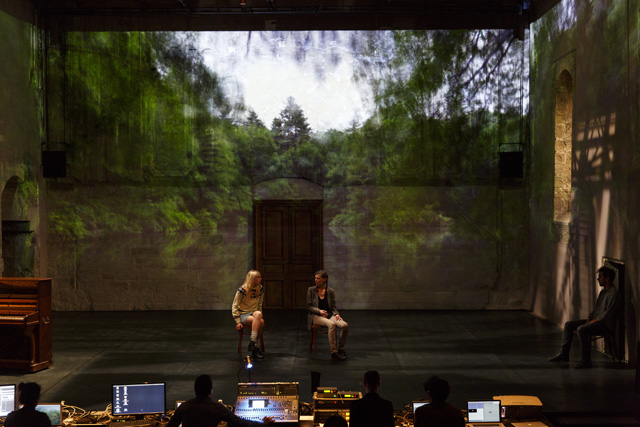
Re: Walden © Christophe Raynaud de Lage / Festival d'Avignon
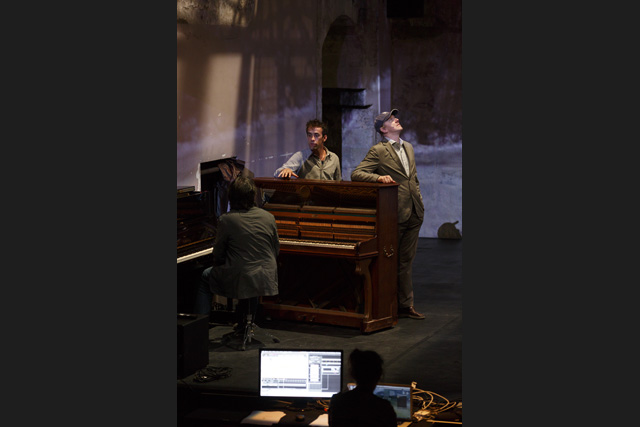
Re: Walden © Christophe Raynaud de Lage / Festival d'Avignon
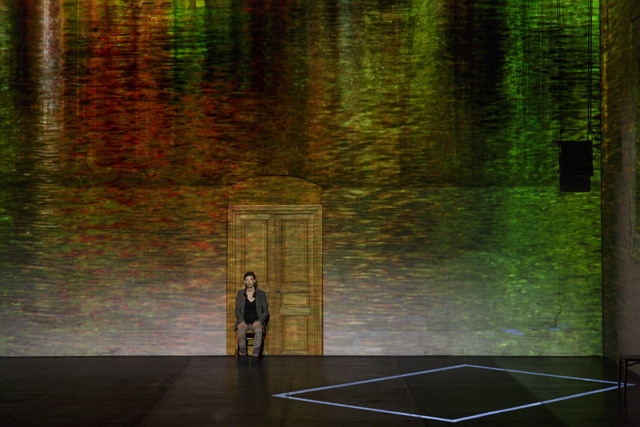
Re: Walden © Christophe Raynaud de Lage / Festival d'Avignon
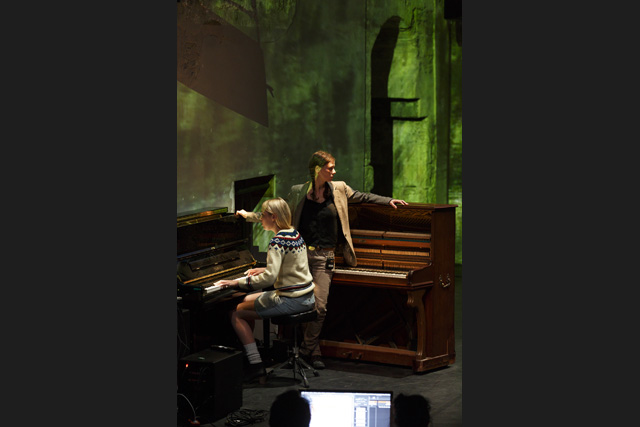
Re: Walden © Christophe Raynaud de Lage / Festival d'Avignon
Re: Walden © Christophe Raynaud de Lage / Festival d'Avignon
Re: Walden © Christophe Raynaud de Lage / Festival d'Avignon
Re: Walden © Christophe Raynaud de Lage / Festival d'Avignon
Re: Walden © Christophe Raynaud de Lage / Festival d'Avignon
Re: Walden © Christophe Raynaud de Lage / Festival d'Avignon
Re: Walden © Christophe Raynaud de Lage / Festival d'Avignon
Re: Walden © Christophe Raynaud de Lage / Festival d'Avignon
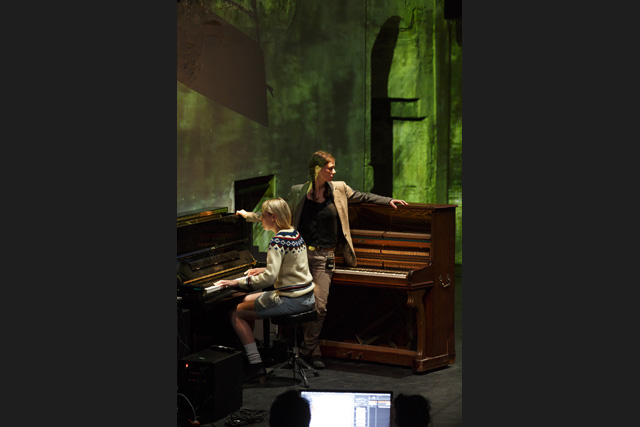
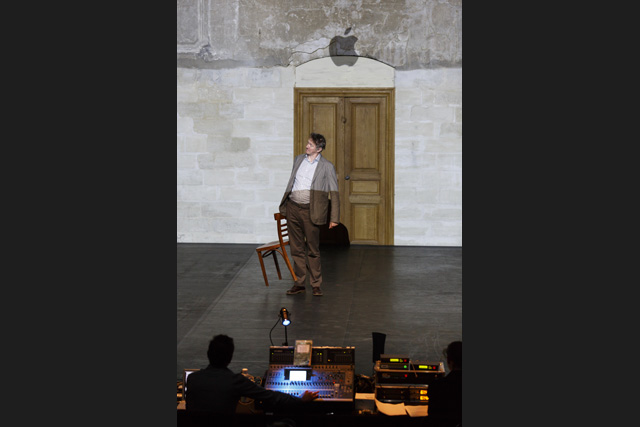
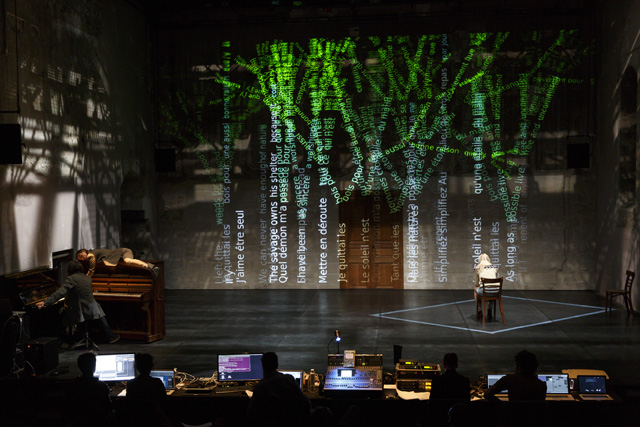
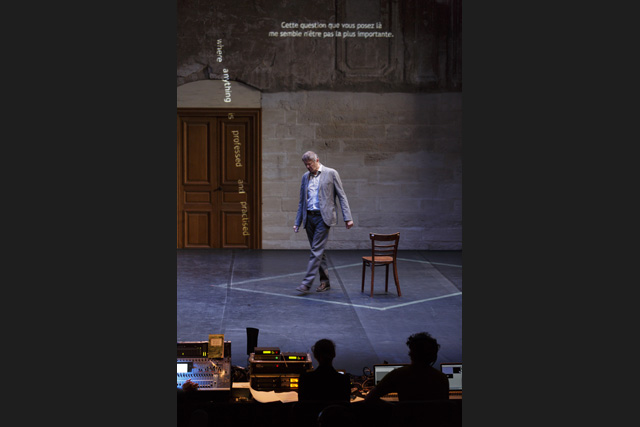
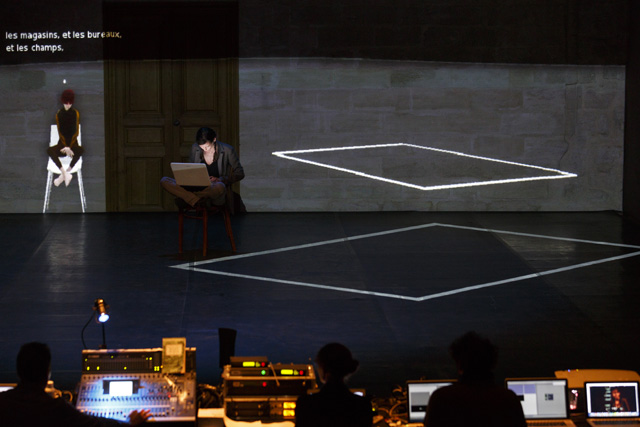
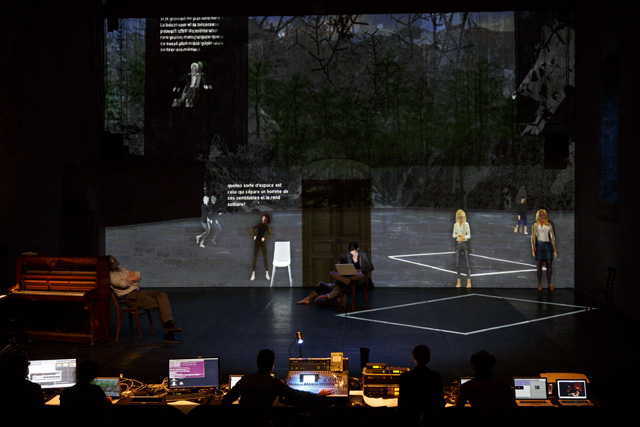
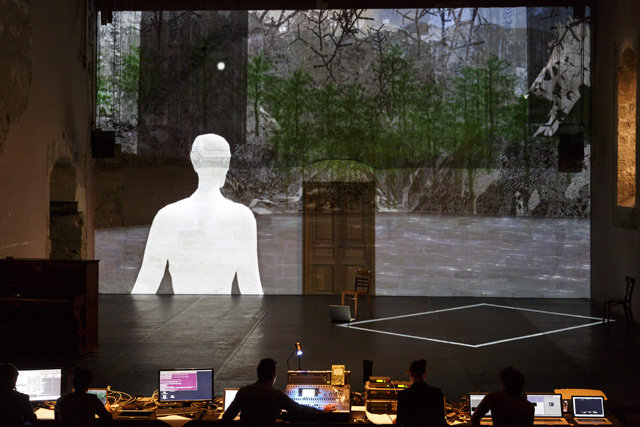
In July 1845, Henry David Thoreau built a cabin near Walden Pond, a few miles from Concord, a small town in Massachusetts where his family lived. For two years, two months and two days, the American writer isolated himself in this spot, living there in almost total self-sufficiency, moving in daily contact with nature, which he meticulously studied. Nine years later, having once again become a “guest of civilized life”, he published, under the title Walden, or Life in the Woods, the account of his experience. A book in which he complied his thoughts, observations and speculations, at the crossroads of the novel, the diary, the philosophical essay and the botany review. It was with this unclassifiable material that Jean-François Peyret wanted to build the structure of his new show, leaving the realm of scientific experimentation to step into the natural spaces so dear to Thoreau. But if the director ventured on Walden's paths, it was not to make himself the eulogist of an ecological policy, but very much to do theatre and continue to reflect on what interests him the most, namely, the links between the living and the artificial. In giving his actors certain passages of this flowing text, he brings to the stage first the language of a great writer, while transforming the original cabin into a “writing machine” that also produces the text. A dialogue is then started between the man and the machine that generates “poetic bugs”, degrading or amplifying the language through digital, visual and sound processes. As always, Jean-François Peyret's scathing humour gives this technological theatre a stunning vital force that joins that of Henry David Thoreau, a protestor calling for civil disobedience, a virulent critic of the alienating world. And if this theatre making use of machines was in fact the place of disalienation? JFP
Walden is unquestionably the major work of Henry David Thoreau (1817-1862), also known for his work as an essayist, philosopher, naturalist and poet, collected in more than 20 volumes. Published in 1854, this work is a sort of autobiographical diary relating an experience of direct contact with nature. It made its author a precursor in the ecological battle. Strongly anti-slavery, favourable to the idea of individual resistance to an authoritarian government, a concept developed in his book Civil Disobedience (1849), Henry David Thoreau inspired the nonviolent movements led by Mahatma Gandhi and the minister Martin Luther King.
direction Jean-François Peyret
music Alexandros Markeas
dramaturgy Julie Valero
electroacoustic device and computer science Thierry Coduys
video Pierre Nouvel
digital world Agnès de Cayeux
with Clara Chabalier, Jos Houben, Victor Lenoble, Lyn Thibault and musician Alexandros Markeas (piano)
production cie tf2 – Jean-François Peyret
coproduction La Colline-théâtre national (Paris)
with the supoprt of: Festival d'Avignon, Chartreuse de Villeneuve lez Avignon, Experimental Media and Performic Arts Center (Troy, États-Unis), Centre national du Théâtre, Fresnoy Studio national des Arts contemporains (Tourcoing), Centre des Écritures contemporaines et numériques (Mons), Dicréam, Mairie de Paris, Institut Numédiart de l'Umons (Mons), Acapela (Belgique), Laboratoire d'Informatique pour la Mécanique et les Sciences de l'Ingénieur au CNRS, Arcadi, Spedidam and SACD