Paris
Cour d'honneur du Palais des papes
2014 re-creation
Running time 2h
Prices : from 38€ to 10€ (cat.2)
|
T 3 |
F 4 |
S 5 |
S 6 |
M 7 |
T 8 |
W 9 |
T 10 |
F 11 |
S 12 |
S 13 |
M 14 |
T 15 |
W 16 |
T 17 |
F 18 |
S 19 |
S 20 |
M 21 |
T 22 |
W 23 |
T 24 |
F 25 |
S 26 |
S 27 21h |
|
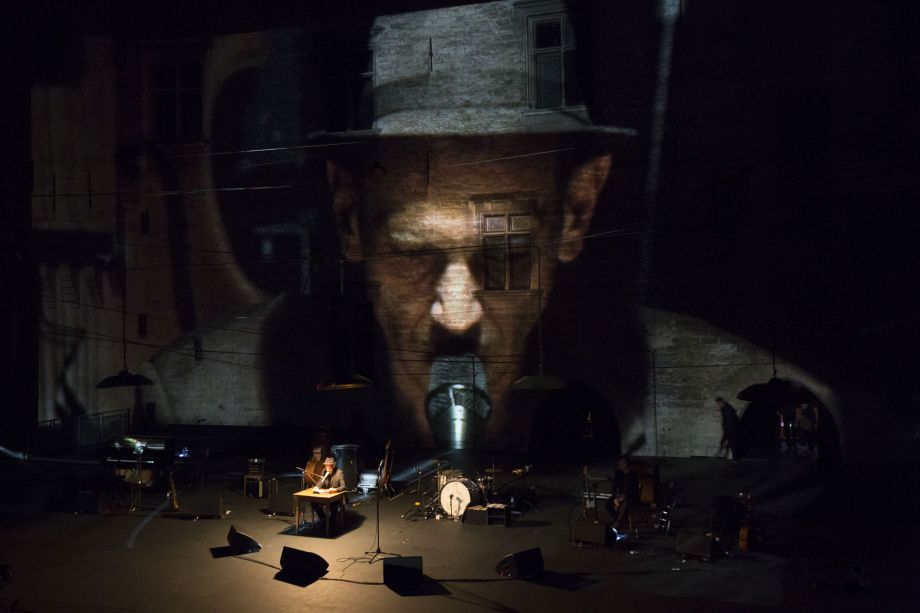
Corps de mots © Christophe Raynaud de Lage
© La Compagnie des Indes
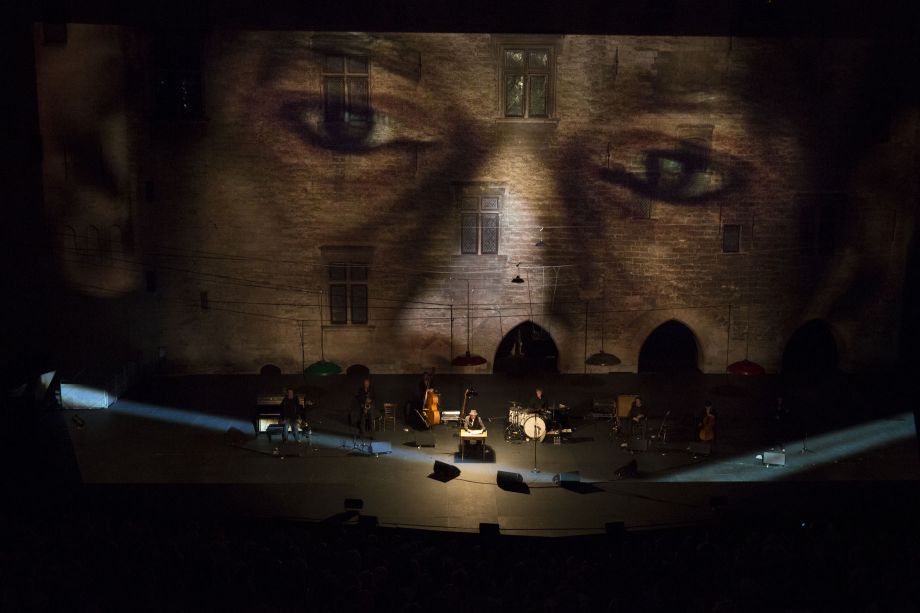
Corps de mots © Christophe Raynaud de Lage
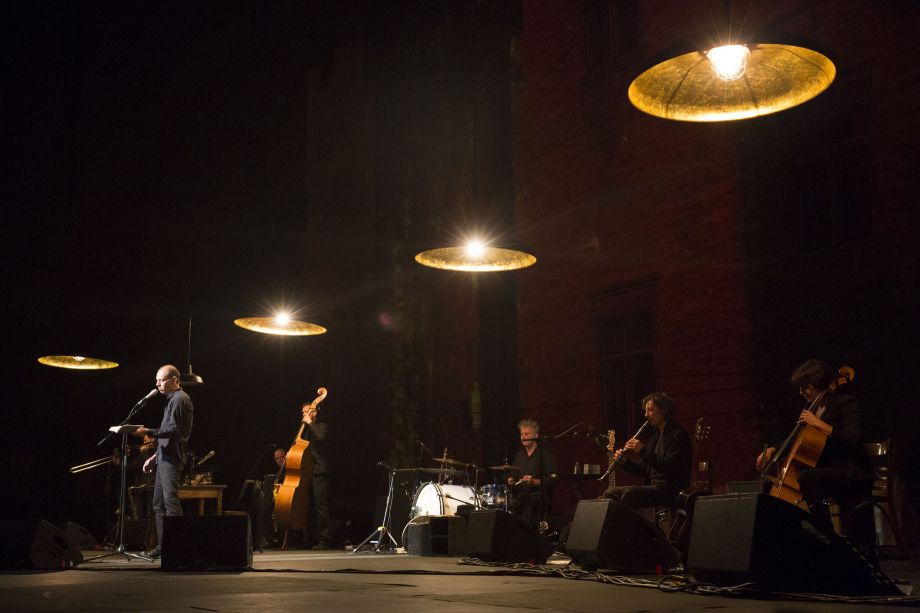
Corps de mots © Christophe Raynaud de Lage
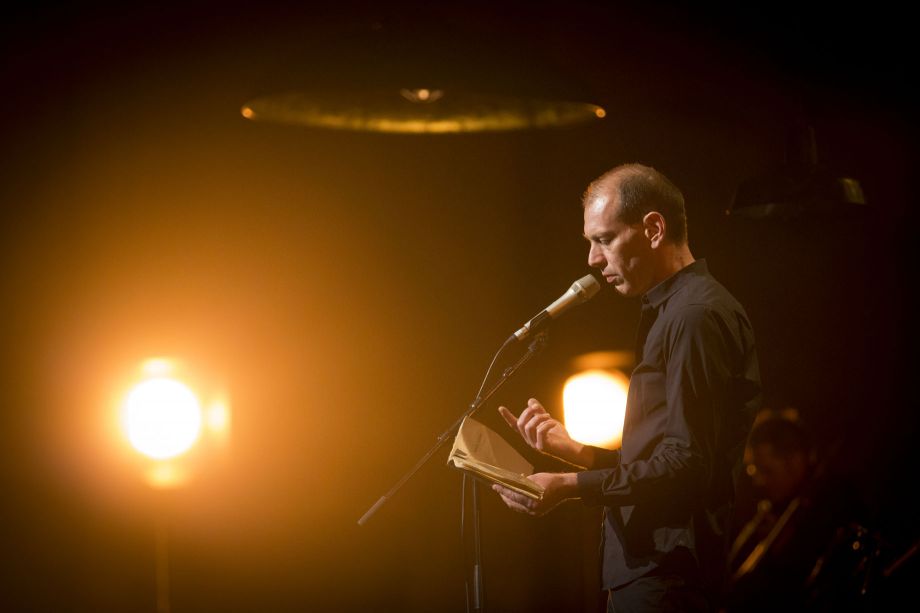
Corps de mots © Christophe Raynaud de Lage
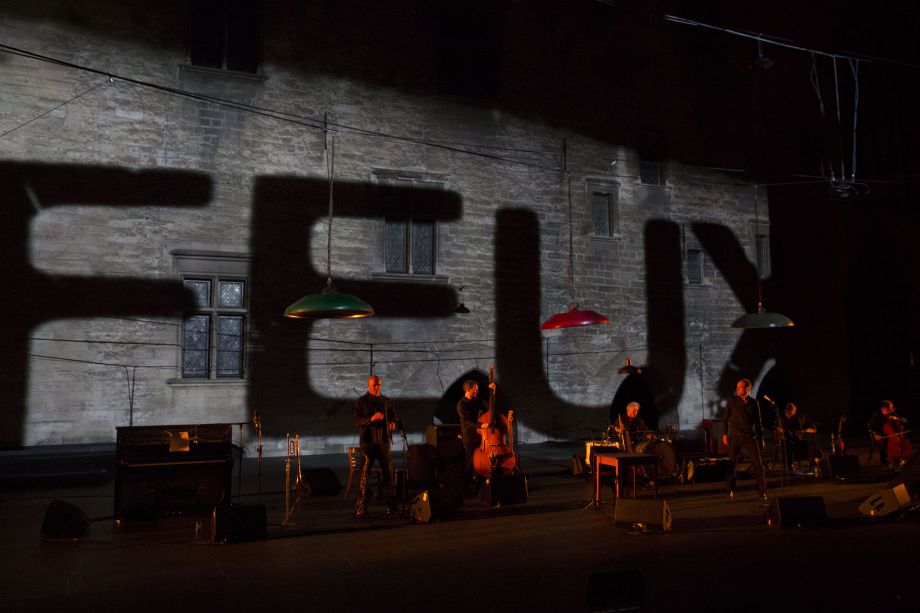
Corps de mots © Christophe Raynaud de Lage
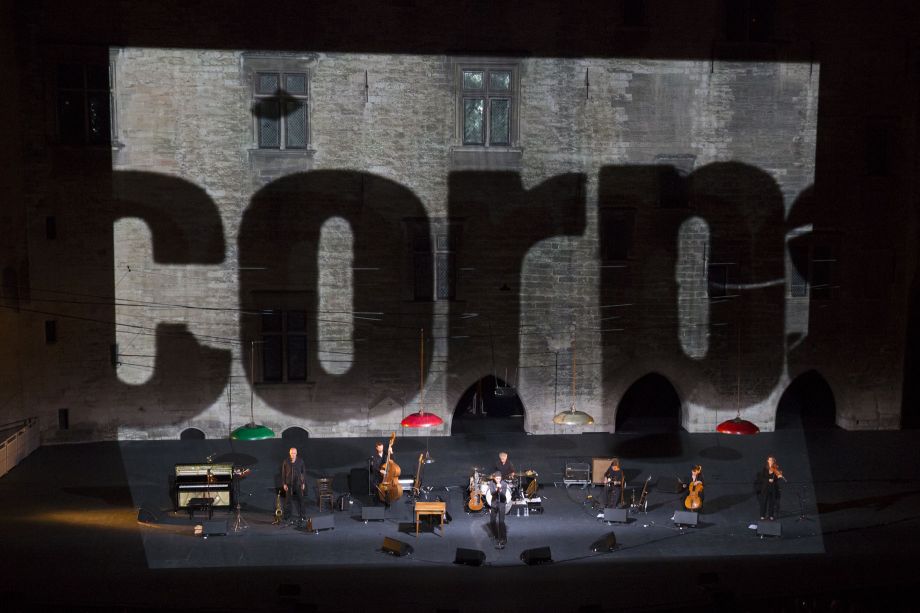
Corps de mots © Christophe Raynaud de Lage
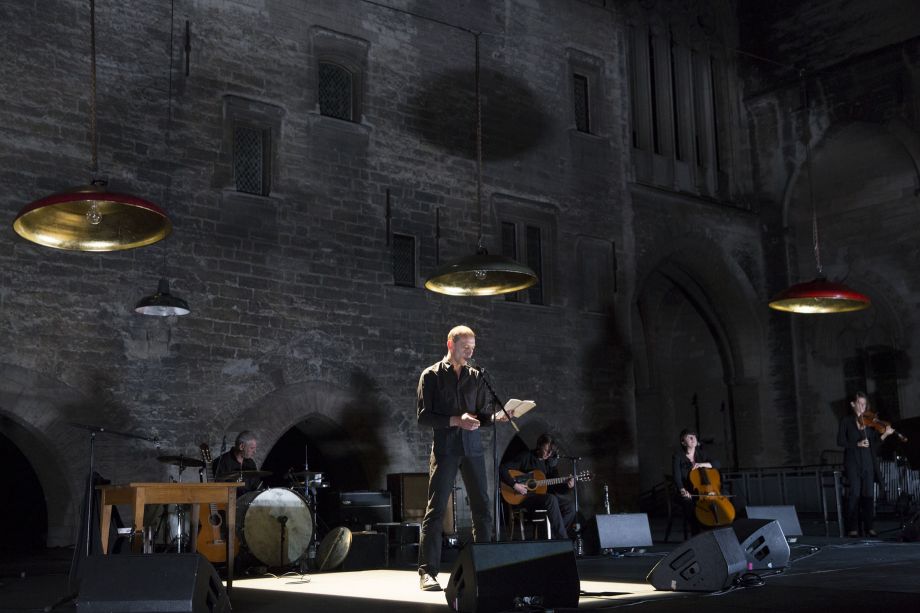
Corps de mots © Christophe Raynaud de Lage
Corps de mots © Christophe Raynaud de Lage
Corps de mots © Christophe Raynaud de Lage
Corps de mots © Christophe Raynaud de Lage
Corps de mots © Christophe Raynaud de Lage
Corps de mots © Christophe Raynaud de Lage
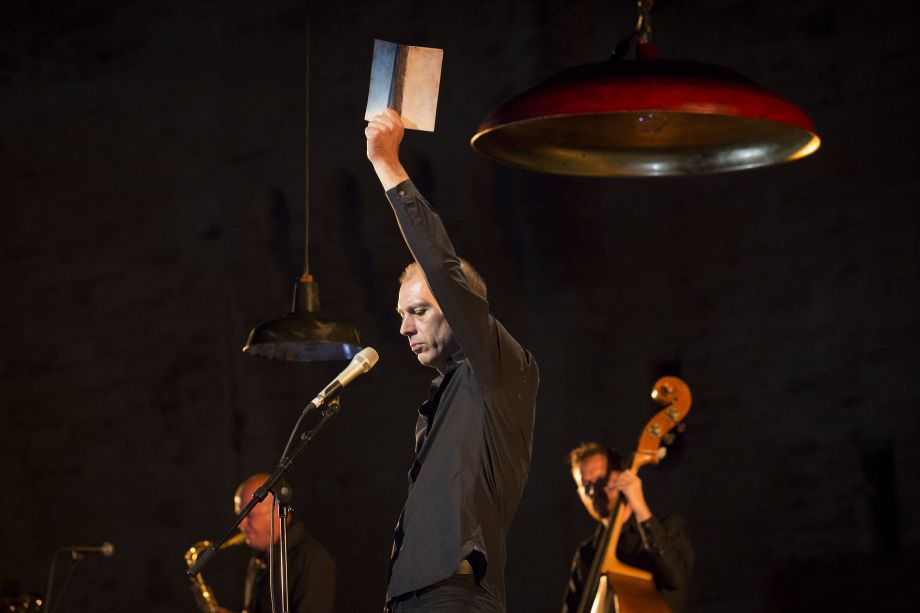
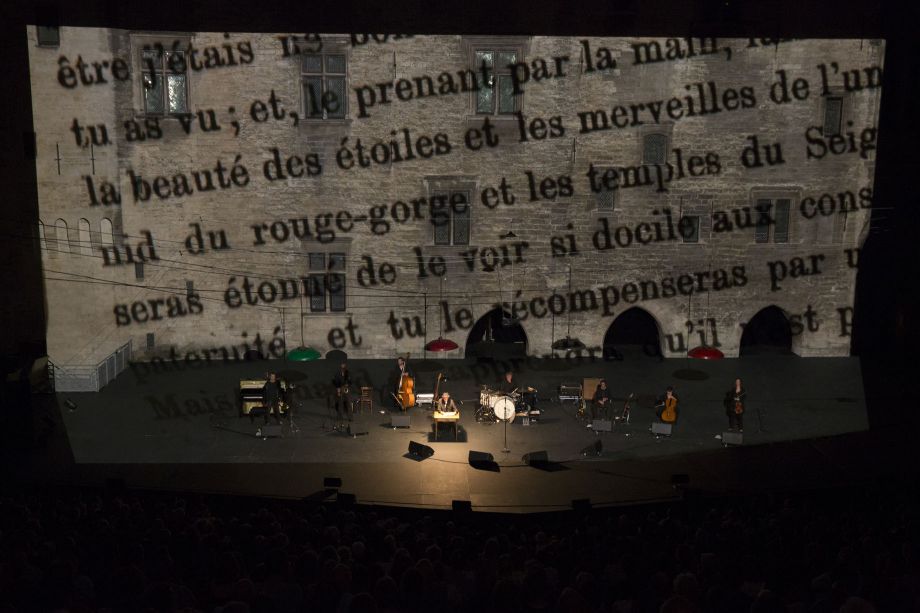
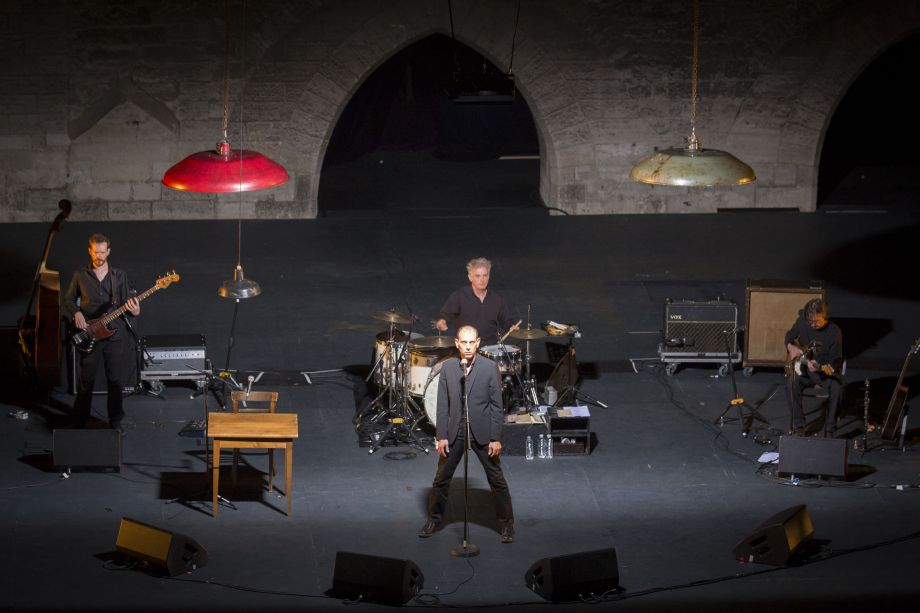
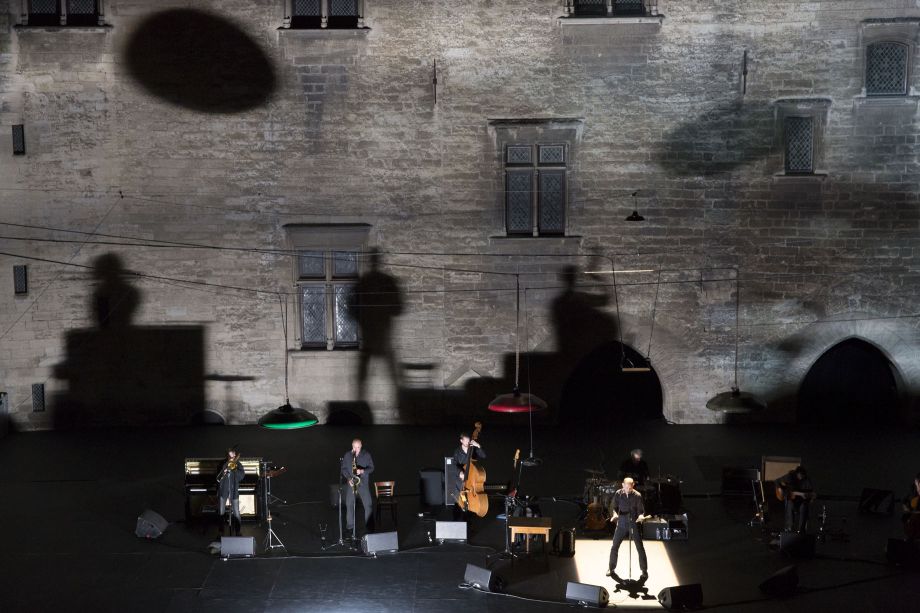
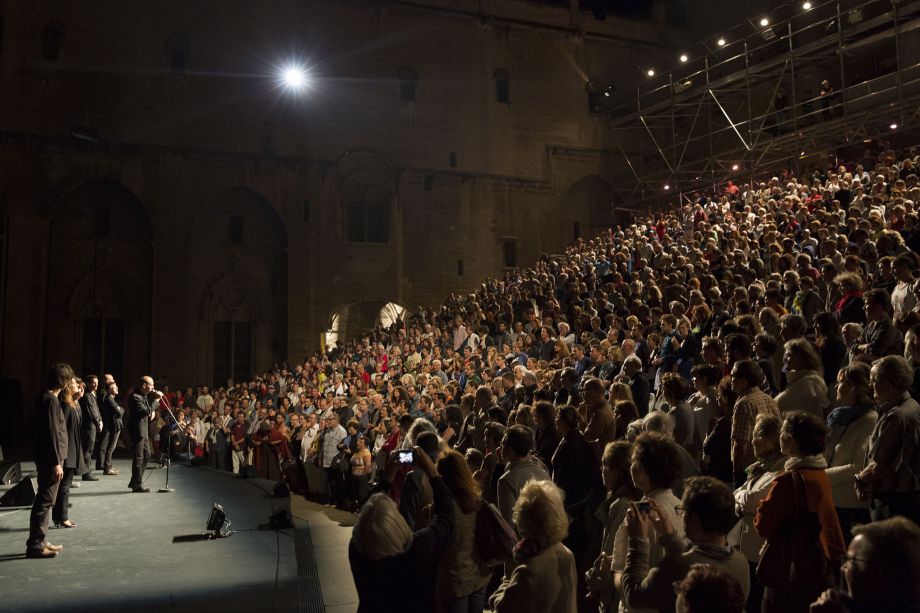
Poetry, be it that of Christian Olivier or that of the great writers, has always been a key element in the history of the band Têtes Raides; several of their albums include the works of a “guest” poet put to music. In 2010, during the celebration of Jean Genet's hundredth birthday at the Odéon-Théâtre de l'Europe, Christian Olivier presented a musical reading dedicated to the writer. Thus was born the idea of creating a show entirely dedicated to the poets that have long inspired him. For him, words are matter. They fill bodies and only come alive when filtered through flesh. The book as a concept plays a key role in this concert, sitting in the middle, a visible and respectable symbol, but the music of Têtes Raides changes our relationship to those difficult texts: this sensible experience gives them meaning. This is a homage of sorts, but also a desire to help the audience discover or rediscover texts that may have been neglected. Playing the part of a “drive belt,” the members of Têtes Raides give Marina Tsvetaieva, Antonin Artaud, or Phillipe Soupault another medium to express themselves beyond just the page, lending them their instruments and their acoustic energy to make their words echo and resonate. Brought together by their common quest for beauty, the words of Desnos, Dagerman, Rimbaud, Dubillard, Lautréamont, or Apollinaire are softened when accompanied by a cello or take on a cheerful quality thanks to the band's clarinet. As proof, “Ginette”, one of the band's most famous songs, soon gets invited to join the party.
Founded in 1989 by musicians avid to share different experiences, the band Têtes Raides has since then released over a dozen albums and has been continuously touring. Their shows take place in very different venues, in the goal of modifying the usual relationship between the audience and the band they are listening to. They also like to mix genres and disciplines: they often invite circus artists, dancers, and actors to share the stage with them. Christian Olivier, the band's singer, composer, and songwriter, is particularly inclined to use various forms and means of expression. Good not only with words but also with his hands, he works with Lionel Le Néouanic under the name Les Chats Pelés to create the covers of the band's albums as well as their posters, as well as a number of books in an easily recognisable style. With freedom as his guide, Christian Olivier loves to blur the border between genres. Influenced by the punk movement and originally described as a rock band, Têtes Raides has since defied labels and surprised their fans at every turn, and are as comfortable playing the accordion and the electric guitar. They have long fought for equality and the defence of fundamental rights, and their texts, without dogmatism but always with humour, tell stories that remind us of the sometimes harsh reality of the world. A delight for the body as much as for the ears, the music of Têtes Raides invites us to dance and think at the same time.
“We have been granted life to take risks,” Jeanne Moreau asserts. Artistically, she has taken a great many of them to build, through daring choices, a career as an actress in the theatre and cinema, which made her an icon. She who became an actress in the same way as “one takes one's vows” still believes that acting means “letting everything in someone else's words be heard.” She hadn't sung in years when she recorded Jean Genet's Le Condamné à mort (The Man Sentenced to Death) with Étienne Daho. Even though she was reciting the poem, the specific musicality of her voice couldn't help but bring her singing to mind. Têtes Raides were also part of the cycle dedicated to the hundredth birthday of Jean Genet at the Odéon-Théâtre de l'Europe; there they met Jeanne Moreau, and that encounter led to the recording of “Emma”, the main single of their 2011 album L'An demain. They are once again coming together to celebrate poets in the Cour d'honneur.
Marion Canelas, April 2014
Texts by Guillaume Apollinaire, Antonin Artaud, Stig Dagerman, Lydie Dattas, Robert Desnos, Roland Dubillard, Jean Genet, Lautréamont, Christian Olivier, Raymond Queneau, Arthur Rimbaud, Philippe Soupault, Marina Tsvetaieva
With
Serge Bégout (guitar, clarinet and piano)
Anne-Gaëlle Bisquay (cello)
Éric Delbouys (drum)
Pierre Gauthé (trombone, piano)
Christian Olivier (voice, accordion, guitar)
Antoine Pozzo di Borgo (double bass, bass)
Jeanne Robert (violin)
Grégoire Simon (saxophone, accordion, flute)
Jeanne Moreau n'a malheureusement pas pu être des nôtres le 27 juillet, pour le spectacle Corps de Mots dans la Cour d'honneur du Palais des papes.
Pour des raisons strictement personnelles, Jeanne Moreau «accablée par cette décision, a tenu à s'excuser auprès du public du Festival d'Avignon, de toutes les équipes du Festival, d'Olivier Py et de Paul Rondin, des Têtes Raides et de Lydie Dattas».
C'est une immense tristesse pour la direction du Festival comme pour les Têtes Raides.
Jeanne Moreau était avec nous sentimentalement dans la Cour d'honneur le 27 juillet et sera toujours l'invitée du Festival d'Avignon, dont elle est la Papesse.
Production Astérios Spectacles
In partnership with les Passagers du Zinc, la Sacem
Booklet (in French)
Download the pdf
Interview with CHRISTIAN OLIVIER
Download the pdf
More informations about
CORPS DE MOTS on
Pearltrees