
after Rainer Werner Fassbinder
Direction THOMAS OSTERMEIER
Berlin
National Premiere
Representation in German with French surtitles
Running time 1h45
Prices : from €28 to €10
|
T 3 |
F 4 |
S 5 |
S 6 |
M 7 |
T 8 |
W 9 |
T 10 |
F 11 |
S 12 |
S 13 |
M 14 |
T 15 |
W 16 |
T 17 |
F 18 |
S 19 |
S 20 |
M 21 |
T 22 |
W 23 20h |
T 24 20h |
F 25 20h |
S 26 20h |
S 27 20h |
|
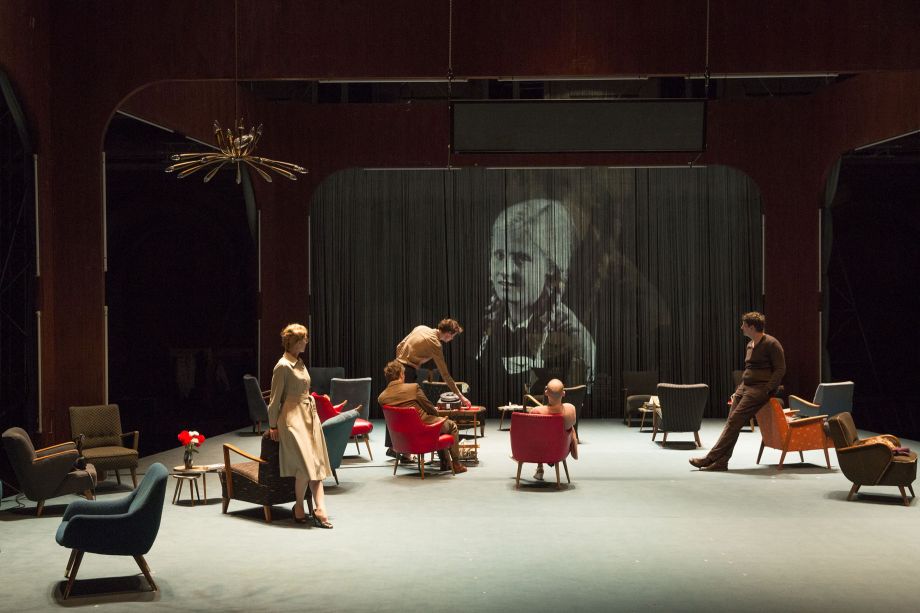
Die Ehe der Maria Braun © Christophe Raynaud de Lage
© La Compagnie des Indes
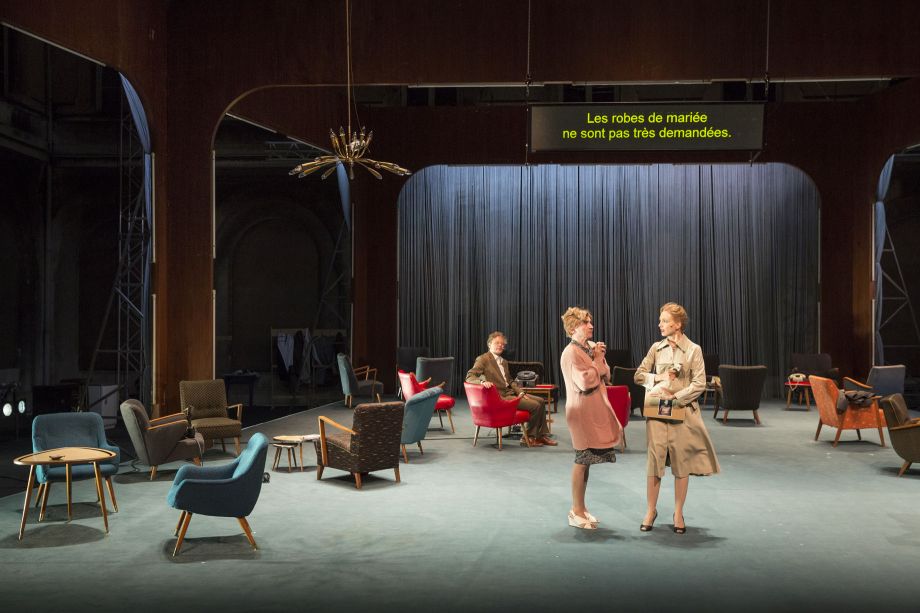
Die Ehe der Maria Braun © Christophe Raynaud de Lage
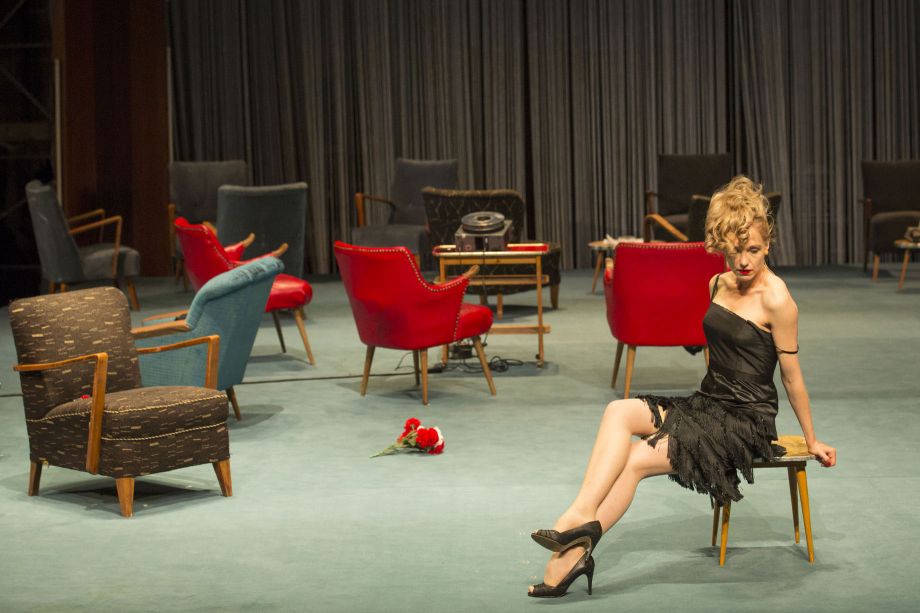
Die Ehe der Maria Braun © Christophe Raynaud de Lage
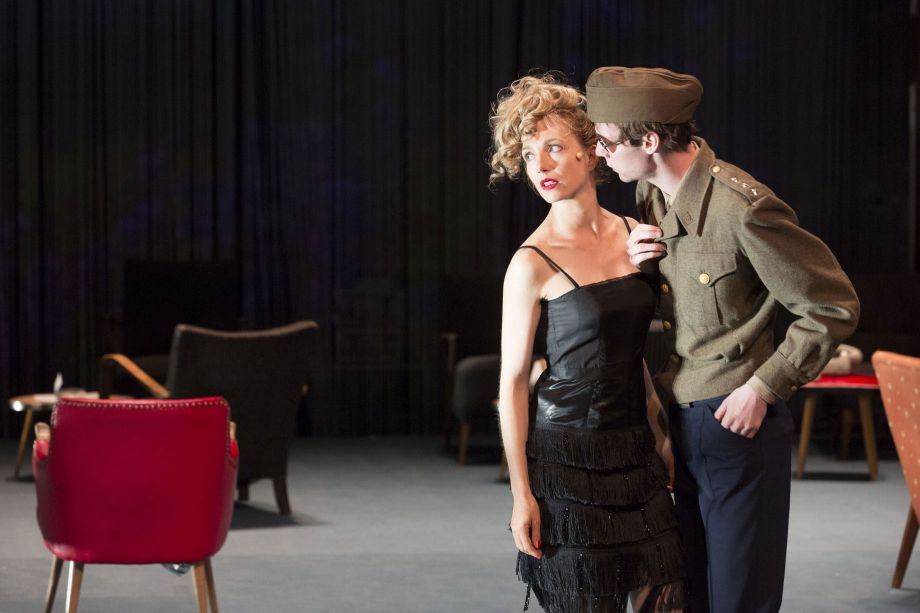
Die Ehe der Maria Braun © Christophe Raynaud de Lage
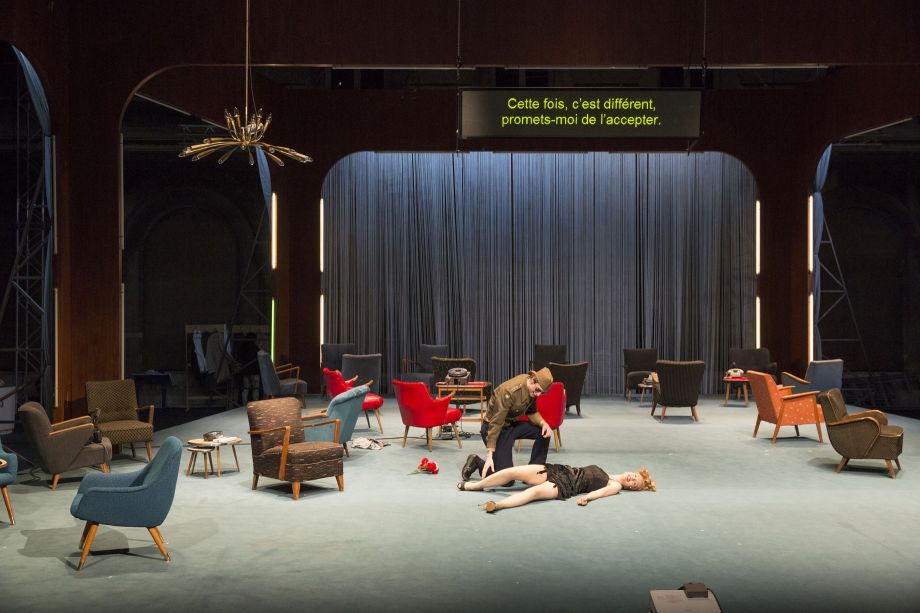
Die Ehe der Maria Braun © Christophe Raynaud de Lage
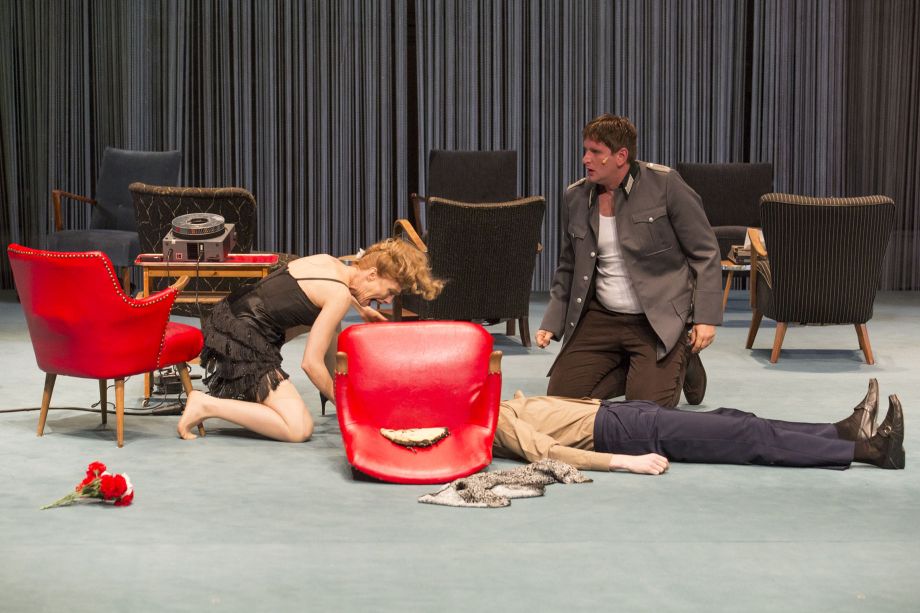
Die Ehe der Maria Braun © Christophe Raynaud de Lage
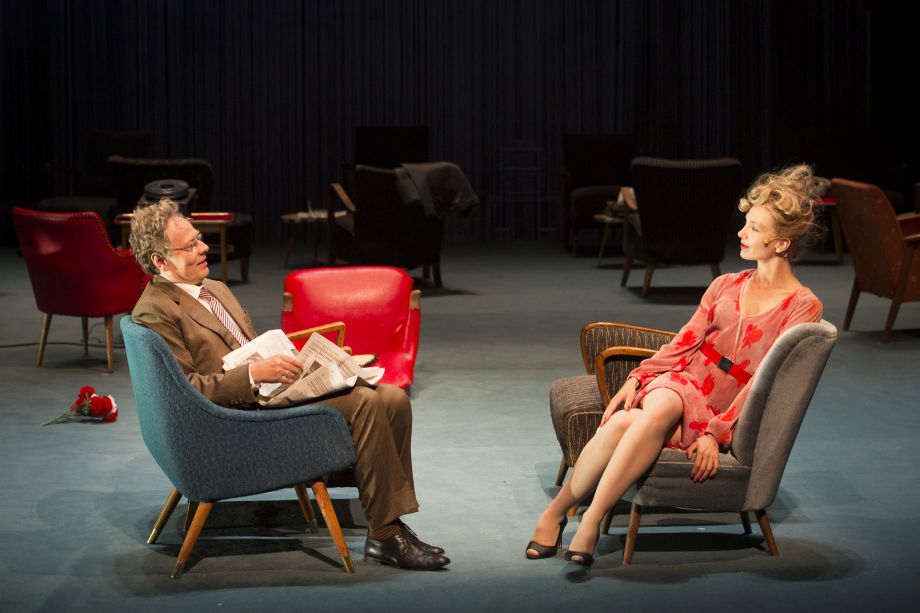
Die Ehe der Maria Braun © Christophe Raynaud de Lage
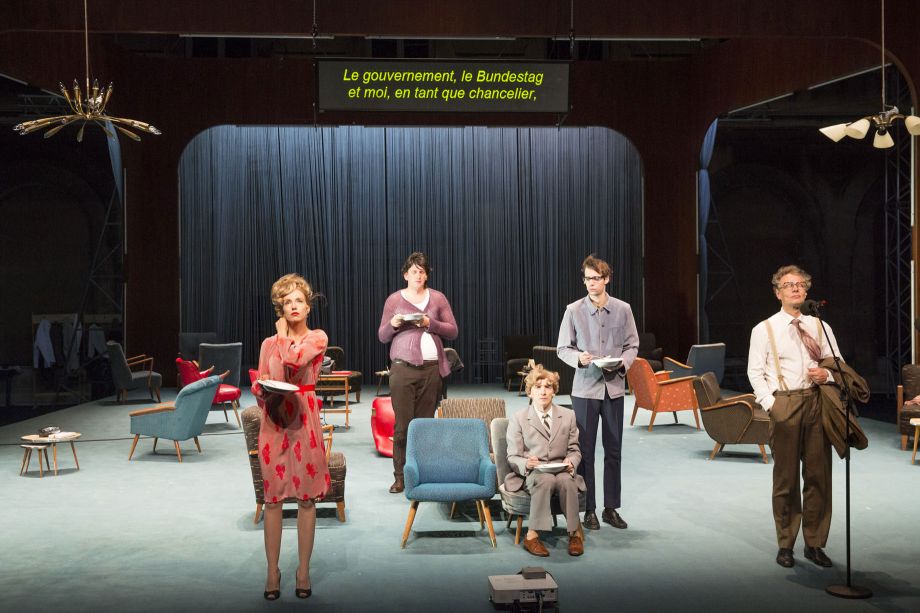
Die Ehe der Maria Braun © Christophe Raynaud de Lage
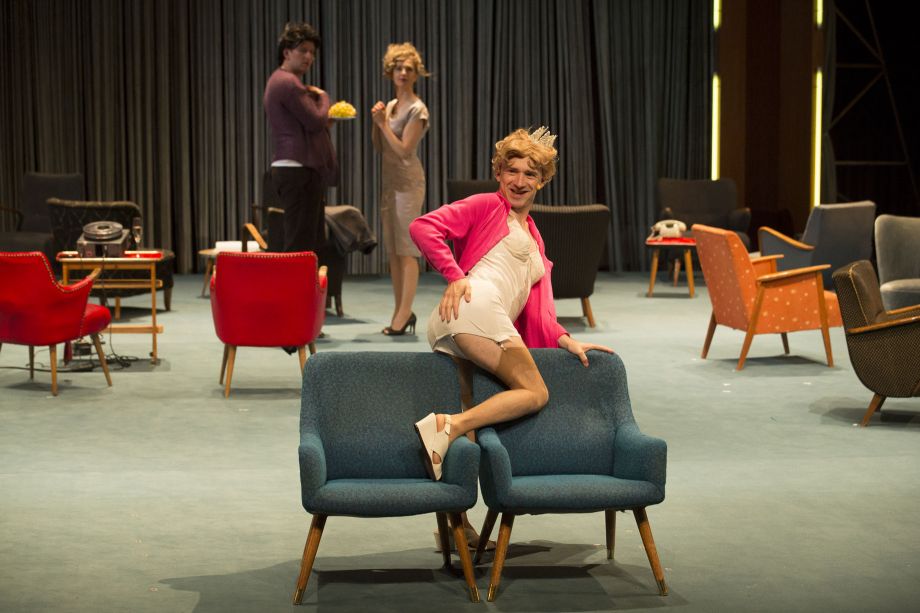
Die Ehe der Maria Braun © Christophe Raynaud de Lage
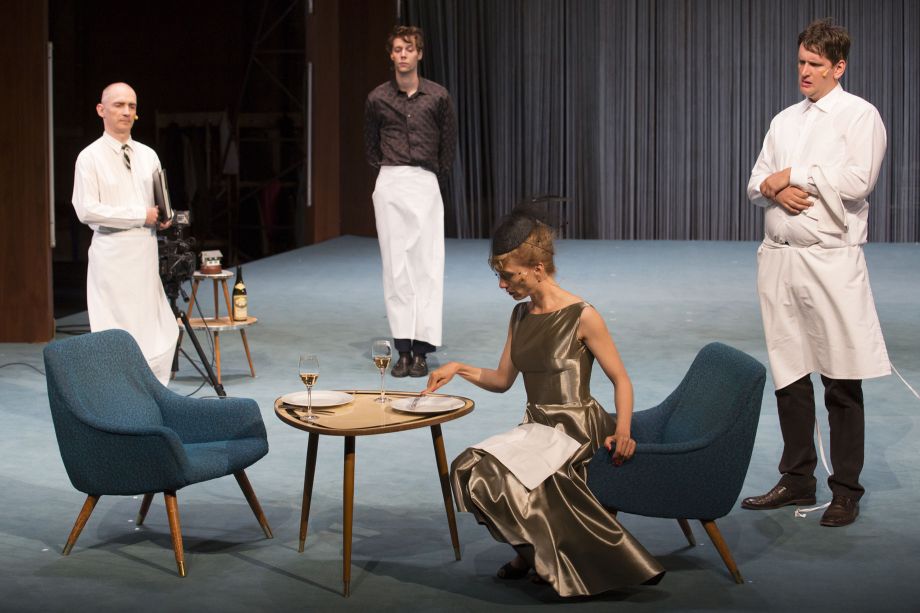
Die Ehe der Maria Braun © Christophe Raynaud de Lage
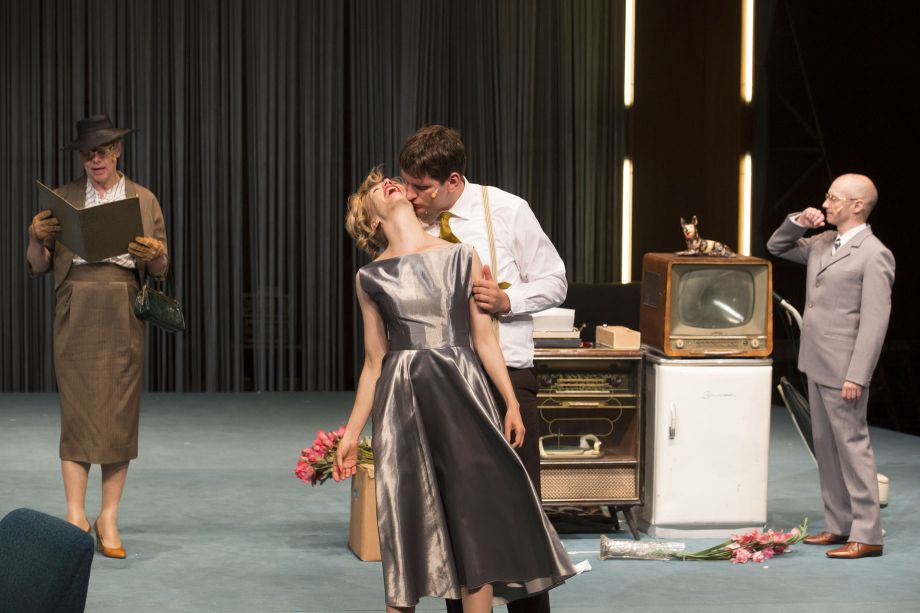
Die Ehe der Maria Braun © Christophe Raynaud de Lage
During World War II, Maria and Hermann get married in a town hall that has recently been bombed. The next day, Hermann is sent back to the front. Once the war is over, Maria, waiting for him to return, is told that he is dead. At the same time as she learns the rules of the black market, Maria learns those of the commerce of love. While working as a waitress in a bar, she begins a relationship with Bill, a black G.I. One night, as they're walking home, they find Hermann waiting for them. In the ensuing confusion, Maria strikes Bill with a bottle, killing him. Hermann takes the blame for the crime and is imprisoned. After the great feminine icons of Henrik Ibsen's plays, Thomas Ostermeier finds in Fassbinder's Maria Braun another victim of social and economic rules. This time, the action takes place in postwar Germany, during the transition towards the Federal Republic. Interested more by the film's story than by staging a reconstitution, Thomas Ostermeier focuses on the fall of Maria Braun's ideals when faced with men whose ego is often proportional to how much money they have in the bank. He highlights this opposition right from the start, even with his casting choices: surrounded by men, Maria Braun is isolated not only as a woman, but also as an idealist hoping for a better world. Like Fassbinder, Ostermeier subverts expectations with this story of a naïve young woman who becomes a tough, rich merchant: rather than a moral tale about a type of women, the play is the portrait of an exceptional personality whose fate is nonetheless ineluctably determined by her environment.
While studying at the Ernst Busch Academy of Dramatic Arts in Berlin, Thomas Ostermeier is noticed by Manfred Karge, who offers him a job as his assistant. After working as an actor in Weimar and for the Berliner Ensemble, he is hired to act in Einar Schleef's Faust. His first direction, Research Faust/Artaud, announces him as a rising star of German theatre. He is soon named artistic director of the Baracke, the secondary stage of the Deutsches Theater, which is leading a revolution in the world of drama in Berlin by providing a springboard for young actors and experimenting with new forms of representation. In 1999, Thomas Ostermeier introduces his first shows at the Festival d'Avignon: Bertolt Brecht's Man Equals Man, Richard Dresser's Below the Belt, and Mark Ravenhill's Shopping and Fucking. The same year, he is named artistic director of the Schaubühne am Lehniner Platz and, with the troupe of faithful actors he has surrounded himself with, he alternates between directing plays from the theatre's repertoire and working on new texts. The texts chosen by Thomas Ostermeier, classics and contemporary texts alike, all deal with “the existential conflicts of the individual, and with the political, economic, and social conflicts of our time.” Featured by the Festival d'Avignon in 2004, he also directed Georg Büchner's Danton's Death in 2001, Sarah Kane's Blasted in 2005, Shakespeare's Hamlet in the Cour d'honneur in 2008, and an adaptation of Henrik Ibsen's An Enemy of the People.
Born in 1945, Rainer Werner Fassbinder died in 1982, aged 37, having directed forty films, some of them adaptations of his own plays. The Marriage of Maria Braun, released in 1979, is the first film in his “BRD Trilogy,” followed by Lola in 1981, and Veronika Voss, which won the Golden Bear at the Berlin International Film Festival in 1982. Fassbinder's work focuses on the evolution of European societies after 1950, the new economic systems that arose in postwar Europe, and the influence they had on human relationships.
Marion Canelas, April 2014
Direction Thomas Ostermeier
Scenario Peter Märthesheimer et Pea Fröhlich
Scenography Nina Wetzel
Costumes Nina Wetzel et Ulrike Gutbrod
Dramaturgy Julia Lochte, Florian Borchmeyer
Music Nils Ostendorf
Video Sébastien Dupouey
With
Thomas Bading Le fonctionnaire de la mairie, Papi Berger, Bronski, L'interprète,
Karl Oswald et Le notaire
Robert Beyer La mère, Le docteur, Le juge, Senkenberg, Le garde, L'avocat
et Le serveur
Moritz Gottwald L'infirmière de la Croix-Rouge, Le trafiquant du marché noir, Bill, Willi, Le contrôleur, L'homme d'affaires américain, Madame Ehmke, Le serveur et Wetzel
Ursina Lardi Maria Braun
Sebastian Schwarz Hermann Braun, Betti, Le soldat américain, Le journaliste
et Le serveur
Production Münchner Kammerspiele, Schaubühne Berlin
Booklet (in French)
Download the pdf
Interview with THOMAS OSTERMEIER
Download the pdf
More informations about
DIE EHE DER MARIA BRAUN on
Pearltrees