© La Compagnie Des Indes
DORSAF HAMDANI
Musical direction DANIEL MILLE
Beyrouth - Paris - Tunis
Creation 2015
Running time 1h15
Prices : from €17 to €10
|
S 4 |
S 5 |
M 6 |
T 7 |
W 8 |
T 9 |
F 10 |
S 11 |
S 12 |
M 13 |
T 14 |
W 15 |
T 16 |
F 17 |
S 18 |
S 19 |
M 20 20h |
T 21 |
W 22 |
T 23 |
F 24 |
S 25 |
|
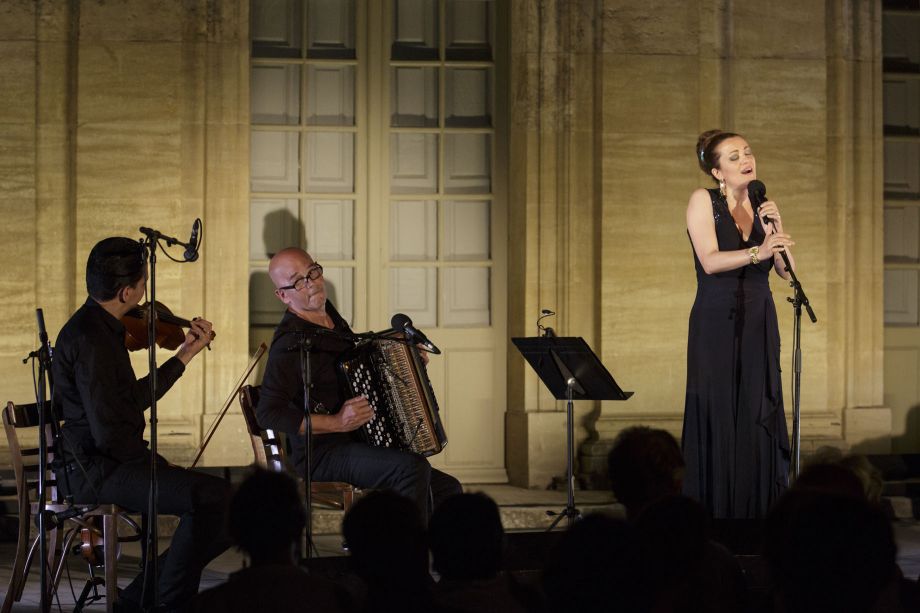
Barbara-Fairouz © Christophe Raynaud de Lage
© La Compagnie Des Indes
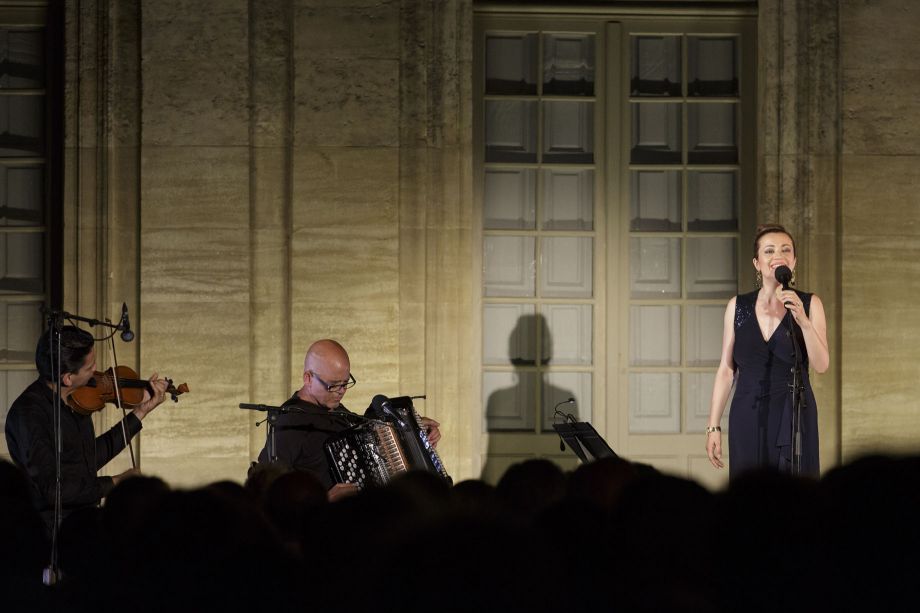
Barbara-Fairouz © Christophe Raynaud de Lage
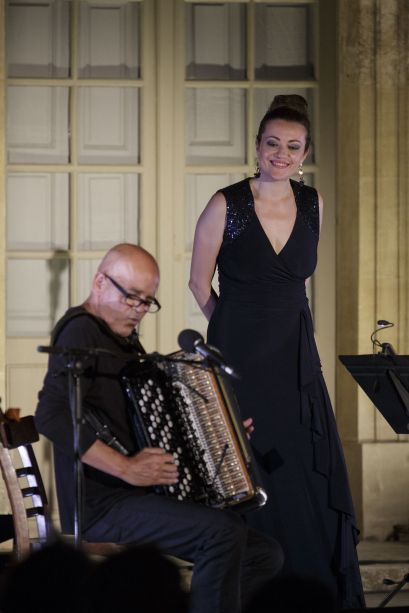
Barbara-Fairouz © Christophe Raynaud de Lage
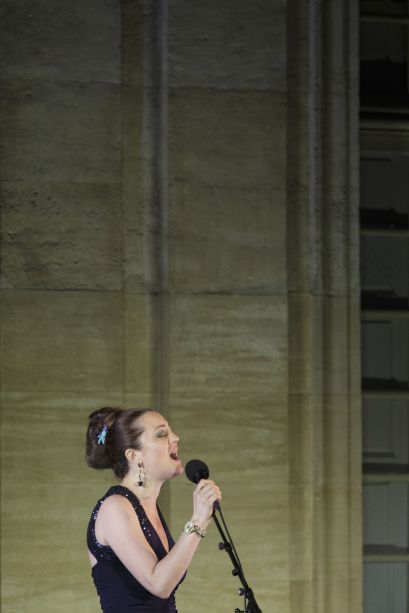
Barbara-Fairouz © Christophe Raynaud de Lage
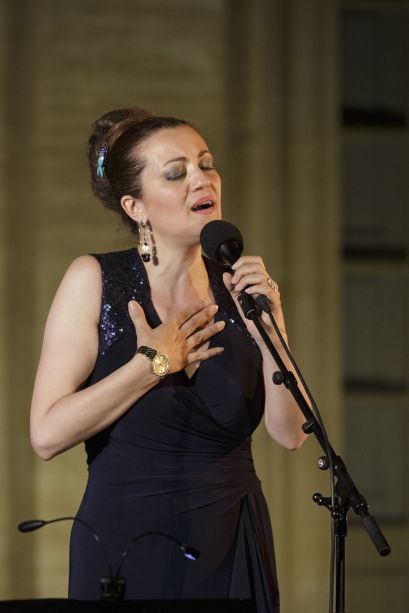
Barbara-Fairouz © Christophe Raynaud de Lage
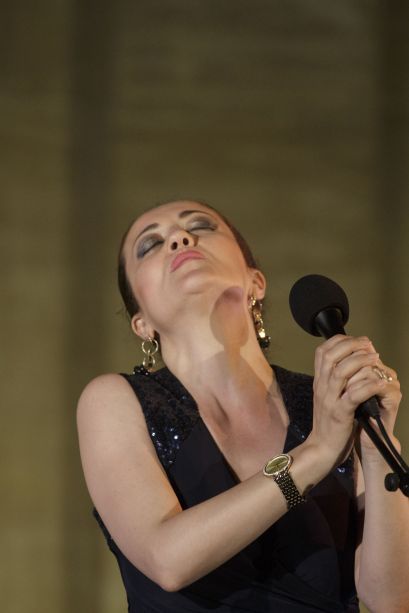
Barbara-Fairouz © Christophe Raynaud de Lage
Barbara-Fairouz © Christophe Raynaud de Lage
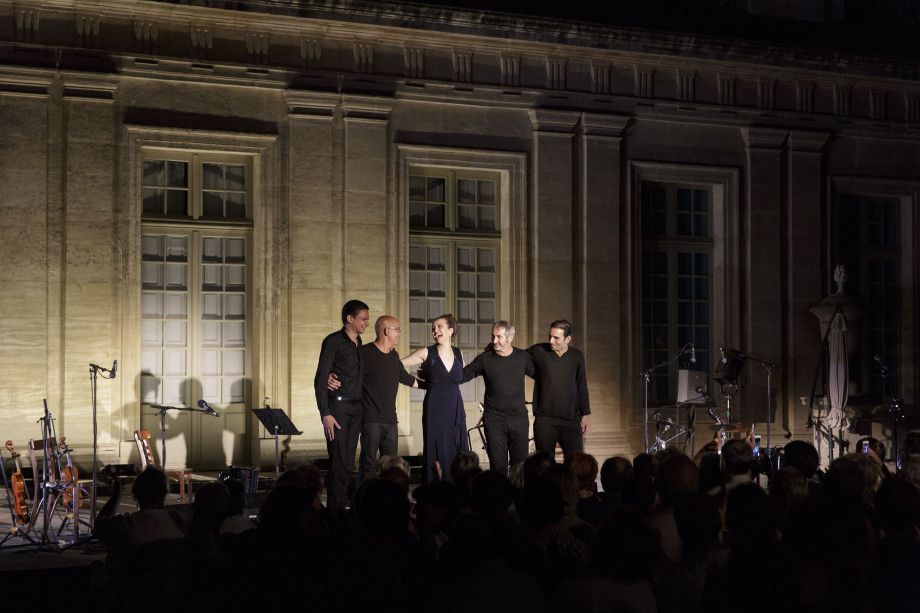
By singing Barbara and Fairuz, Dorsaf Hamdani wanted those two great singers to talk to each other. A conversation between the tall, dark lady, who revealed her wounds and wildness in a streaming of crystal, and the Lebanese diva who embodied the soul of her people with a fascinating artistic boldness. The result is so clear that it all seems obvious: the similarities between their nonconformist worlds, the astonishing freedom that springs forth from each song, the ties between the souls of two artists who both remain mysteries, each in her own culture. After all, Barbara long seemed strange to many of her French listeners, and Fairuz, working with the Rahbani brothers, introduced many modern if not outright exotic elements in her songs—electronic music, Latin American sonorities, jazz... Dorsaf Hamdani has chosen from their respective repertoires intimate songs, songs of the beating heart and the naked soul. By calling on Daniel Mille to serve as musical director for the show, she confirmed the path she's chosen: Barbara and Fairuz together, between great loves and whispered confessions, between melancholy and sparkling, between vertigo and majesty.
Recognised as one of the greatest voices of Tunisia, Dorsaf Hamdani likes to broaden her horizons, both in space and time. A student of malouf, the Arab Andalusian music of Tunisia, and of the semi-classic genres that appeared in the Mashriq in the 20th century, she learnt western music theory and experimented with fusion music, receiving countless awards in her country and abroad... She's an indefatigable traveller, from master class to encounter with the masters, from festivals to a doctorate in musicology at the Sorbonne. She's sung at the Cairo Opera and worked with the greatest artists in Arabic music, such as Salah Ghoubachi or Selim Sahab. In 2010, she took part in the creation of Ivresses, based on the poetry of Omar Khayyam, along with Persian singer Alireza Ghorbani—which was met with critical and public acclaim. Looking to the east, towards Lebanon and Egypt and the great Arab voices, she led the project Emirat el tarab (Princesses of Arabic Songs), which brought together songs by Umm Kulthum, Fairuz, and Asmahan.Proud of her radiant multiculturalism and always looking for artistic truth, Dorsaf Hamdani embodies the mutations of the modern Mediterranean.
Daniel Mille's early experience with music says much about him: having abandoned the accordion after spending two years trying to learn to play it as a child, he comes back to it when he sees Richard Galliano accompanying Claude Nougaro. And so he'll play both French songs and jazz, never afraid to embark on a new adventure; a unique musician, at once well-read and instinctive, romantic and pointillist. Throughout his original career, he accompanies singers (Claude Nougaro, Christophe, Salif Keita, Jacques Higelin, etc.), leads unique projects (two albums recorded with Jean-Louis Trintignant) and bold personal creations, like this recent homage to Astor Piazzolla, accompanied by three cellists. He didn't know the first thing about Fairuz before Dorsaf Hamdani called him, and had played only a few notes in Barbara's show Lily Passion, as a young musician in Paris in 1986. But the Tunisian singer's project echoes his own obsessions—space, air, silence, and fervour.
BARBARA AND FAIRUZ
They never met, and who knows if they were at all familiar with each other's music, but Barbara and Fairuz, creators who were as secret as they were unpredictable and fierce guardians of their creative freedom, who had little to do with the archetypal figures of women in their respective countries, have a lot in common. Beyond the language in which Dorsaf sings, one might be surprised not to be able to tell one world from the other. Melodies born in Lebanon or on the banks of the Seine seem to be made of the same material, the same palette, the same moods.Fairuz's sparkles seem to lighten Barbara's melancholy, and the European to lend her sharp intelligence to the romanticism of the eastern signer. A fertile experiment for Dorsaf Hamdani: “I understood you can be a very strong, very modern woman, while being torn within a rather conventional culture in which you try to offer another image of the woman.”
Musical director Daniel Mille
Songs Barbara and Fairuz
With Dorsaf Hamdani singing
and musicians
Daniel Mille accordion,
Lucien Zerrad arrangement, guitar, oud,
Zied Zouari violin,
Yousef Zayed percussions, oud
Tracks
Fairouz
Jerusalem (Zahrat Al Madeen)
Zourouni
Baadak Ala Bali
Yalla Tnam
Atini Nay Wa Ghanni
Addeysh Kan Fi Nas
Al Bint El Chalabeya
Barbara
Dis, quand reviendras-tu ?
La Solitude
Nantes
Göttingen
Ce matin-là
Gare de Lyon
Le Soleil noir
Production Accords Croisés
Coproduction Institut français de Tunisie, La Cordonnerie-Cité de la Musique - SMAC des Pays de Romans
This creation is supported by the programme d'aide à l'accompagnement de carrière de l'action culturelle de la Sacem