© La compagnie des indes
Text and direction
VALÈRE NOVARINA
Paris
Creation 2015
Running time 2h40
Prices : from €28 to €10
|
S 4 |
S 5 20h |
M 6 20h |
T 7 |
W 8 20h |
T 9 20h |
F 10 20h |
S 11 20h |
S 12 20h |
M 13 |
T 14 |
W 15 |
T 16 |
F 17 |
S 18 |
S 19 |
M 20 |
T 21 |
W 22 |
T 23 |
F 24 |
S 25 |
|
Le Vivier des noms © Christophe Raynaud de Lage
© La compagnie des indes
Le Vivier des noms © Christophe Raynaud de Lage
Le Vivier des noms © Christophe Raynaud de Lage
Le Vivier des noms © Christophe Raynaud de Lage
Le Vivier des noms © Christophe Raynaud de Lage
Le Vivier des noms © Christophe Raynaud de Lage
Le Vivier des noms © Christophe Raynaud de Lage
Le Vivier des noms © Christophe Raynaud de Lage
Le Vivier des noms © Christophe Raynaud de Lage
Le Vivier des noms © Christophe Raynaud de Lage
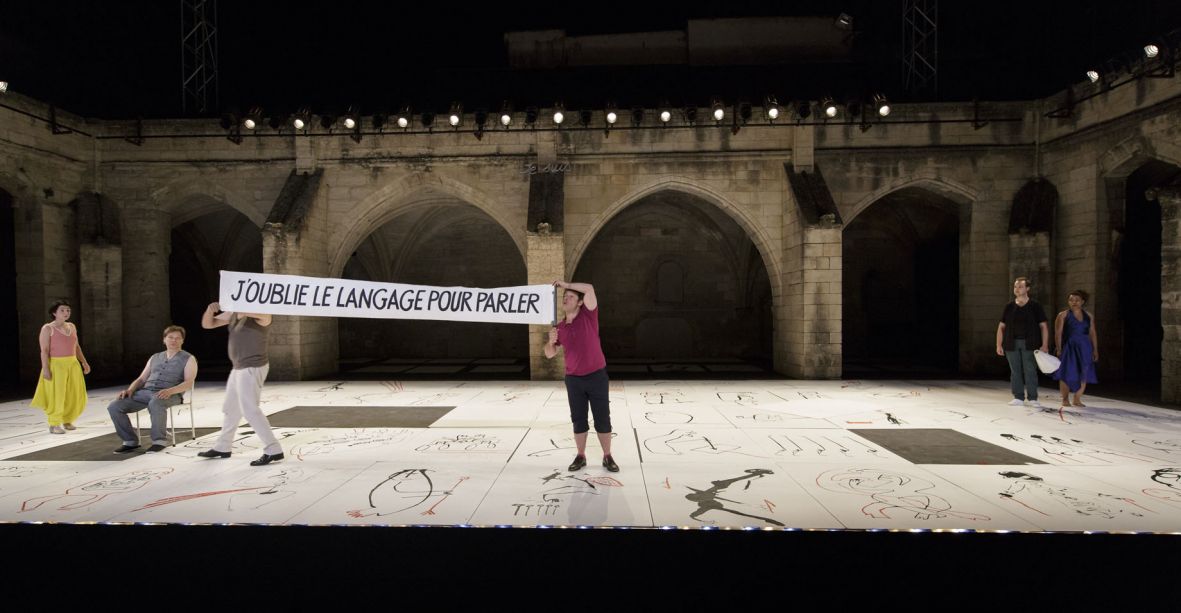
Le Vivier des noms © Christophe Raynaud de Lage
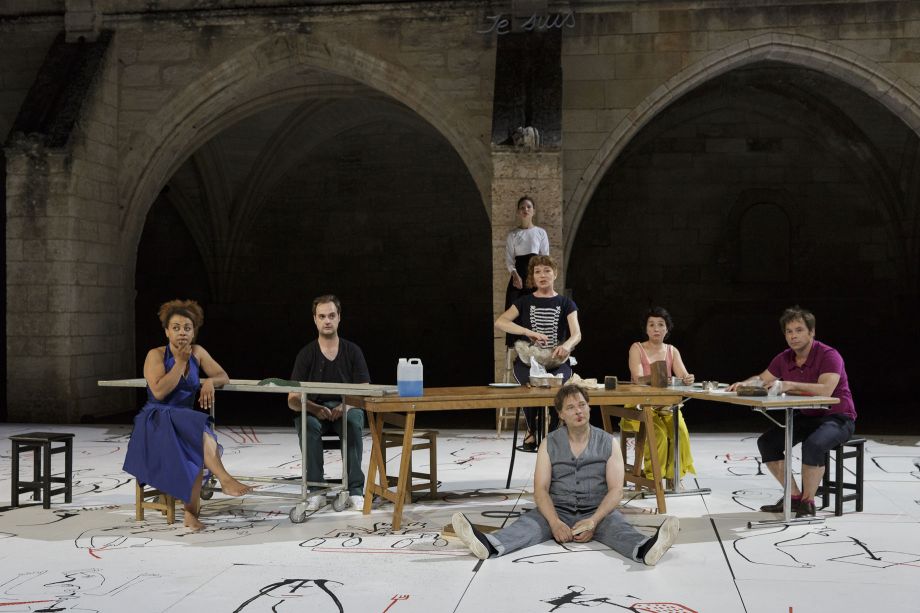
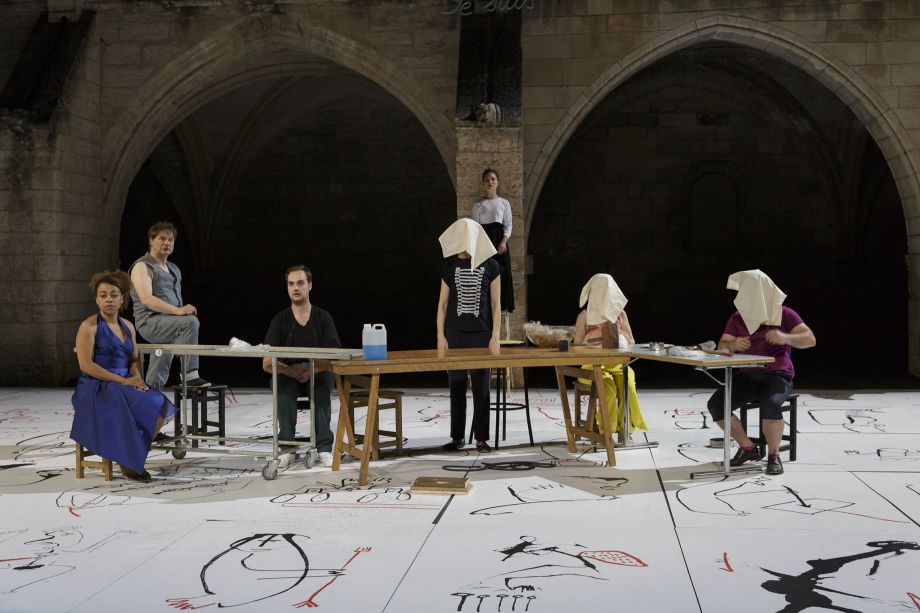
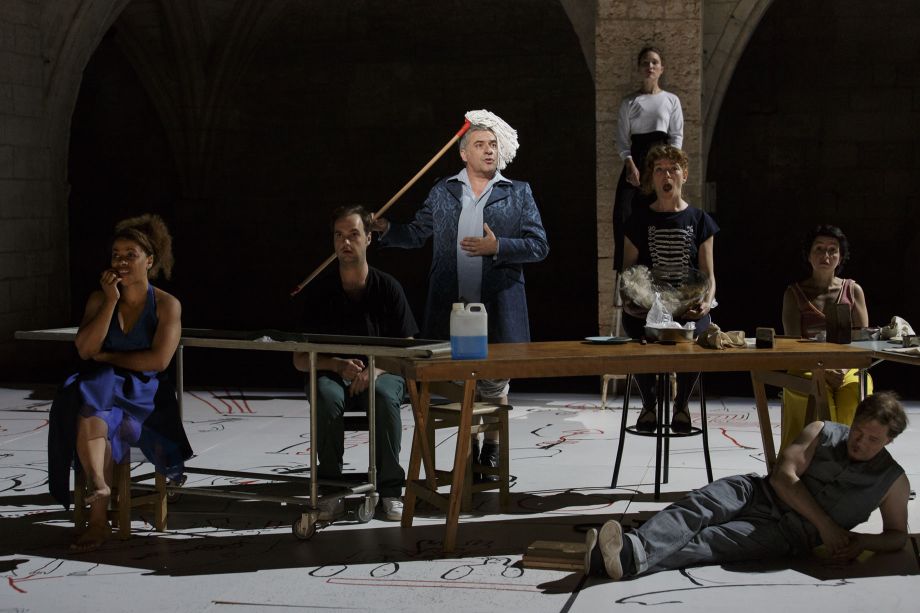
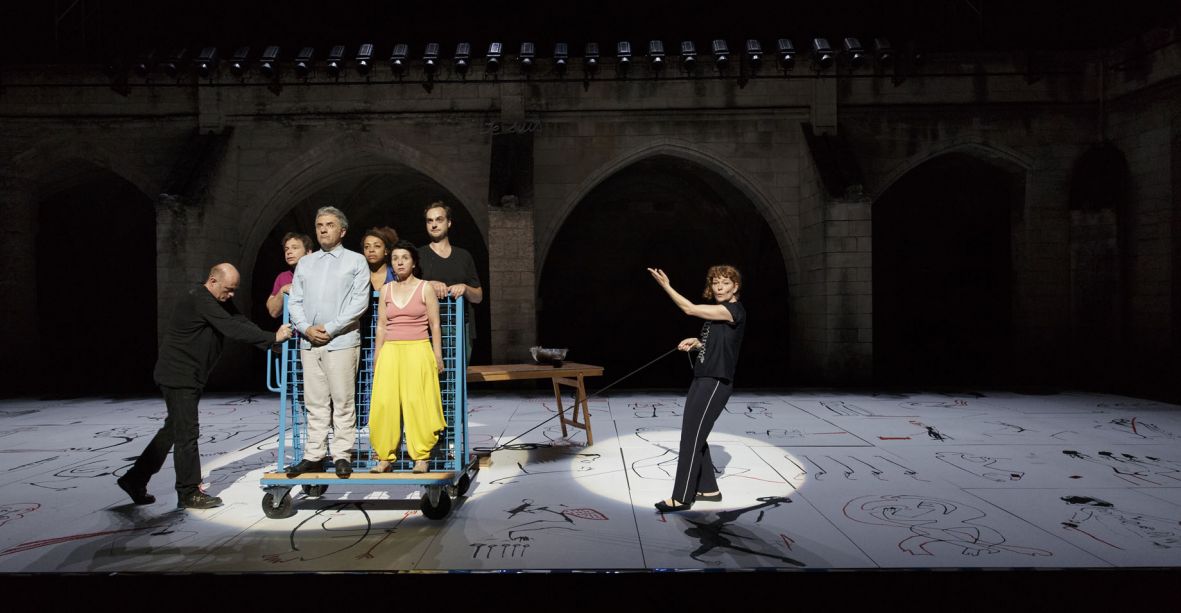
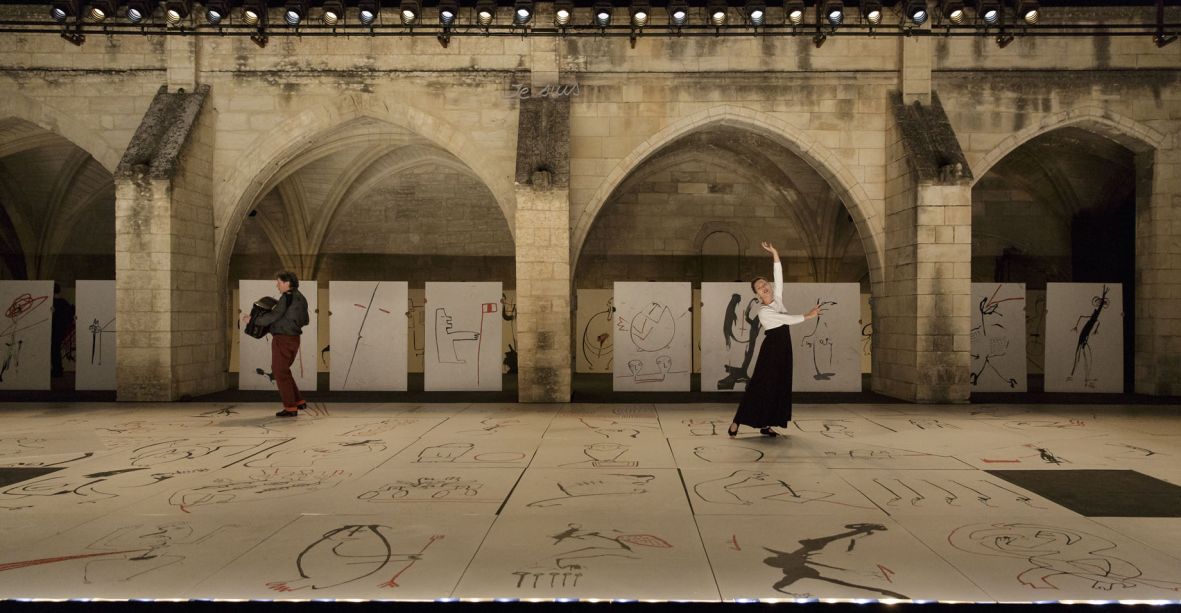
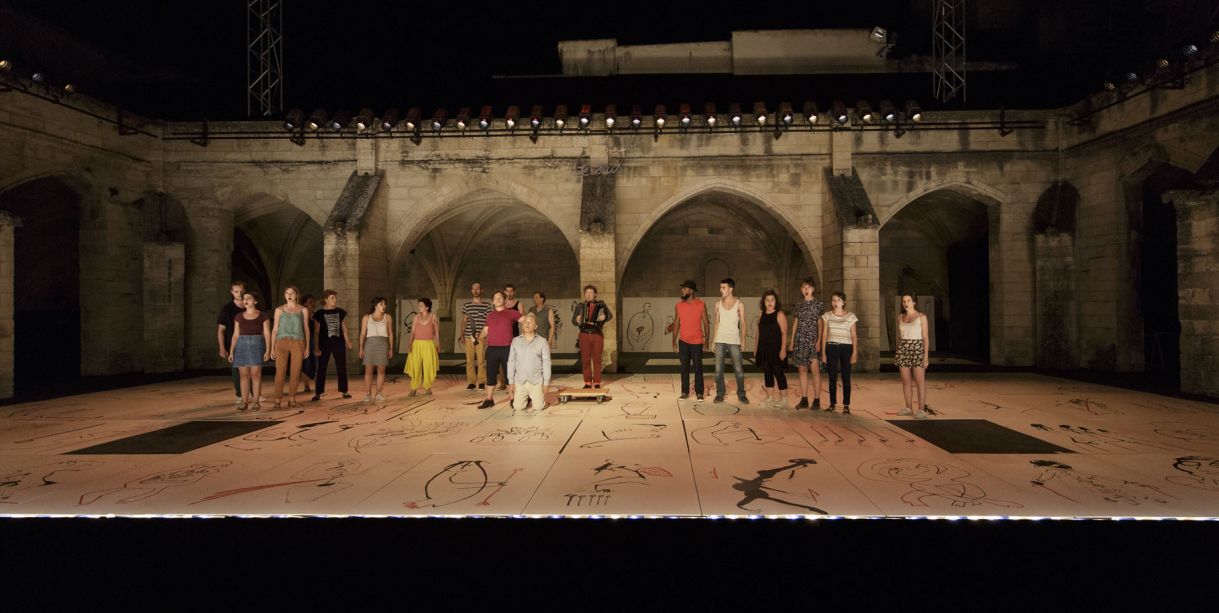
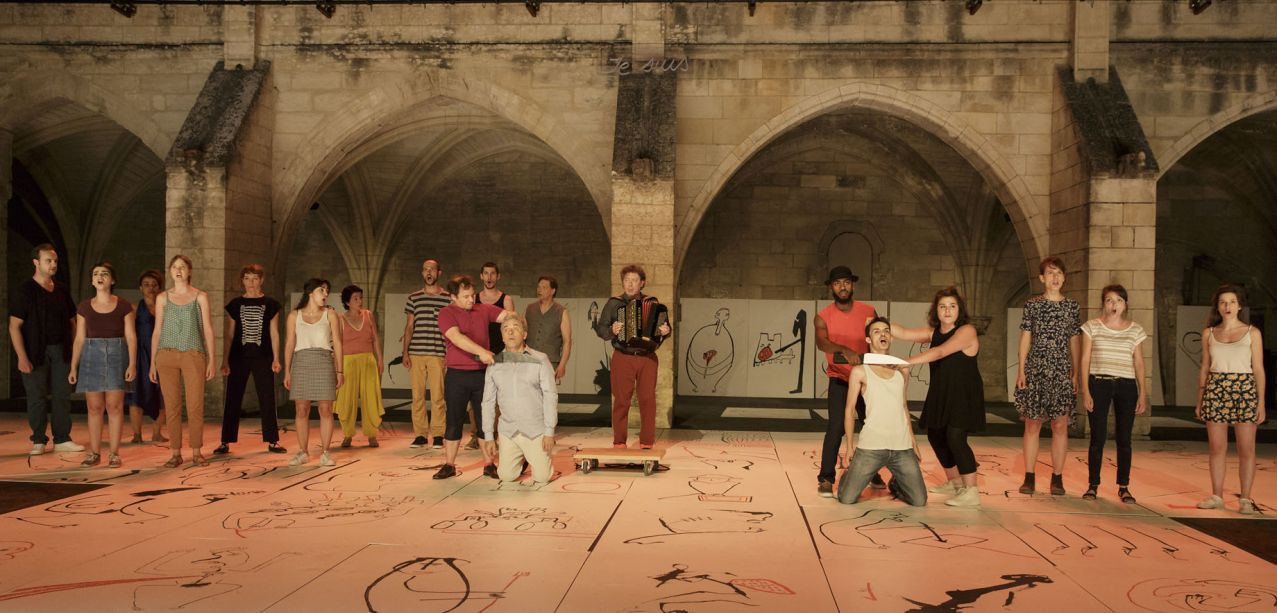
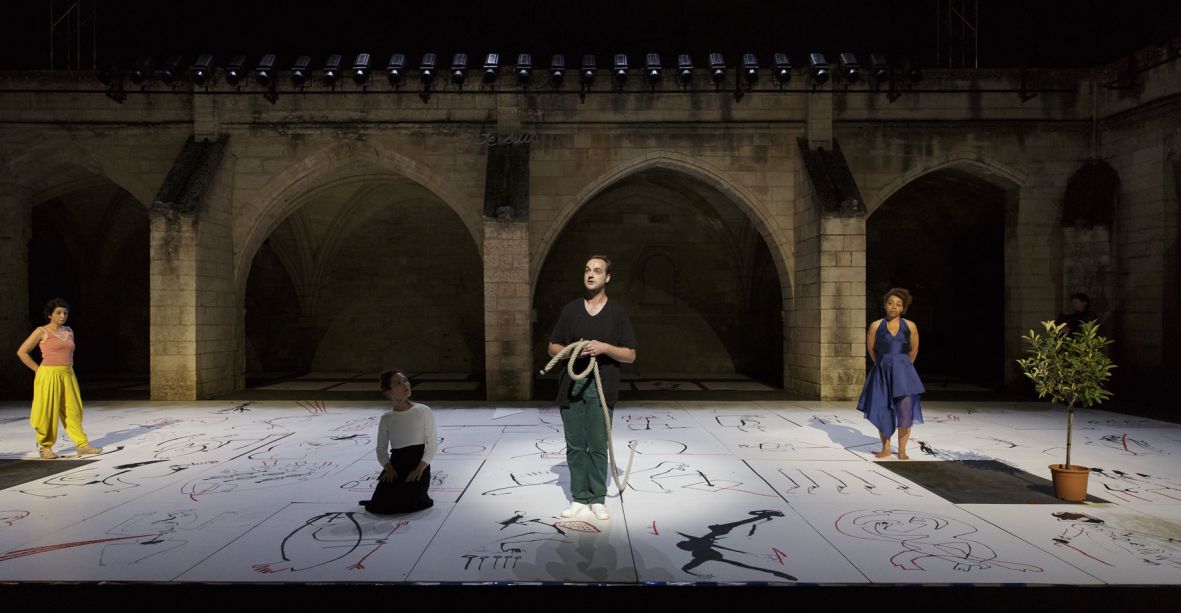
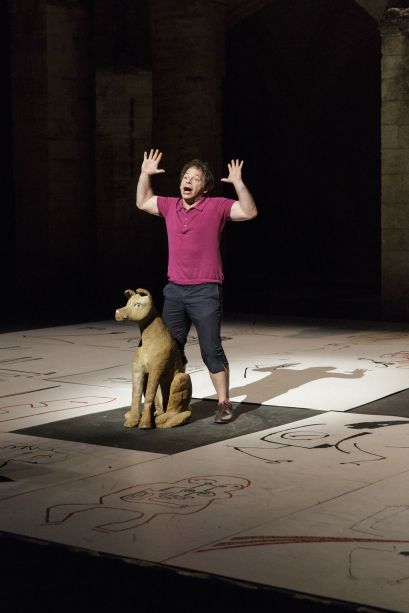
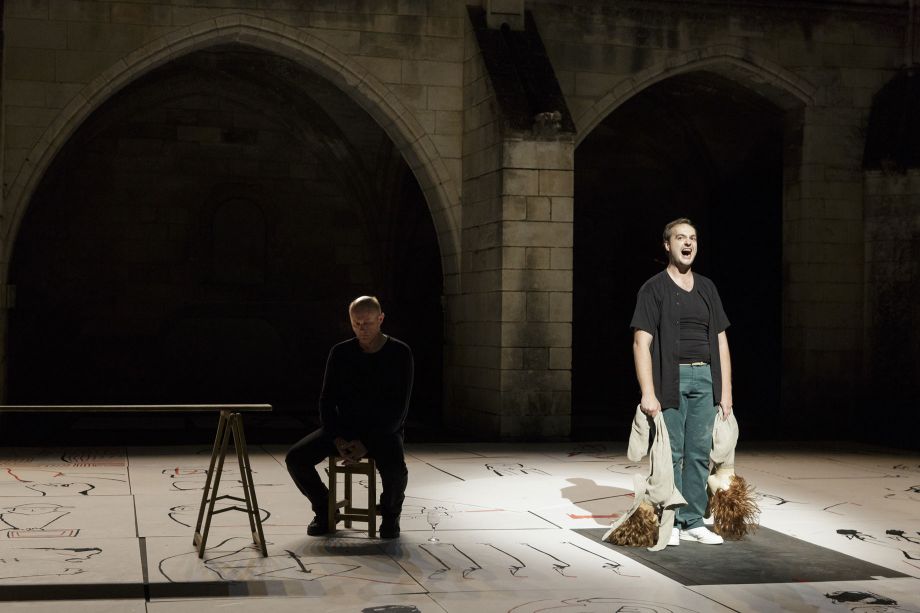
Le Vivier des noms (The Breeding Pool of Names) is first and foremost the title of one of Valère Novarina's notebooks, cracked open by the Animal Child at the end of Vrai Sang (The True Blood), which he directed in 2011. It is a collection of what the writer calls “logaèdres,” “logolithes,” “logogrammes,” and “anthropoglyphes,” a myriad names that sometimes start multiplying on their own and play within the space of the theatre and the bodies of the audience. A circular logic of reminiscence, much like at the circus, in an order that is alive because unfinished. This forest of names is the second one Valère Novarina has explored. In 1986, his very first direction, Le Drame de la vie (The Drama of Life), already let 2,587 names run wild, in a never-ending movement of entrance. Today, in fifty-two scenes, those “verbal spirits,” those countless objects will be said, formulated, projected, and ventured into the air by 1,100 characters, each with his or her individual name — although not all will appear on the stage. In the middle of those names, Valère Novarina puts the Historian, who orders the story to begin: Worntooth the dog knows that it will no longer appear, the Antipeople are plotting something, the Actor who flees others proves once again the opposite of what he's thinking, the Minister of the Exterior declares Latin to be a living language, the parietal Children come every fifteen minutes to empty a bag of preconceived notions... Over the two hours and eleven minutes of the show, the stage is dismantled and put back together, then filled with rebus. Time sighs: no one noticed it. The actors walk on the edge of language, between words that free and words that enslave.
Born in Geneva in 1947, Valère Novarina is a writer, a painter, and a cartoonist: movement is at the heart of his creative process, of his reflection and research, because he thinks that The Hand is the Organ of Language (2013). He works on space, colours, and words as if they were matter. In his theatre, he tries to make words perceptible and visible by deploying them in space. Following three intertwined axes, his work questions language, its origins and forms, and the “thousand ways man can be man.” Alternating between the theatre (The Flying Workshop, You Who Live In Time, The Imaginary Operetta, The Unknown Act, The Animal of Time), uncategorisable texts, monologues for multiples characters, poetry in acts (The Babble of the Dangerous Classes, The Drama of Life, Words to Animals, Man's Flesh, The True Blood), and theoretical works inspired by the stage and by actors (During Matter, In Front of the Word, The Flipside of the Mind, Fourth Person Singular), his books are published, for the most part, by P.O.L. Publishing.
Text, direction, and paintings Valère Novarina
Artistic collaboration Céline Schaeffer
Music Christian Paccoud
Scenography Philippe Marioge
Lights Joël Hourbeigt
Costumes Karine Vintache
Make up Carole Anquetil
Accessory Jean-Paul Dewynter
Dramaturgy Roséliane Goldstein, Adélaïde Pralon
With Julie Kpéré, Manuel Le Lièvre, Dominique Parent, Claire Sermonne, Agnès Sourdillon, Nicolas Struve, René Turquois, Valérie Vinci
Le musicien Christian Paccoud
Les ouvriers du drame Elie Hourbeigt, Richard Pierre
With the participation of the students of the Conservatoire à rayonnement régional du Grand Avignon : Jérémie Aguera, Serge Atouga Attougha, Magali Avarello, Romain Bigot, Sophie Claret, Marie Gurrieri, Martin Houssais, Camille Lucas, Lisa Meyer,
Charlotte Prost, Zoé Vuaillat
Production L'Union des contraires
Coproduction Festival d'Avignon, Le Fracas Centre dramatique national de Montluçon
With the support of the Ministère de la Culture et de la Communication, Région Île-de-France, École de la Comédie de Saint-Étienne, DIESE# Rhône-Alpes, Adami, Spedidam
Residence at the Théâtre de Sartrouville and at the Yvelines, Centre dramatique national and at Colombier in Bagnolet
Booklet (in English)
Download the PDF
Bibliography in French of Valère Novarina by the BnF Maison Jean Vilar
Download the PDF