

Choreography TRAJAL HARRELL
New York
Creation 2016
Running time 1h
|
W 6 |
T 7 |
F 8 |
S 9 20h 22h |
S 10 20h 22h |
M 11 20h 22h |
T 12 20h 22h |
W 13 |
T 14 |
F 15 |
S 16 |
S 17 |
M 18 |
T 19 |
W 20 |
T 21 |
F 22 |
S 23 |
S 24 |
|
Caen Amour © Christophe Raynaud de Lage
Caen Amour © Christophe Raynaud de Lage
Caen Amour © Christophe Raynaud de Lage
Caen Amour © Christophe Raynaud de Lage
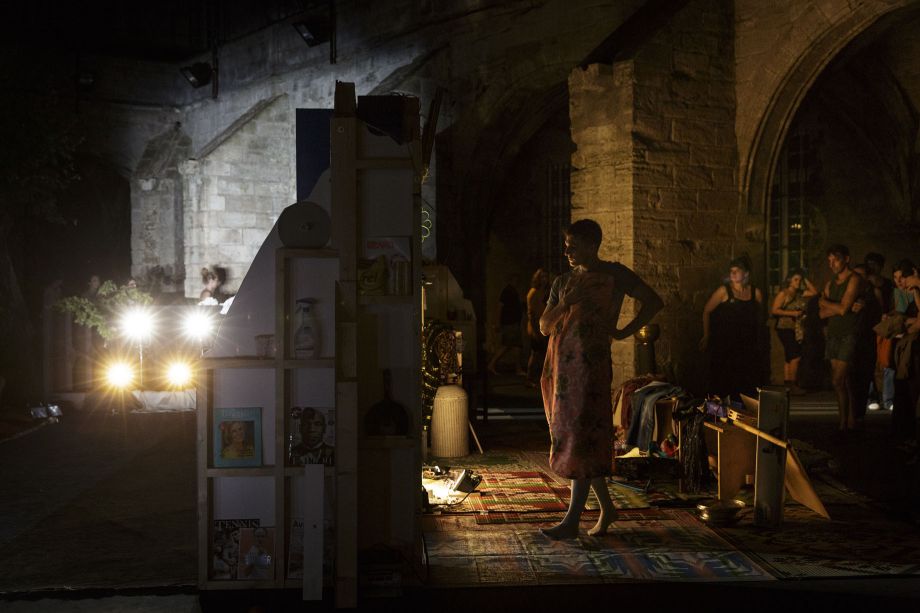
Caen Amour © Christophe Raynaud de Lage
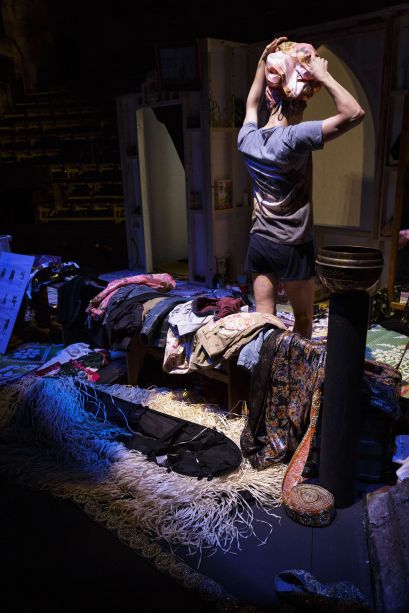
Caen Amour © Christophe Raynaud de Lage
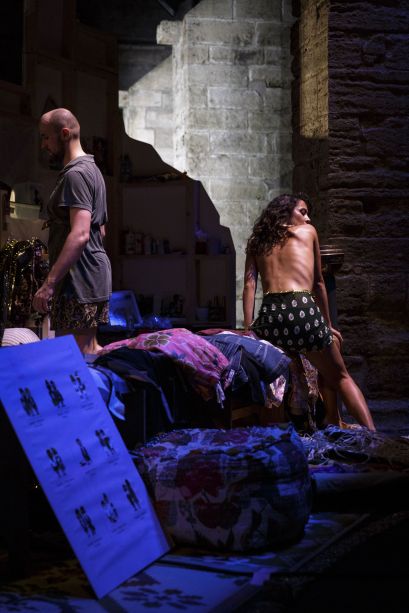
Caen Amour © Christophe Raynaud de Lage
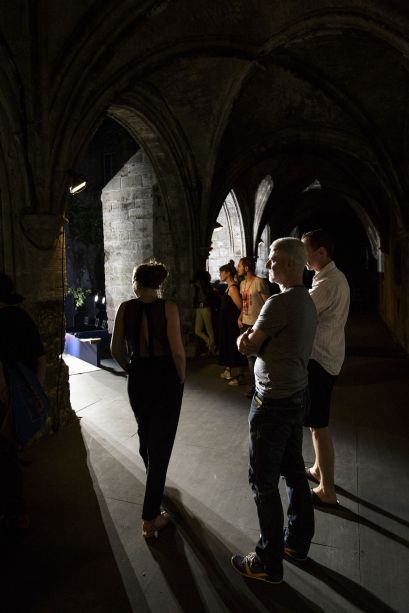
Caen Amour © Christophe Raynaud de Lage
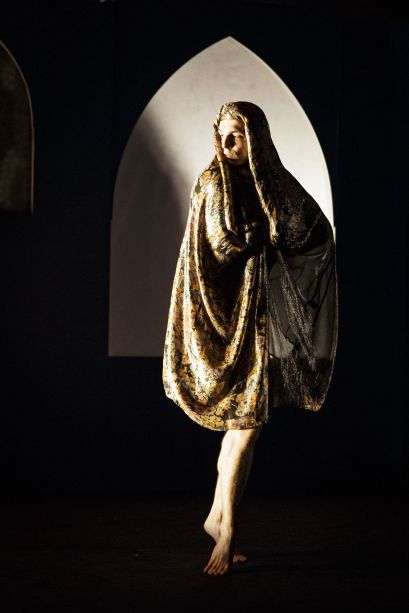
Caen Amour © Christophe Raynaud de Lage
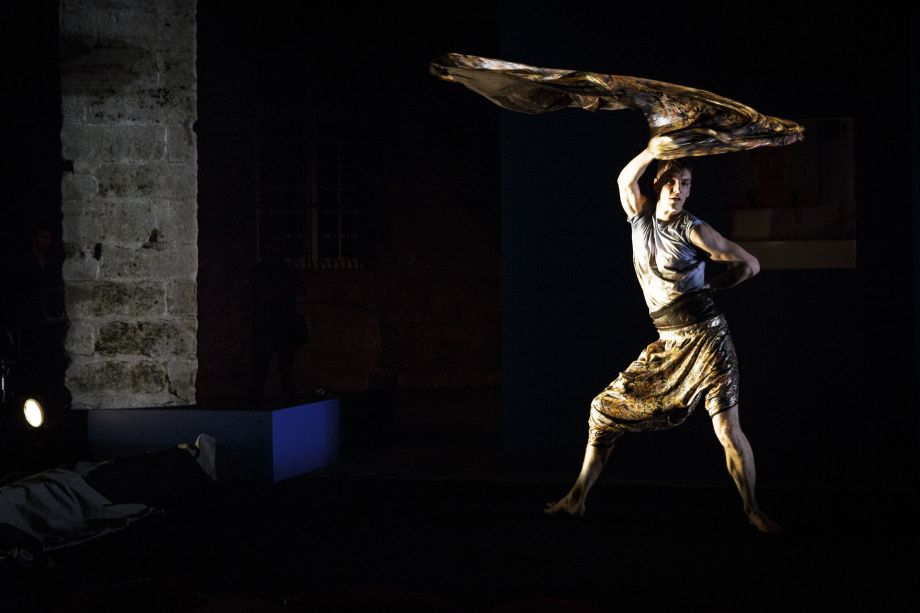
Caen Amour © Christophe Raynaud de Lage
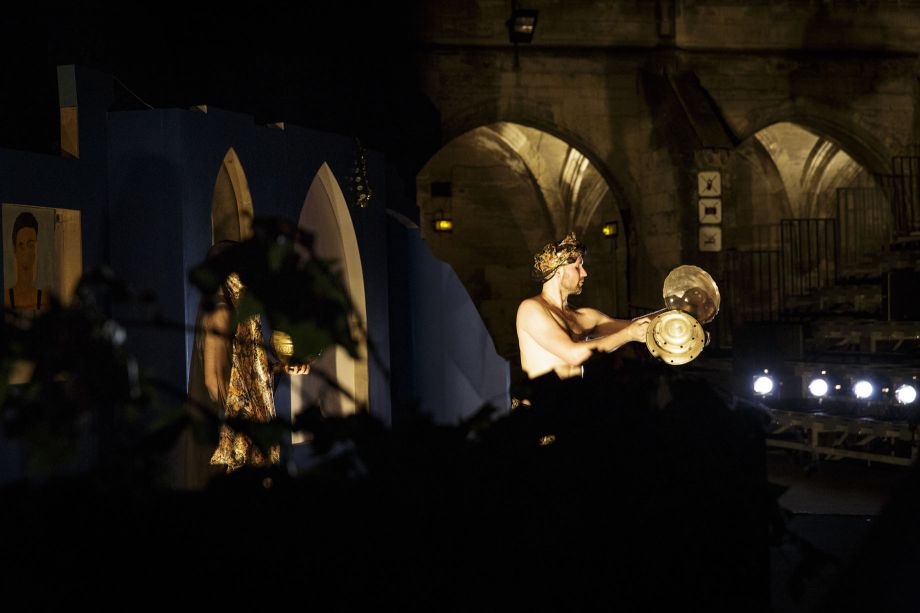
Caen Amour © Christophe Raynaud de Lage
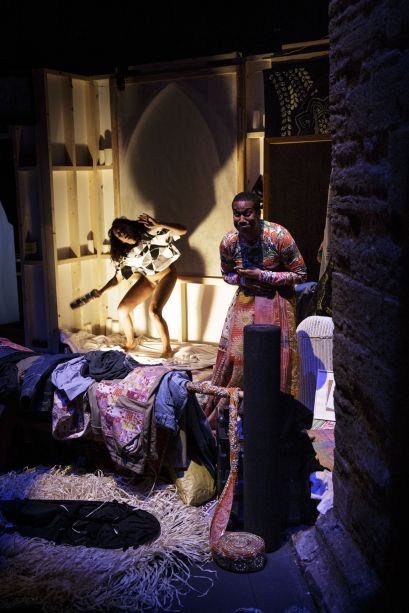
Caen Amour © Christophe Raynaud de Lage
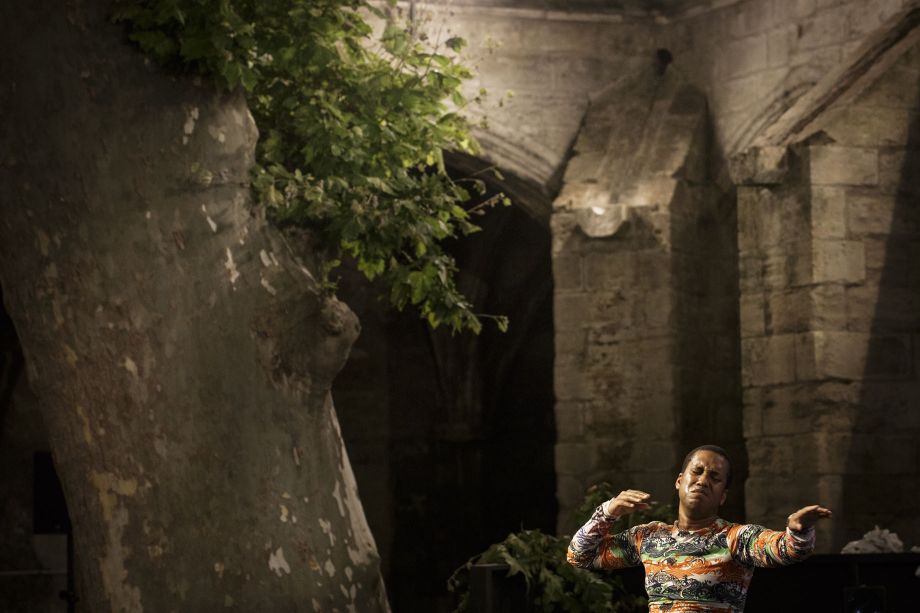
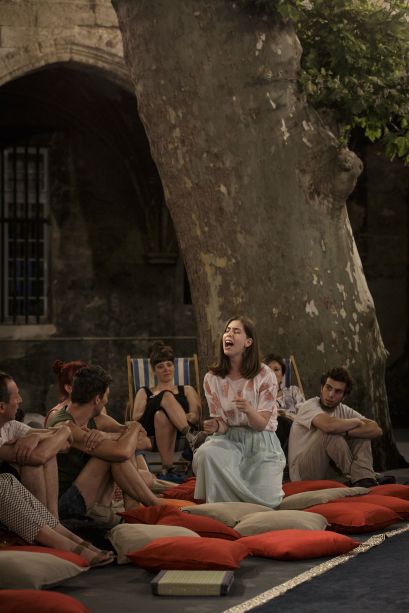
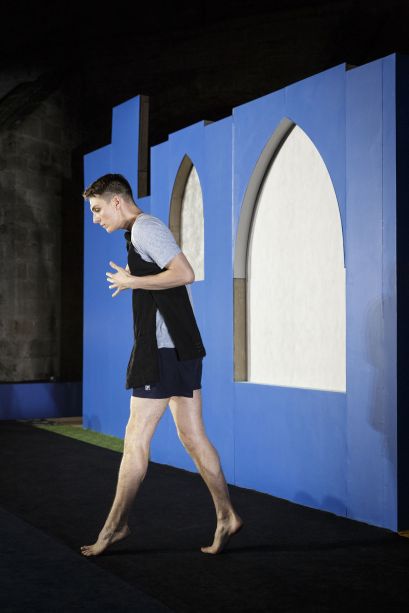
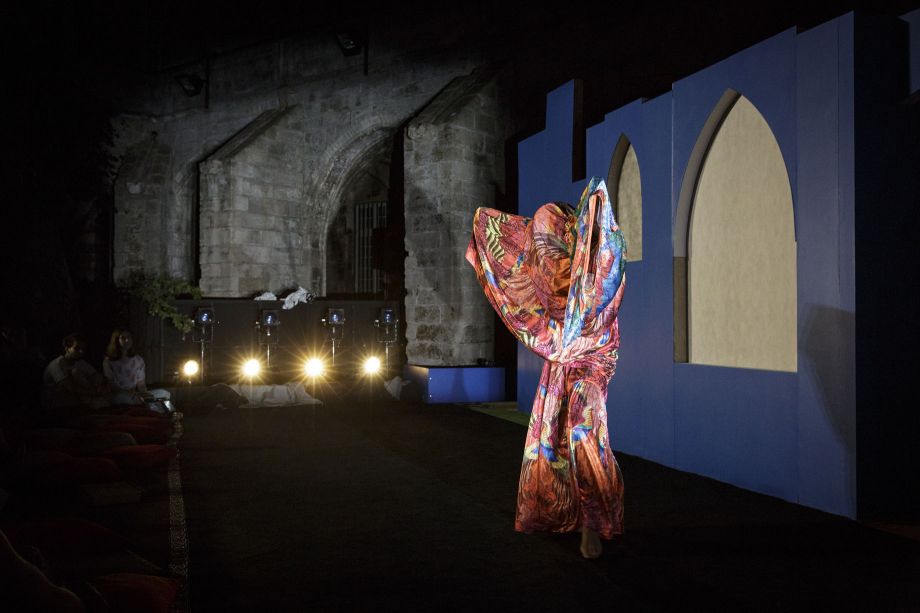
On a set made of pasteboard—is it a doll's house or a paper palace?—four actors roam, turn away, loom, leave, loop back to where they came from... They wear their roles and costumes loose or tight in a circular fashion show, conjuring the ghosts of cowboys, sailors, oriental dancers, and other lascivious or wild figures. Faithful to his project of studying the relationship between artistic and popular practices, between academic, commercial, and protest dances, Trajal Harrell creates an original carousel which makes history resonate and topples stereotypes. Serving both as anchor and destination of the journey is the hoochie coochie, a name out of time for a dance that appeared in the wake of the Philadelphia Centennial Exhibition in 1876, then of the Chicago World's Fair in 1893, where Syrian dancer Little Egypt was a smash hit. For the next century, exotic and sexually suggestive variations have cropped up in itinerant circuses all over the United States; a dance in which the woman, exposed, moves her pelvis and belly, a dance influenced by traditions that may come from the Middle East and Africa, but also from the Romani and Tzigane people, and from East India. But this isn't a documentary, concerned with faithfulness to reality. Trajal Harrell isn't going for a reconstitution, but rather for a sort of collective rambling, in which the audience is invited to participate. A collective rambling influenced by a century of works about sexism, orientalism, colonialism, and gender, with which the choreographer is intimately familiar and which give to his projects all their modernity.
Trajal Harrell
In Caen amour, like in most of his creations, Trajal Harrell willingly crosses the border between the room and the stage, acting as a hyphen between the audience and his own imagination. An imagination that scoffs at distances—be they of chronological, geographical, or cultural nature—weaving links, credible or improbable, between voguing and American postmodern dance (Twenty looks or Paris is burning at the Judson Church), or between French dancer Dominique Bagouet and founder of Butoh Tatsumi Hijikata (The Ghost of Montpellier meets the Samouraï). A graduate of Yale University, the New York choreographer uses the tools of critical thought (in particular research about gender, feminism, and post-colonialism) as well as his own deep knowledge of art and dance history. The result of extensive research, his shows are like so many sensitive, hybrid, and joyful objects that borrow equally from fashion, pop culture, and avant-garde artists. Trajal Harrell has performed all over the world, but he regularly comes back to France, and has worked in particular in Belfort, Montpellier, or Caen, cities whose unexpected exoticism is revealed by the titles of his latest shows.
Choreography, sound Trajal Harrell
Lights Sylvain Rausa
Stage design Jean Stephan Kiss et Trajal Harrell
Dramaturgy Sara Jansen
Costumes Trajal Harrell and perfomers
With Trajal Harrell, Thibault Lac, Perle Palombe, Ondrej Vidlar
Guest Aria Boumpaki
Co-production Kampnagel (Hambourg), Festival Avignon, Théâtre de Fribourg, Arsenic (Lausanne), Gessnerallee Zürich, Institute for Contemporary Art (Boston), Productiehuis Rotterdam, Kaaitheater Bruxelles
With the support of Tanzfond Erbe (Berlin) and Fondation BNP Paribas