based on the novel by Nikolai Gogol
Direction KIRILL SEREBRENNIKOV
Moscow
National Premiere
Representation in Russian with French surtitles.
Running time 2h25
|
W 6 |
T 7 |
F 8 |
S 9 |
S 10 |
M 11 |
T 12 |
W 13 |
T 14 |
F 15 |
S 16 |
S 17 |
M 18 |
T 19 |
W 20 13h |
T 21 13h |
F 22 13h |
S 23 13h |
S 24 |
|
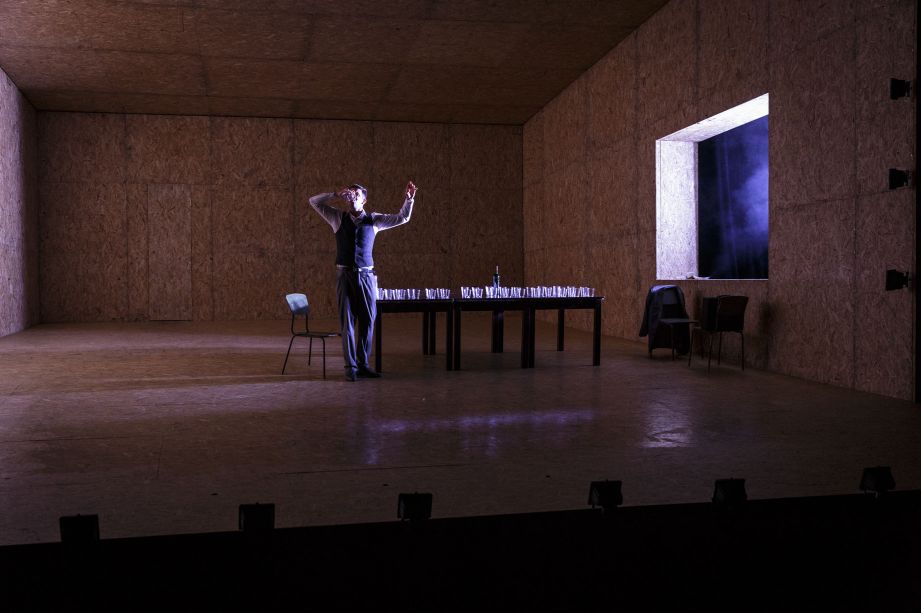
Dead Souls © Christophe Raynaud de Lage
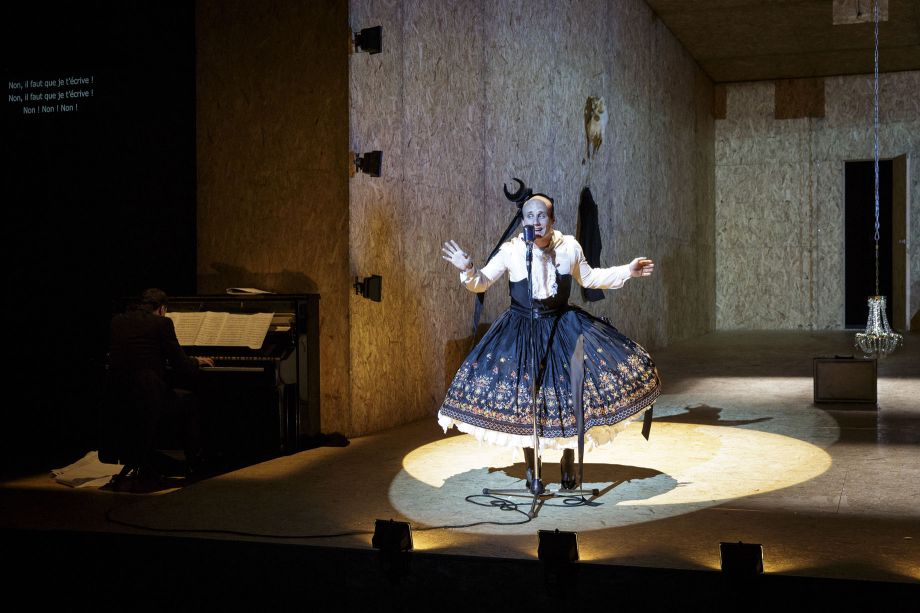
Dead Souls © Christophe Raynaud de Lage
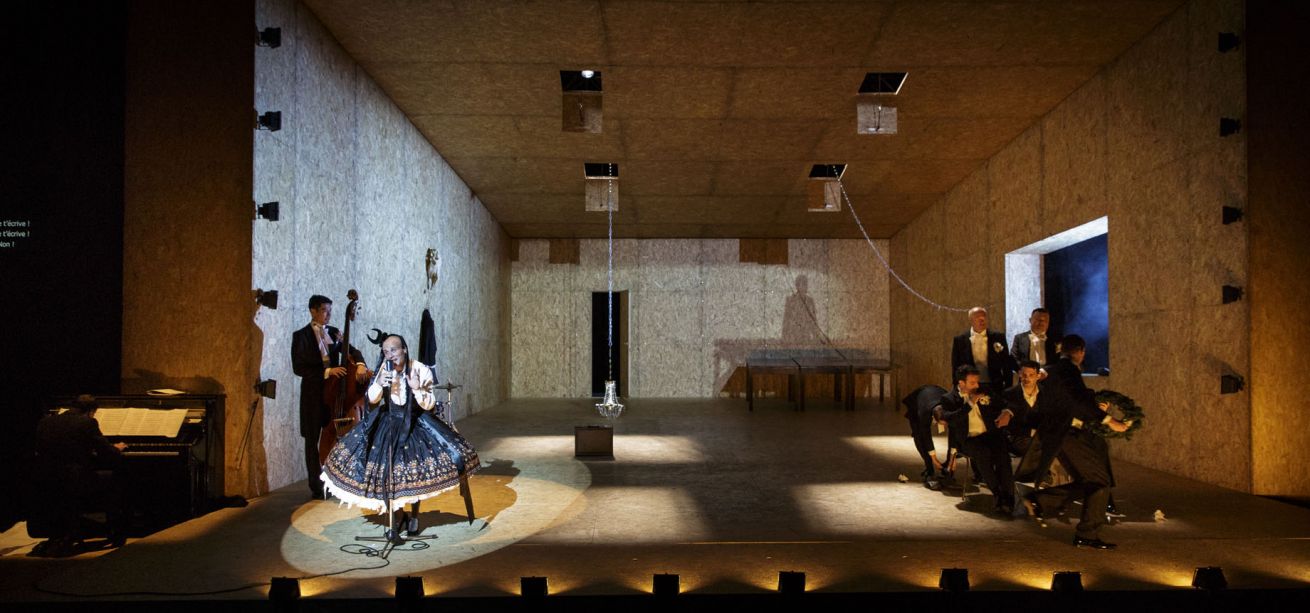
Dead Souls © Christophe Raynaud de Lage
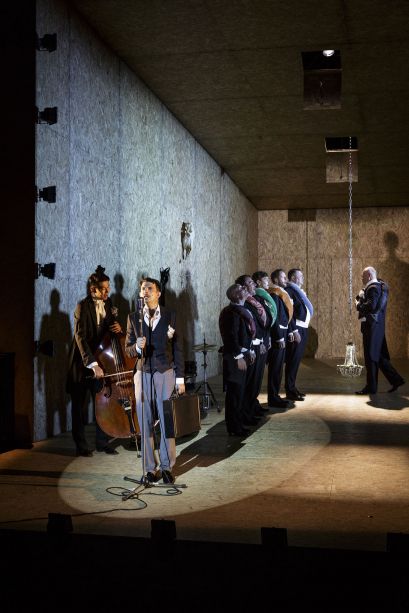
Dead Souls © Christophe Raynaud de Lage
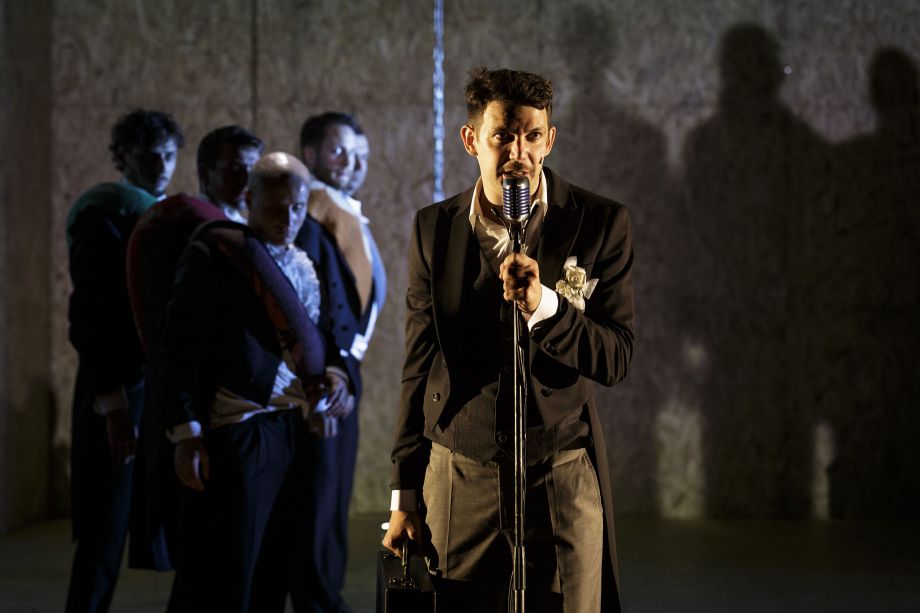
Dead Souls © Christophe Raynaud de Lage
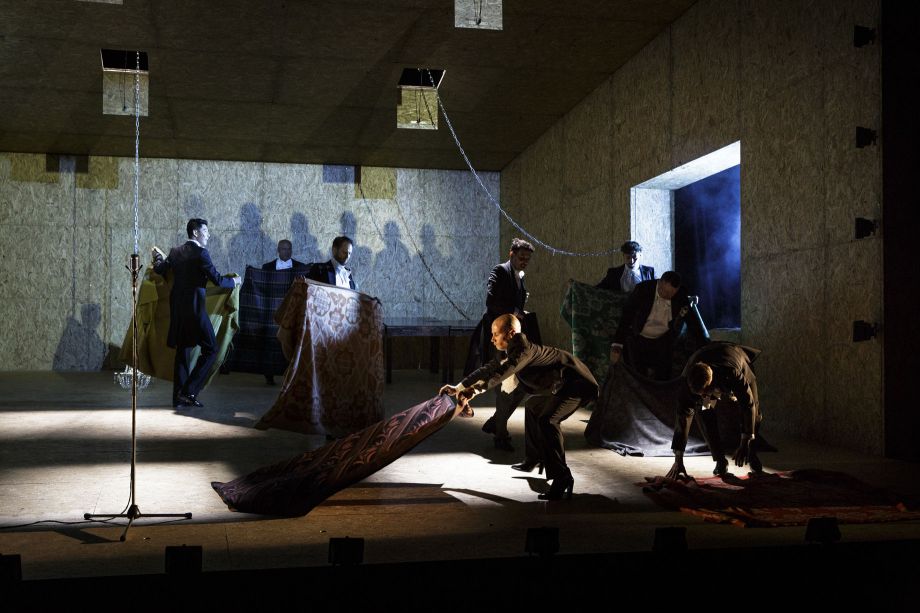
Dead Souls © Christophe Raynaud de Lage
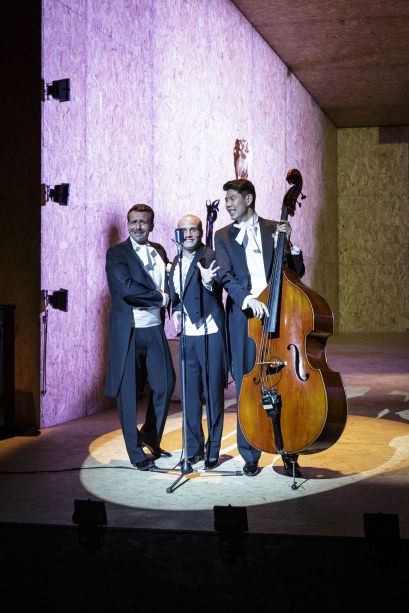
Dead Souls © Christophe Raynaud de Lage
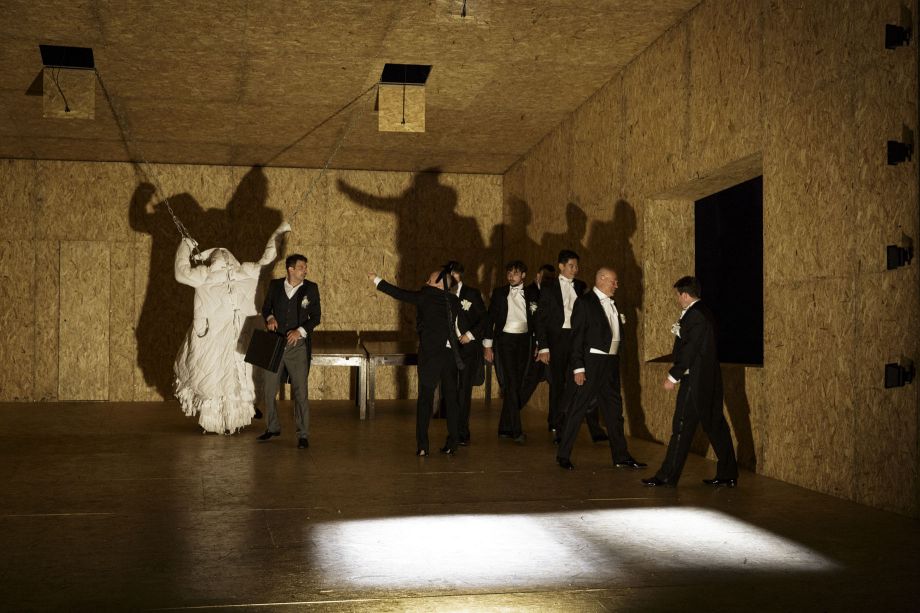
Dead Souls © Christophe Raynaud de Lage
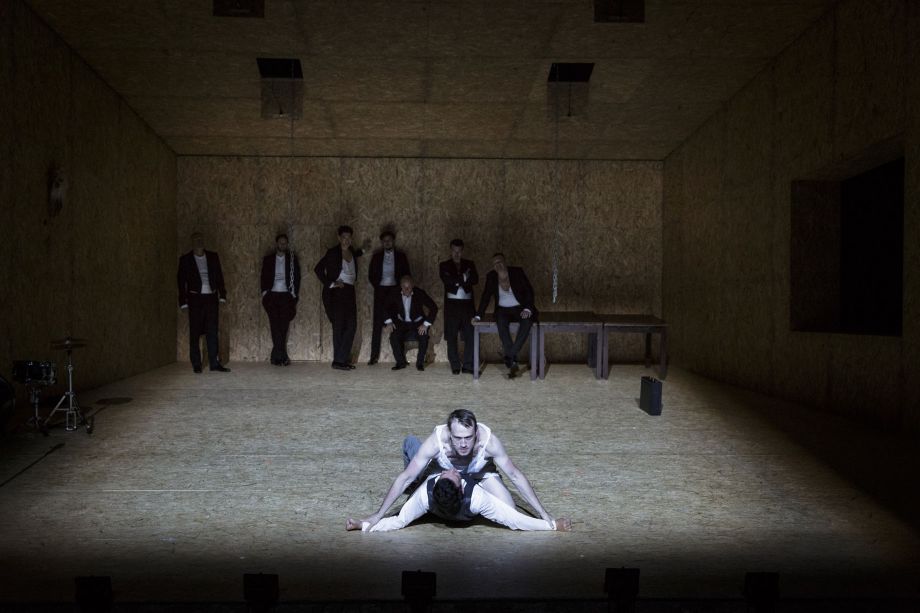
Dead Souls © Christophe Raynaud de Lage
Russia in the 1820s: Chichikov is an ordinary but clever man seeking fortune, who comes up with the unique idea of buying for next to nothing the deeds of property of deceased serfs who haven't been recorded as dead by the administration yet, in order to mortgage them and get a lot more than they are actually worth. Chronicling Chichikov's negotiations and transactions, Nikolai Gogol created a monumental work that takes the form of a portrait gallery whose triviality, at first amusing, soon turns unsettling. The writer seems to be saying that the worst thing about that story isn't that the living speculate on the souls of the dead... but that they all turn out to be corrupted by gambling, alcohol, and greed. Using this historic work, which attracted so much hate that his author disowned it, as a springboard, director Kirill Serebrennikov introduces us to the inhabitants of “N.” against a backdrop of plywood, pointing out the flaws of humanity throughout the ages, in Russia and everywhere else. This plywood box is at once a stage for actors who, like puppets, take on the many roles of the novels, and a wretched coffin for those souls whose interests are so morbid they have lost all vitality. With its dark humour and absurd ensemble, this stage is a space-time where human relationships are doomed never to change.
Kirill Serebrennikov
Kirill Serebrennikov was born in 1969 in Rostov, in southeast Russia. Originally destined to a career in physics, in 1992 he found himself celebrating his graduation in the school theatre. Bitten by the theatre bug, Kirill Serebrennikov began directing several plays shown in Rostov. In 2001, he directed Vassily Sigarev's Plasticine at the Dramatic Art and Direction Center Theater in Moscow. His shows—among which Mark Ravenhill's Some Explicit Polaroids, Maxim Gorky's The Petty Bourgeois, Bertold Brecht's The Threepenny Opera, Mikhail Bulgakov's Zoyka's Apartment, and Shakespeare's Antony and Cleopatra—thereafter played at the Pushkin Drama Theatre, at the Sovremennik Theatre, and at the Moscow Art Theatre. Kirill Serebrennikov has also directed many operas, in particular with the Bolshoi Opera in Moscow, the Mariinsky Theatre in St Petersburg, the Opéra Comique in Berlin and the Staatsoper in Stuttgart. He received an award in 1999 for his work in television (TEFI) and in 2006 for a feature film (Roma film festival); he has also been the artistic director of the Gogol Centre in Moscow since 2012. His show The Idiots, which played at the Festival d'Avignon in 2015, was already about the cruel absurdity of human relationships.
Nikolai Gogol
Born in 1809, Nikolai Gogol wrote many short stories, among which the famous Diary of a Madman, and several plays, including The Government Inspector. His novel Dead Souls, published in 1842 after having been censured and cut by the tsarist regime, is widely considered to be his masterpiece. Celebrated for his talent early in his career, Nikolai Gogol was friends with and inspired great authors like Pushkin and Turgenev, before turning to mysticism after suffering from a deep bout of depression. He died in 1852, acclaimed by many, his books still outlawed by the regime for what they deemed his sarcastic tone towards Russia.
Direction, stage design, costumes Kirill Serebrennikov
Composition Aleksandr Manotskov
Musical direction Arina Zvereva
Lights Igor Kapustin
With Odin Byron, Oleg Guchin, Ilya Kovrizhnykh, Nikita Kukushkin, Andrey Poliakov, Andrey Rebenkov, Evgeny Sangadzhiev, Semen Shteinberg, Mikhail Troynik, Anton Vasyliev
Production Gogol Center (Moscou)
With the support of Culture Departmen of Moscow City, Volnoe Delo Foundation Oleg Deripaska and Onda
Dead Souls by Nikolaï Gogol, translation Henri Mongault, is published by éditions Gallimard, collection Folio.