Direction AMIR REZA KOOHESTANI
Tehran
Representation in Farsi with French and English surtitles.
Focus Middle East
Running time 1h10
|
W 6 |
T 7 |
F 8 |
S 9 |
S 10 |
M 11 |
T 12 |
W 13 |
T 14 |
F 15 |
S 16 |
S 17 |
M 18 |
T 19 |
W 20 |
T 21 13h |
F 22 13h |
S 23 13h |
S 24 13h 18h |
|
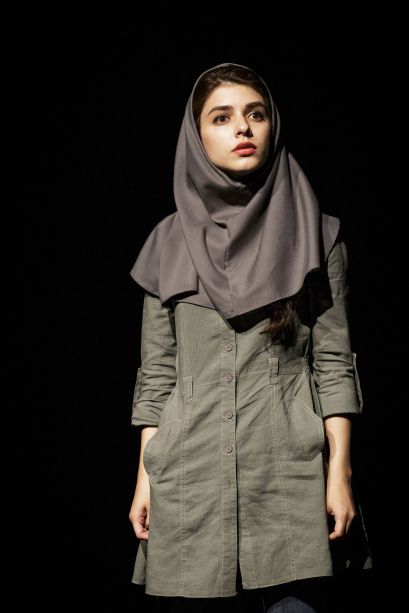
Hearing © Christophe Raynaud de Lage
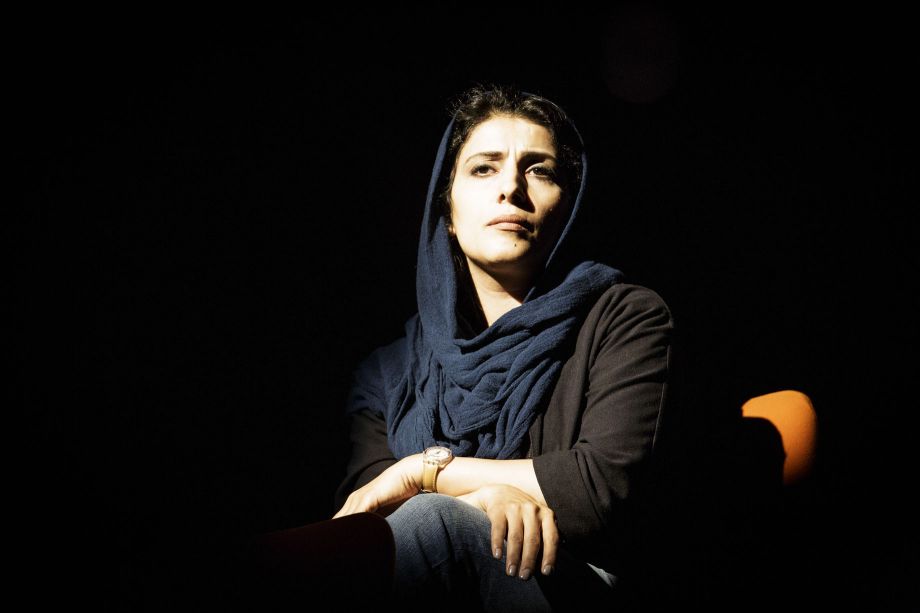
Hearing © Christophe Raynaud de Lage
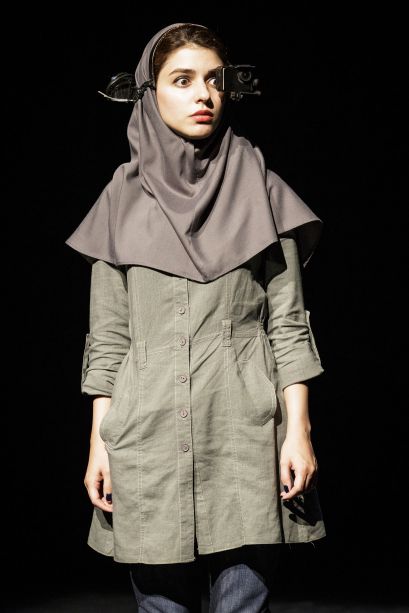
Hearing © Christophe Raynaud de Lage
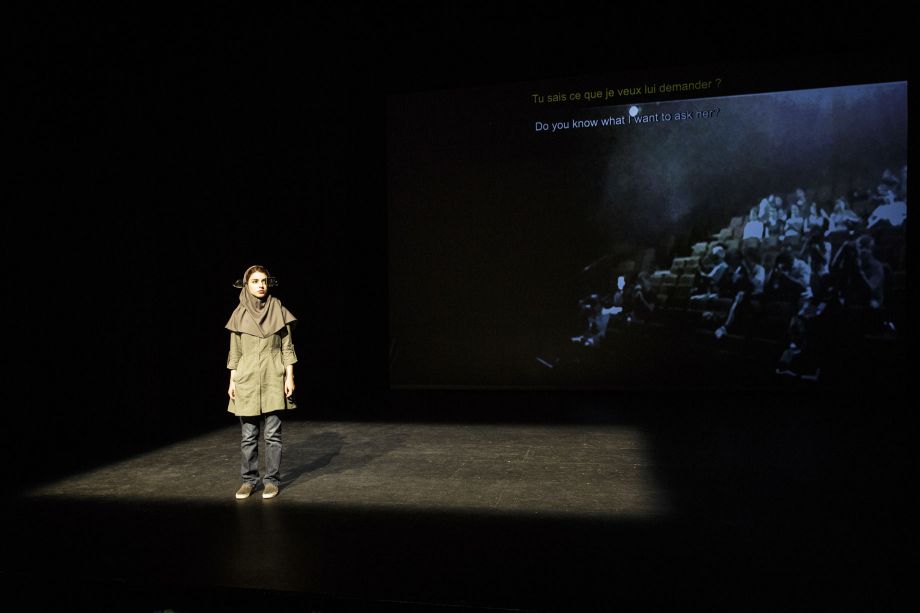
Hearing © Christophe Raynaud de Lage
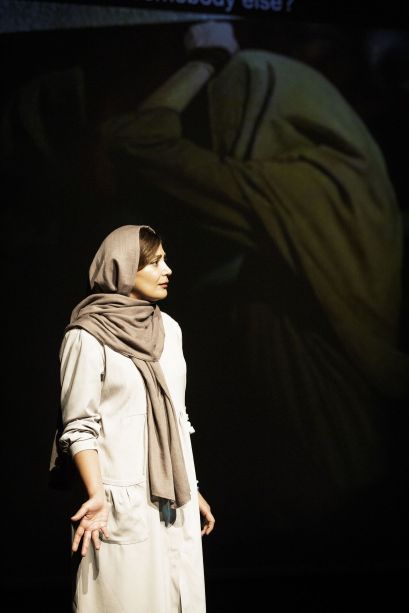
Hearing © Christophe Raynaud de Lage
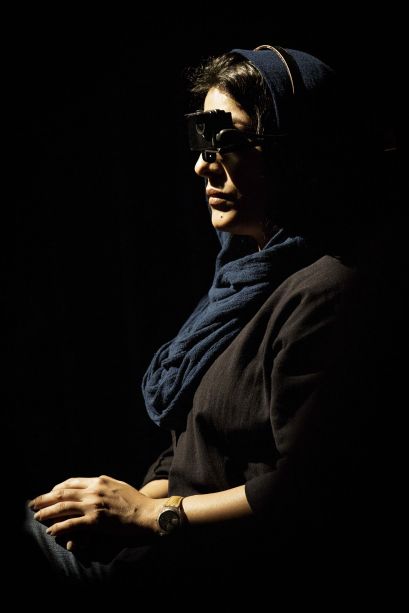
Hearing © Christophe Raynaud de Lage
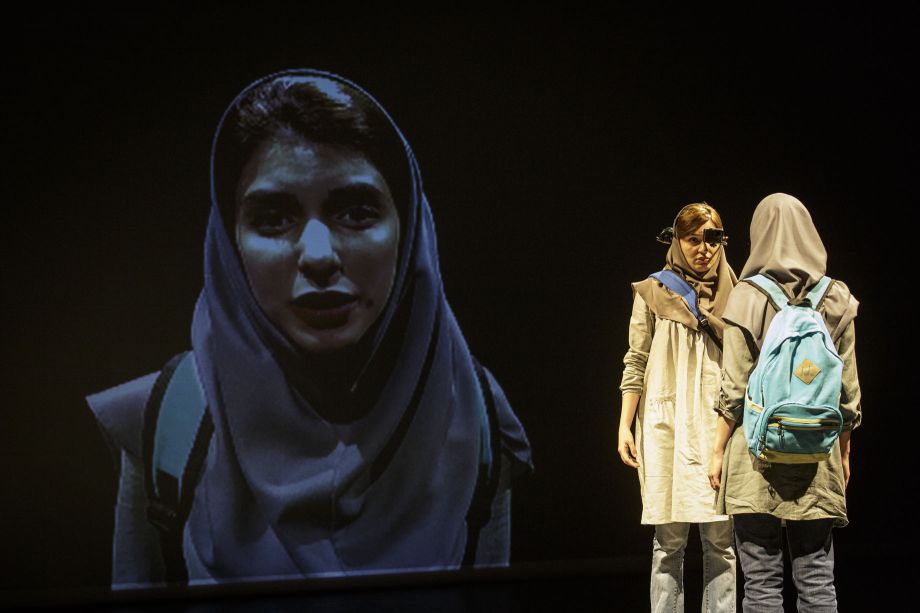
Hearing © Christophe Raynaud de Lage
Every time she rides her bike, Samaneh thinks of Neda. Neda who, in her freedom, would hurtle down the still-deserted streets of Tehran; Neda who won't come back from her exile in Sweden. She thinks back on that New Year's Eve when, stuck in the girls' dorm at her university, she thought she heard a man's laughter coming from Neda's room. Was it a real voice, there alongside her friend she thought was alone, or one conjured by her own adolescent fantasies? Too late. The rumour of what was an absolute transgression spread like wildfire. A report was made to the dorm's prefect. For the past twelve years, Samaneh has relived over and over again the interrogation to which she was subjected, has dwelt on those answers she can no longer change, and relived this “nightmare of a woman trapped by guilt.” A subconscious sanction that Amir Reza Koohestani, in this chiaroscuro work, highlights with a blue line that refuses to go away. That voice is also the dramatic engine of the play. It's the subjective camera of the Iranian director that explodes the spatial limitations of the theatre and the sensory ones of the representation; a subtle journey through the elliptic but universal waters of the unsaid, where private and social currents meet, and the dull violence of a life defined by taboos gushes out.
Amir Reza Koohestani
Amir Reza Koohestani is sixteen when he meets writer Amin Faghiri, who makes him read Céline and Dostoyevsky. A member of the Iranian Youth Cinema Society, he thus discovers his passion for writing, which leads to the publication of his first short stories in newspapers in his hometown of Shiraz. At age eighteen, while attending a show about the trauma of the Iran-Iraq war, he becomes fascinated by the actors who, performing in a park, don't hesitate to engage the audience. He joins the Mehr Theatre Groupe and soon starts writing. His first play, And the Day Never Came, was never performed, not having been approved by the Ministry of Culture and Islamic Guidance. Breaking away from the naturalistic and declamatory style popular in Iran, his following plays are noticed for their poetic style that explores, with a critical symbolism, the everyday life of characters caught up in the turmoil of their environment. After a stay in Manchester, where he studied documentary theatre, Amir Reza Koohestani returned to Tehran, where his creations have made him a major actor of the resurgence of theatre in his country, but also in Europe, where he is regularly celebrated.
Text, direction and stage design Amir Reza Koohestani
Video Ali Shirkhodaei
Music Ankido Darash, Kasraa Paashaaie
Lights Saba Kasmaei
Costumes and props Negar Nemati
Assistants director Mohammad Reza Hosseinzadeh, Mohammad Khaksari
With Mona Ahmadi, Ainaz Azarhoush, Elham Korda, Mahin Sadri
Production Mehr Theatre Group
Co-production La Bâtie Festival de Genève, Künstlerhaus Mousonturm Frankfurt am Main, BOZAR Centre for Fine Arts Brussels
In partnership with RFI, France 24 and Monte Carlo Doualiya