
Direction RAOUL COLLECTIF
Brussel
National Premiere
Running time 1h20
|
W 6 |
T 7 |
F 8 |
S 9 |
S 10 |
M 11 |
T 12 |
W 13 |
T 14 |
F 15 |
S 16 |
S 17 20h |
M 18 20h |
T 19 20h |
W 20 20h |
T 21 |
F 22 20h |
S 23 20h |
S 24 |
|
Rumours and daybreaks © Christophe Raynaud de Lage
Rumours and daybreaks © Christophe Raynaud de Lage
Rumours and daybreaks © Christophe Raynaud de Lage
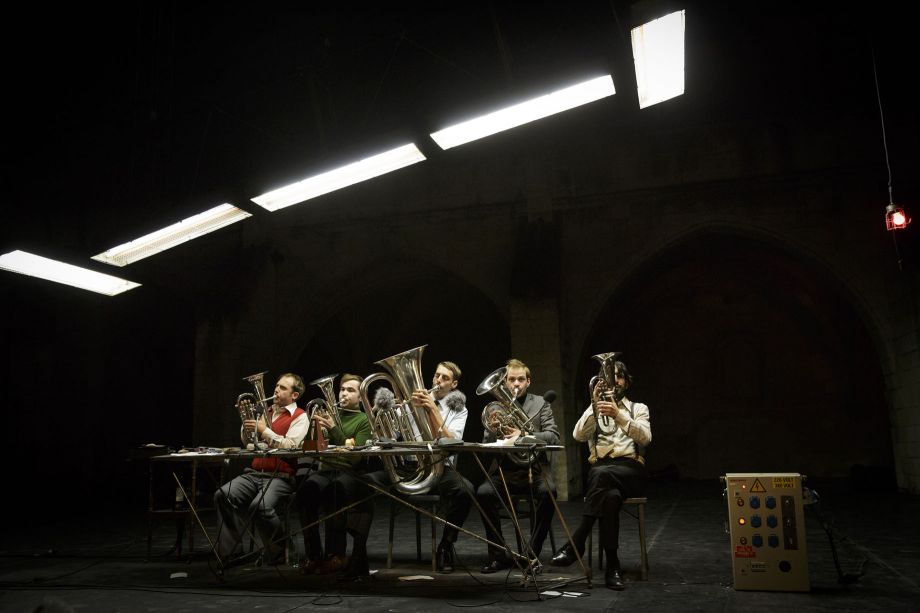
Rumours and daybreaks © Christophe Raynaud de Lage
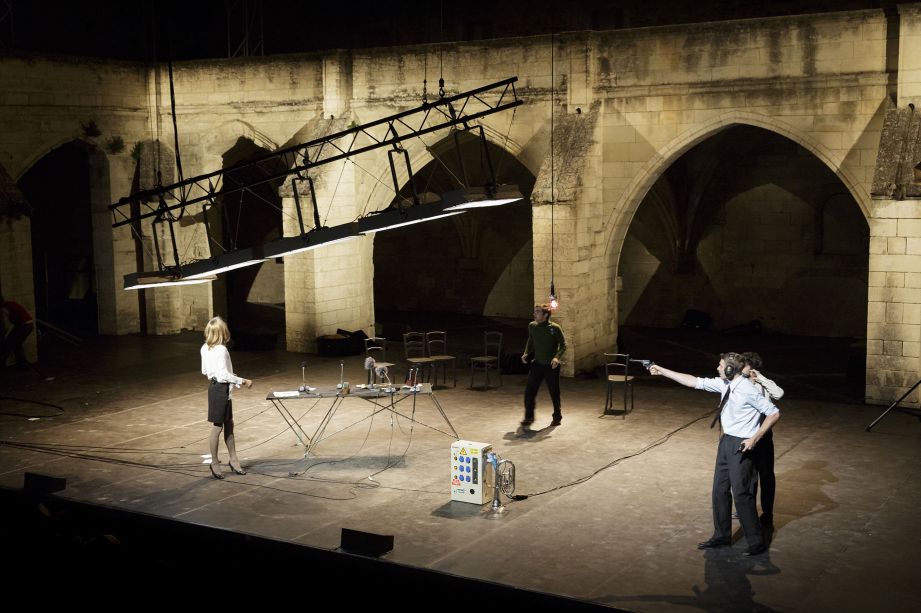
Rumours and daybreaks © Christophe Raynaud de Lage
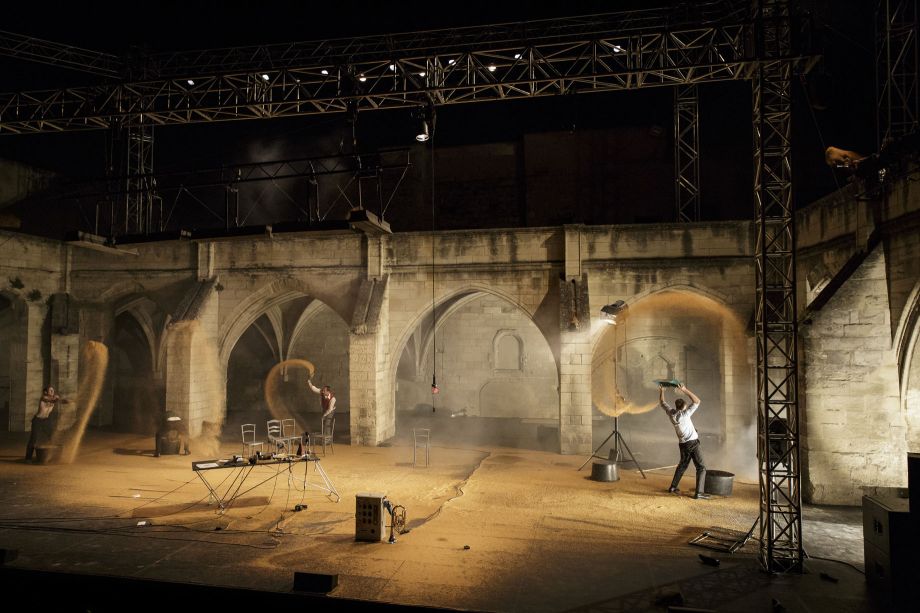
Rumours and daybreaks © Christophe Raynaud de Lage
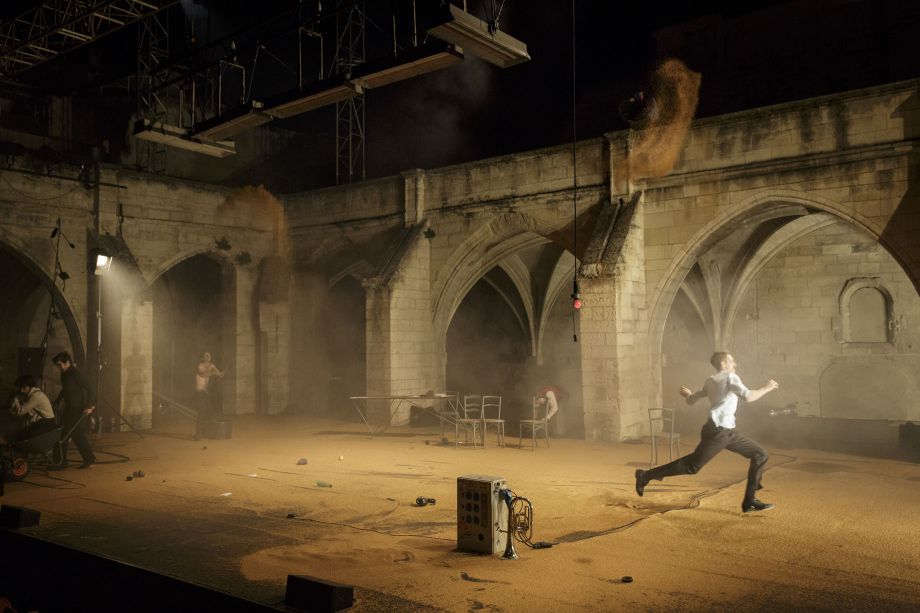
Rumours and daybreaks © Christophe Raynaud de Lage
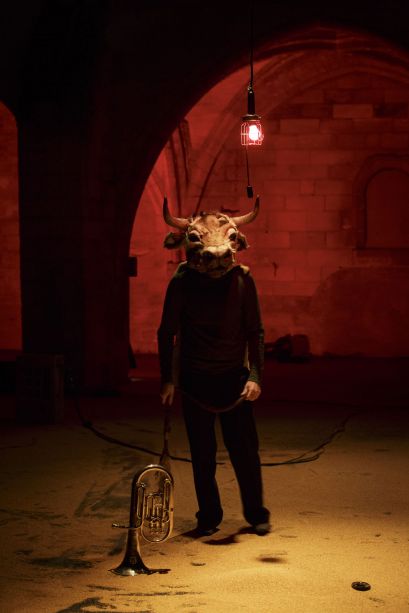
Rumours and daybreaks © Christophe Raynaud de Lage
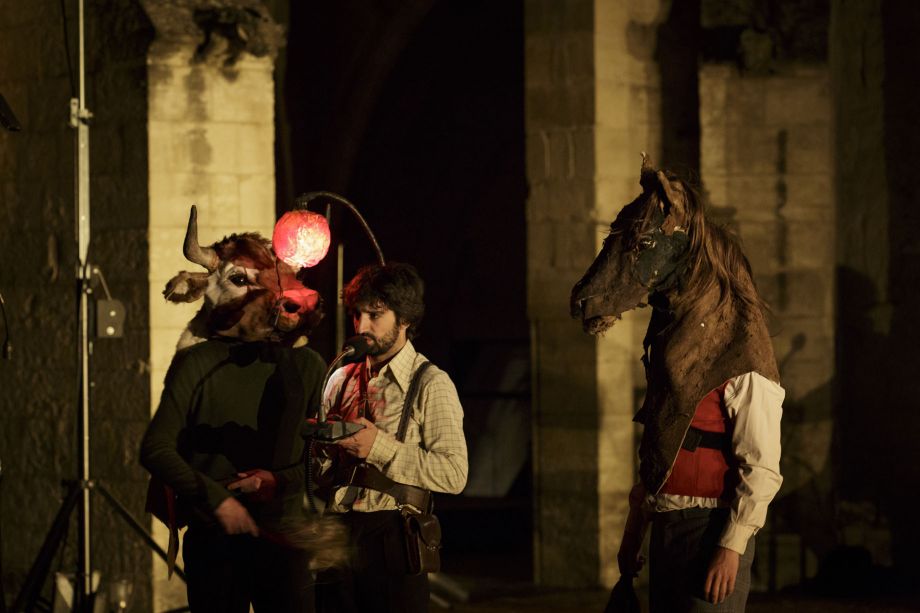
Rumours and daybreaks © Christophe Raynaud de Lage
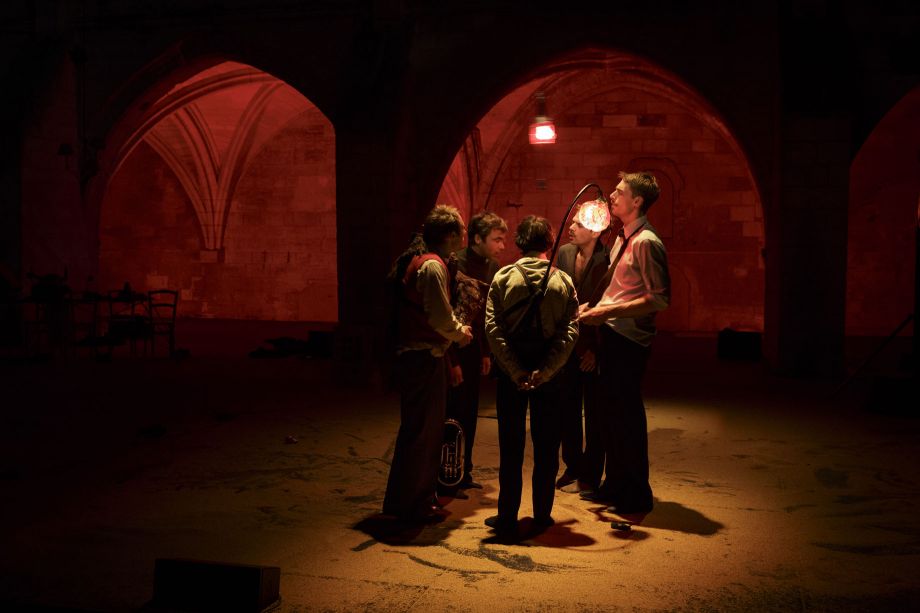
Rumours and daybreaks © Christophe Raynaud de Lage
© Bachibouzouk- France Télévisions -Festival d’Avignon-Festival d’Aix -2016
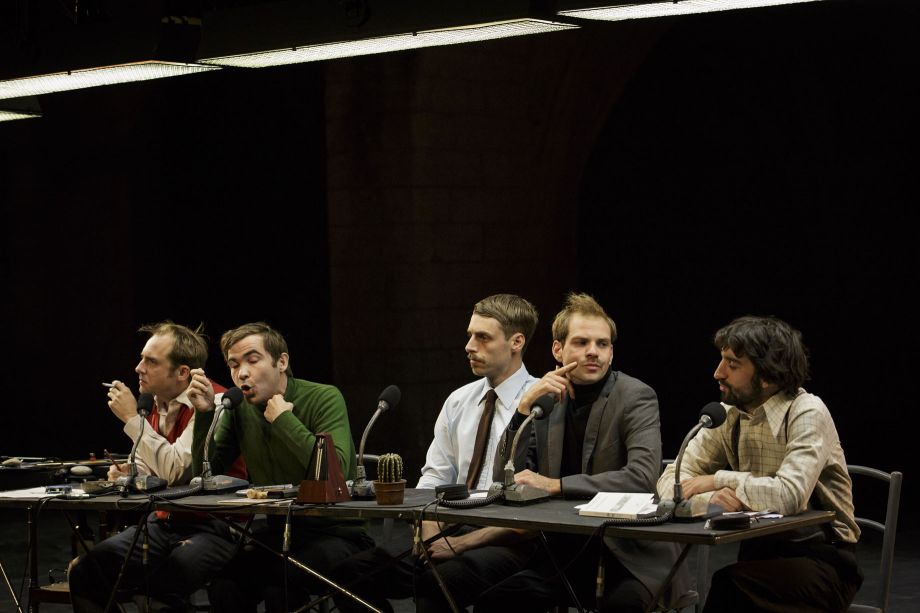
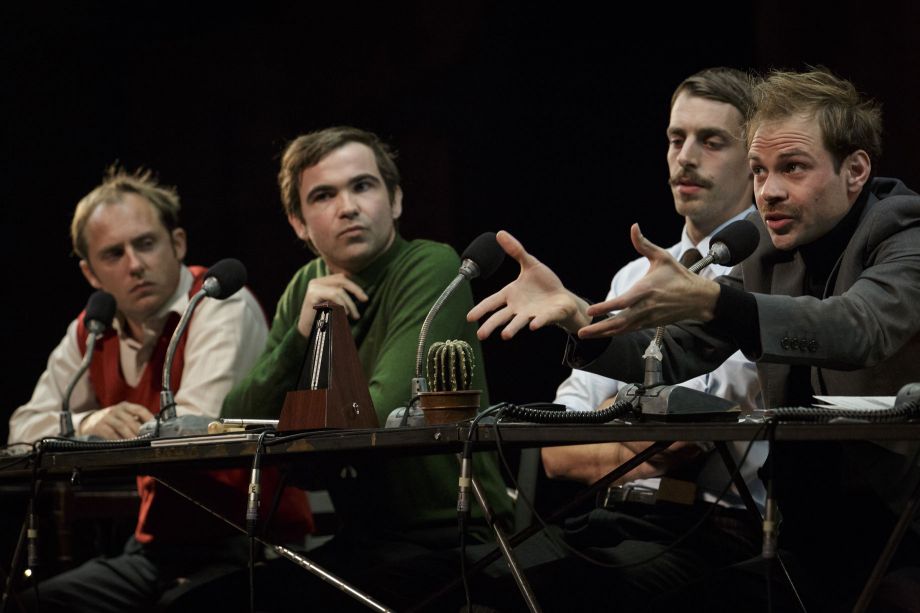
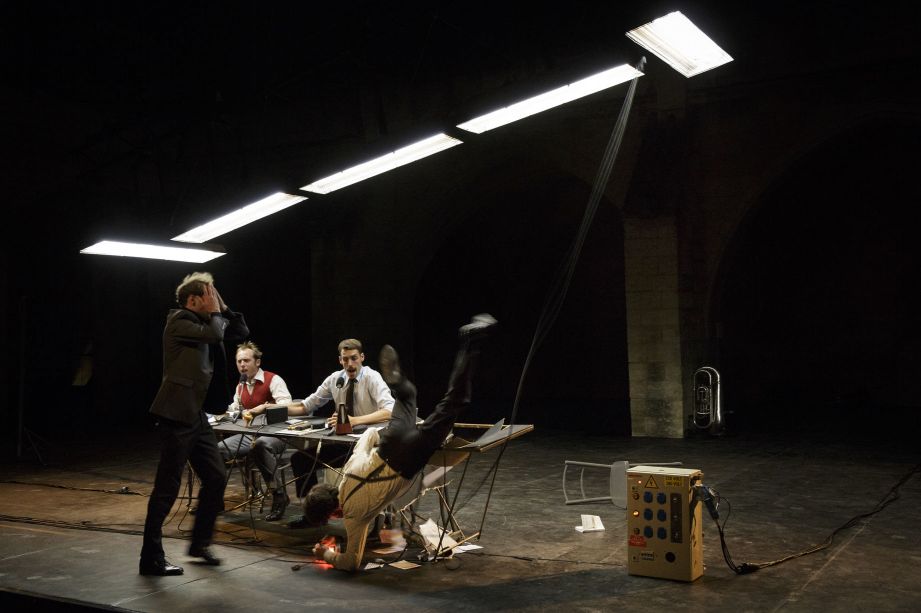
The show's on in three minutes. The audience is getting ready. Technicians are busy setting up. Relaxed, the commentators of Epigraph sit down behind their microphones. Smoking a cigarette, one of them plays the programme's opening music, an old swing number. Three, two, one... “For want of sun, learn how to ripen in the snow”: such is the topic of the last episode of the show, which has just been brutally cancelled. Sensing that the set is about to fall apart around them, that the lights will go crazy and dim, the commentators nonetheless begin a new debate. Each in their own way, they will challenge the neoliberal ideology that has just taken them off the air, in a final assault of poetic thinking, with more than a little self-deprecation. A weapon that could by itself destroy that doctrine—articulated in the 1950s by the Mont Pelerin Society—and its provocative slogan, “There is no alternative,” an “argument from terror that disqualifies any other worldview.” From Henri Michaux to the Huichol people, the various inspirations of this Belgian quintet lead them into a situationist reflection on the world. Arguing that the time and moments spent together are essential, and that humour and deep thinking aren't antithetical, the Raoul Collectif give us with their second play a hilarious show about aesthetics and politics, about the collective reappropriation of power through language and imagination.
Raoul Collectif
Romain David, Jérôme de Falloise, David Murgia, Benoît Piret, and Jean-Baptiste Szézot met at the l'École supérieure d'acteurs du Conservatoire, in Liège. Although they didn't attend the same classes, they worked together on a single project, having been given carte blanche to choose their partners and pick their subjects and methodology. They came up with a short form, Voyage d'hiver (Winter Trip, 2008), which played student festivals, then at the Théâtre national in Brussels, before hopping the linguistic border to play in Flemish-speaking Flanders. Brought together by their desire for theatre, they decided to continue this adventure without waiting for all of them to graduate and started working on their first show, Le signal du promeneur (The Sign of the Walker, 2012), before founding their own structure. Based around “the strength of the group and eruptions of individual brilliance,” the Raoul Collectif is created “like a cry out of childhood,” claiming with one voice that “in a world bent on its own destruction, to create is the only way not to destroy oneself with it.” Rumeur et petits jours is the company's second show.
Design Raoul Collectif
Costumes Natacha Belova
Lights Philippe Orivel
Sound Julien Courroye
Assistant director Yaël Steinmann
With Romain David, Jérôme de Falloise, David Murgia, Benoît Piret, Jean-Baptiste Szézot
Production Raoul Collectif
Co-production Théâtre national de Bruxelles, Théâtre de Namur, Théâtre de Liège and le Manège.Mons.
With the support of Fédération Wallonie-Bruxelles, Wallonie-Bruxelles International, Zoo Théâtre and la Chaufferie Acte 1