

by Georg Kaiser
Direction THOMAS JOLLY
with École supérieure d'art dramatique du Théâtre national de Strasbourg
Strasbourg
Creation 2016
Running time 1h45
|
W 6 |
T 7 |
F 8 |
S 9 |
S 10 |
M 11 |
T 12 |
W 13 |
T 14 |
F 15 |
S 16 |
S 17 13h |
M 18 13h 18h |
T 19 13h 18h |
W 20 13h |
T 21 |
F 22 |
S 23 |
S 24 |
|
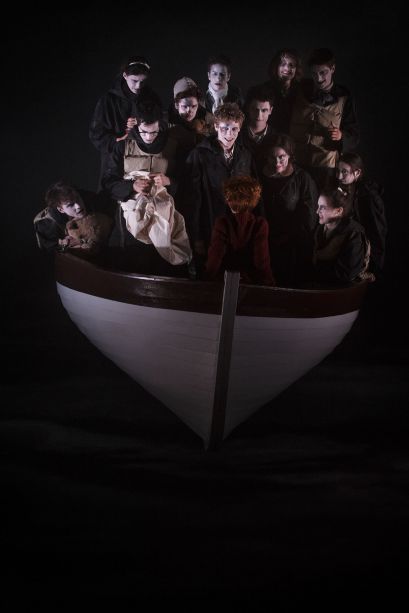
The Raft of the Medusa © Christophe Raynaud de Lage
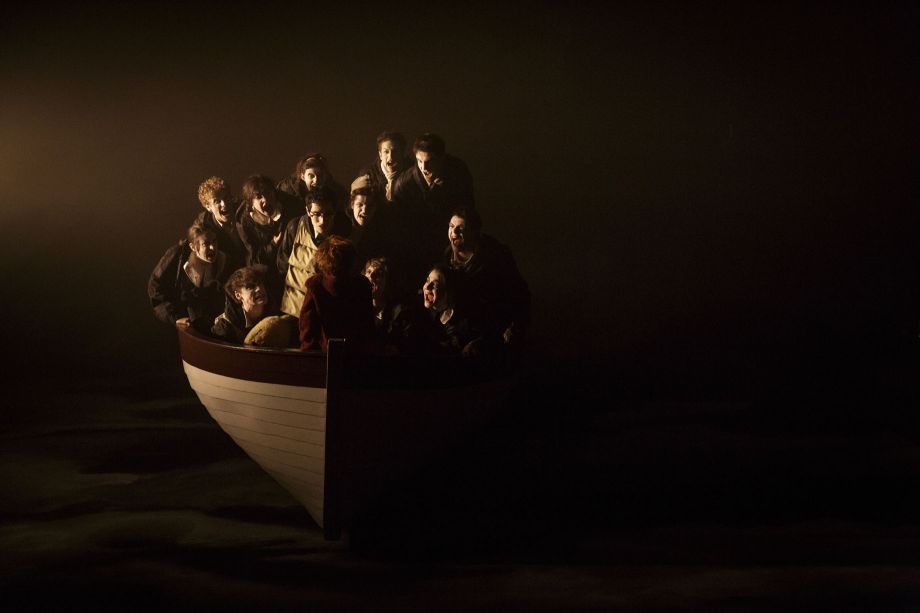
The Raft of the Medusa © Christophe Raynaud de Lage
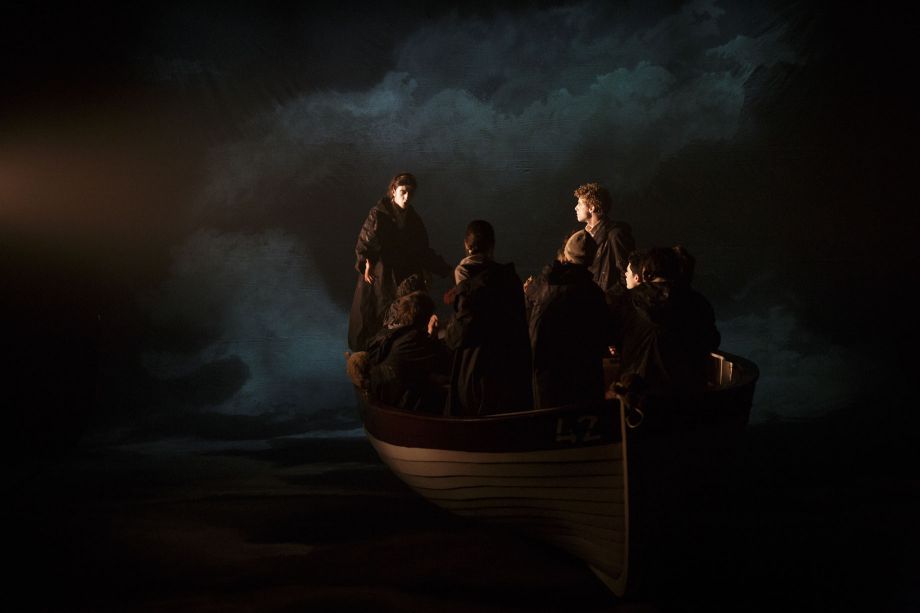
The Raft of the Medusa © Christophe Raynaud de Lage
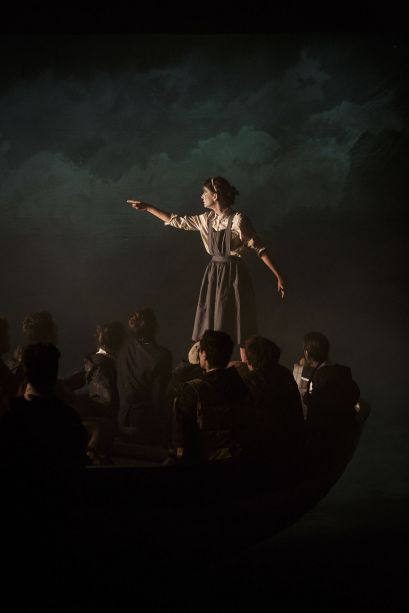
The Raft of the Medusa © Christophe Raynaud de Lage
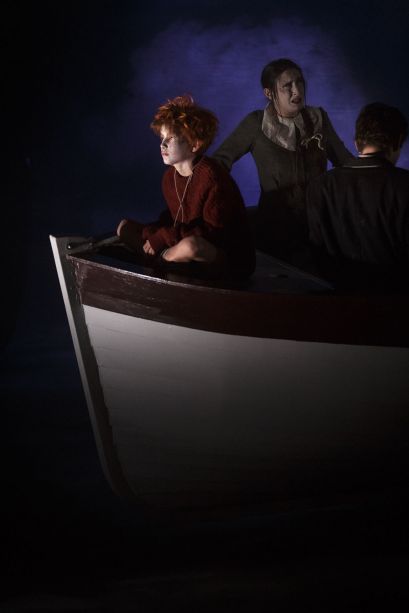
The Raft of the Medusa © Christophe Raynaud de Lage
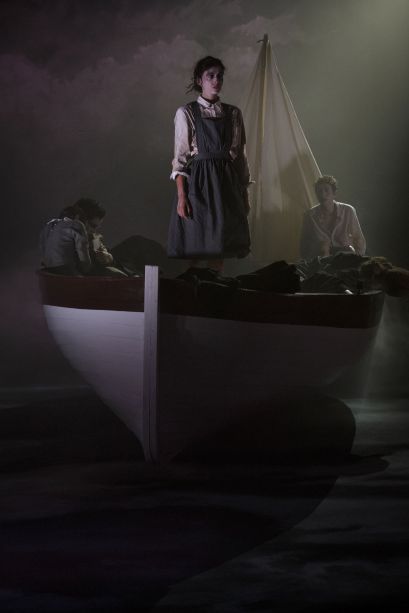
The Raft of the Medusa © Christophe Raynaud de Lage
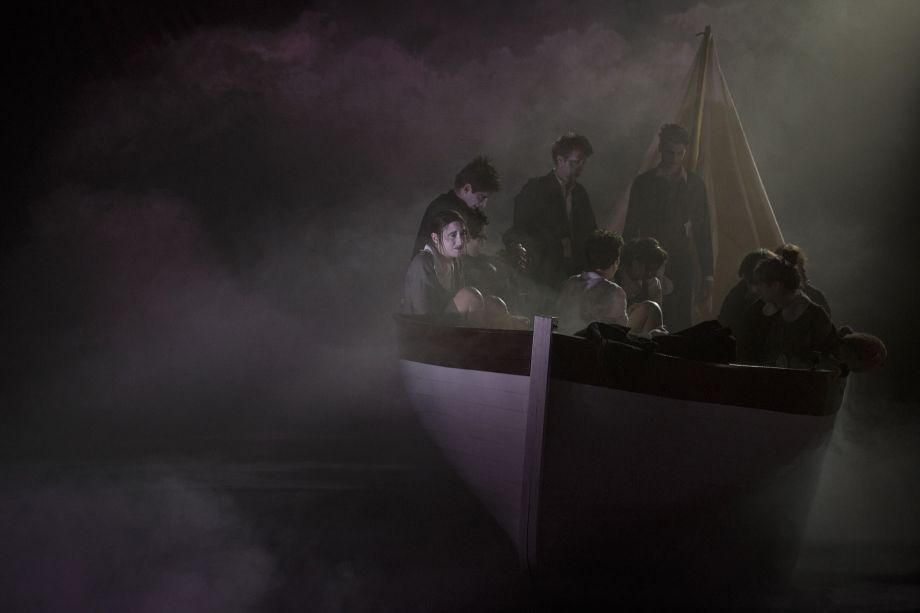
The Raft of the Medusa © Christophe Raynaud de Lage
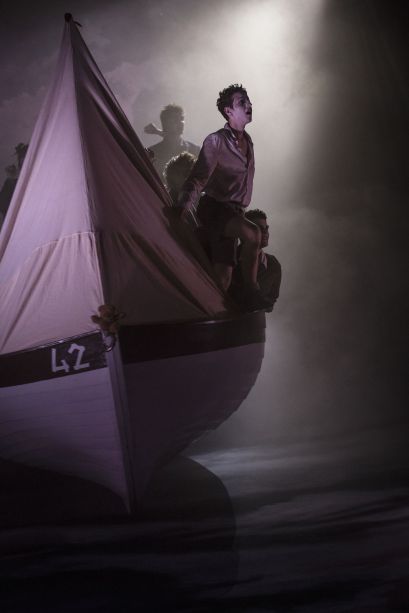
The Raft of the Medusa © Christophe Raynaud de Lage
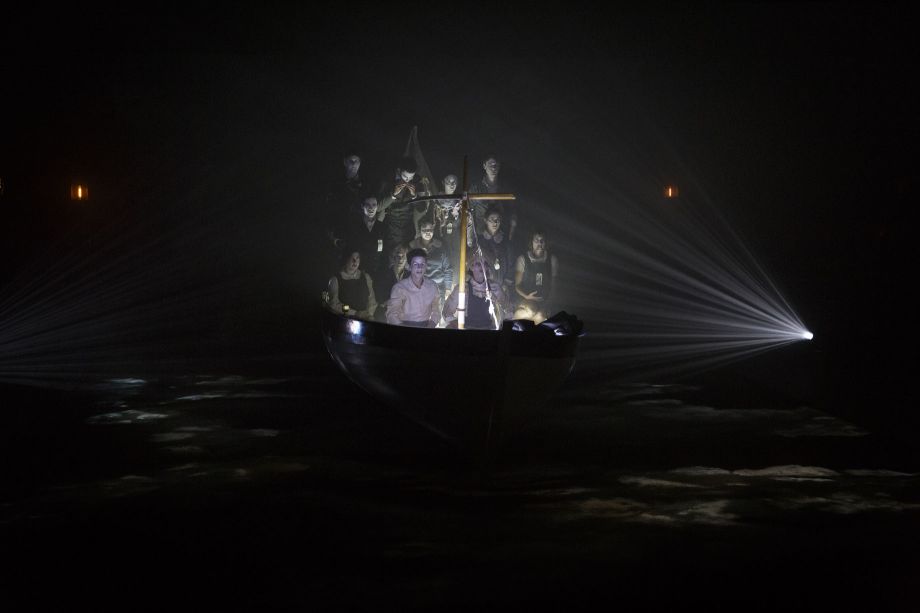
The Raft of the Medusa © Christophe Raynaud de Lage
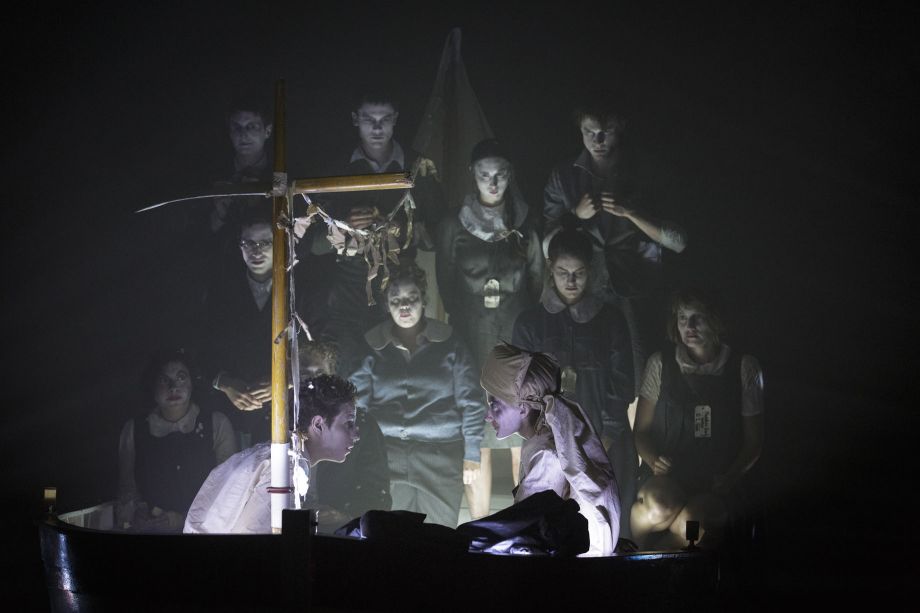
The Raft of the Medusa © Christophe Raynaud de Lage
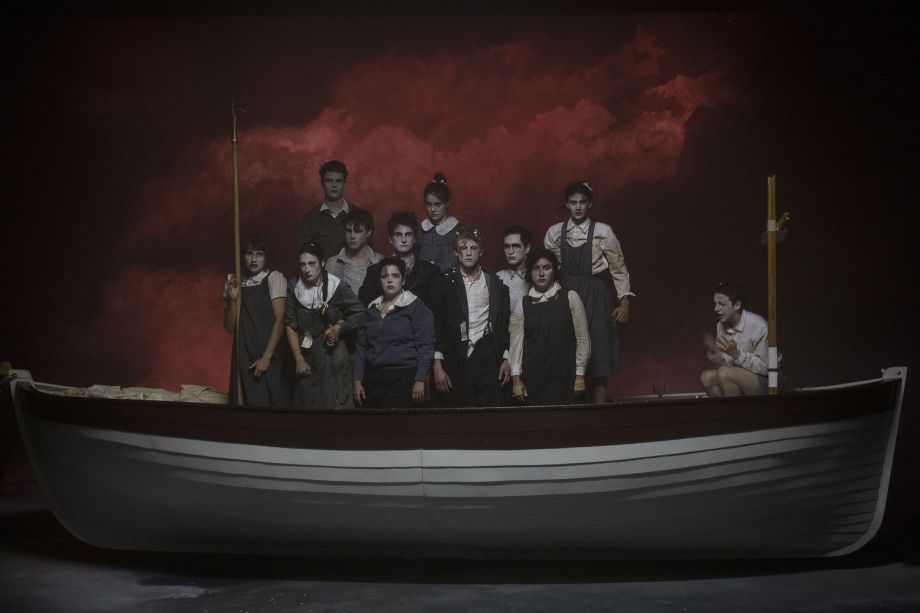
The Raft of the Medusa © Christophe Raynaud de Lage
Thirteen children on a makeshift raft; thirteen children fleeing the violence of the adults, the violence of war that forced them to leave their country and made them castaways. If Georg Kaiser based his play on a tragic real story from World War II—the torpedoing of a British vessel carrying children to America—it wasn't to do documentary theatre, to work on reality in a world made of fiction, but to delve into the heart of human contradictions. What could be worse than to see children act more and more like the adults they fled? Threatened in their very existence and trying desperately to survive, they will protect themselves by killing one of their own... By choosing this text whose characters are children for the young actors of the École du Théâtre national of Strasbourg, Thomas Jolly started a new collective adventure. “Their energies, their anger, their ideas, their singularities, their desires” are at stake in this claustrophobic play set in the middle of the ocean, and work to denounce the indoctrination tactics that lead to an incredibly violent exclusion mechanism. For after trying to create an egalitarian society based on brotherhood, it will only take those children seven days to slowly slide into barbarism. Seven days in the lives of a group of children on a raft who play at becoming adults and reluctantly do, a tragedy at once ancient and so achingly modern.
Thomas Jolly
After taking drama classes at the Jeanne d'Arc secondary school in Rouen, Thomas Jolly enrolled into the school of the Théâtre national de Bretagne in Rennes, where he met his future partners-in-crime. Together, they created the company La Piccola Familia (2006), wishing to offer a theatre that would be “challenging, popular, and festive,” a theatre open to all kinds of audiences. His artistic theatre, proud of its artisanal roots and which refuses to hide the artifices and tricks it uses, rejects the standardisation of cultural objects and facile nods to a fake conception of modernity. Thomas Jolly cut his teeth as a director on an adaptation of Marivaux's Arlequin poli par l'amour (Harlequin, Refined by Love), which he followed with Sacha Guitry's Toâ—which was awarded the audience award at the Festival Impatience 2009—and Mark Ravenhill's pool (no water). In 2010, he asked the actors of the Piccola Familia if they wanted to work on a long-term project, William Shakespeare's Henry VI, which they played in its entirety at the 2014 edition of the Festival d'Avignon. This outsized project, an eighteen-hour play on which they'd worked for four years, was unanimously celebrated by audiences and critics alike. He followed it up with what could be considered the final part of the Henry VI saga, Richard III, directing and playing King Richard. Thomas Jolly is now director associated with the National Theatre of Strasbourg. For the 70th edition of the Festival d'Avignon, he offers, with the Piccola Familia, a daily dramatic series in the Ceccano Garden: a way to tell the story of the Festival, and above all to (re)invent it.
Georg Kaiser
Georg Kaiser was probably one of the most celebrated German playwrights of the interwar period, along with Bertolt Brecht and Gerhart Hauptman. Considered a member of the expressionist school, he broke away from it to write two novels, over 45 plays, and philosophical essays. When the Nazis rose to power in 1933, he was denounced as a “degenerate” artist, his works burnt in public; after almost being arrested, he fled to Switzerland, where he continued writing. The Raft of the Medusa was written in 1942. He died in 1945, never having gone back to Germany.
Direction Thomas Jolly
Stage design Heidi Folliet, Cecilia Galli
Lights Laurence Magnée, Sébastien Lemarchand
Music Clément Mirguet
Sound Auréliane Pazzaglia
Costumes, makeup Oria Steenkiste
Props Léa Gabdois-Lamer
Construction Léa Gabdois-Lamer, Marie Bonnemaison, Julie Roëls
Director assistant Mathilde Delahaye, Maëlle Dequiedt
Artistic support Thibaut Fack (stage design), Clément Mirguet (sound) et Antoine Travert (lights)
With the groupe 42 from École supérieure d'art dramatique du Théâtre national de Strasbourg : Youssouf Abi-Ayad, Éléonore Auzou-Connes, Clément Barthelet, Romain Darrieu, Rémi Fortin, Johanna Hess, Emma Liégeois, Thalia Otmanetelba, Romain Pageard, Maud Pougeoise, Blanche Ripoche, Adrien Serre
And alternating with Blaise Desailly and Gaspard Martin-Laprade
Production Théâtre national de Strasbourg in partnership with La Piccola Familia
The Raft of the Medusa by Georg Kaiser, translation Huguette et René Radrizzani, is published by éditions Fourbis.