
Avignon - Roquemaure - Malaucène
Running time 1h30
Prices : from €14 to €10
|
T 3 |
F 4 |
S 5 |
S 6 |
M 7 |
T 8 |
W 9 |
T 10 |
F 11 |
S 12 |
S 13 |
M 14 |
T 15 |
W 16 |
T 17 |
F 18 |
S 19 |
S 20 |
M 21 15h |
T 22 |
W 23 |
T 24 |
F 25 |
S 26 |
S 27 |
|
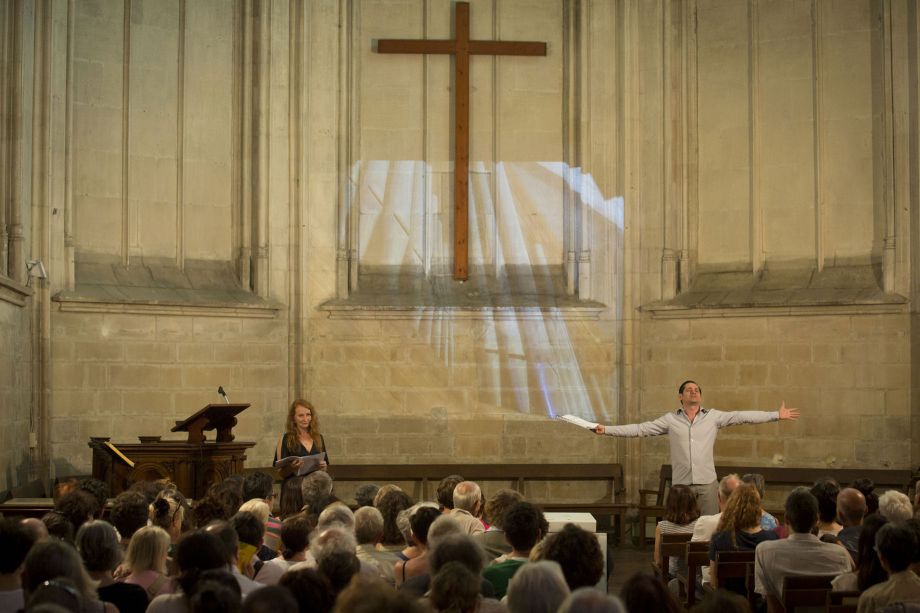
Les amants lumineux © Christophe Raynaud de Lage
© theatre-contemporain.net
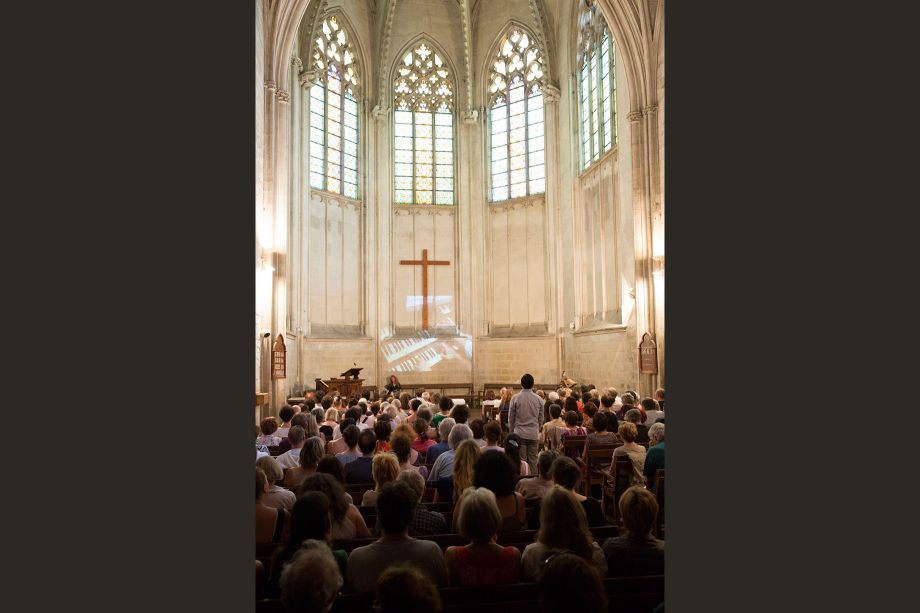
Les amants lumineux © Christophe Raynaud de Lage
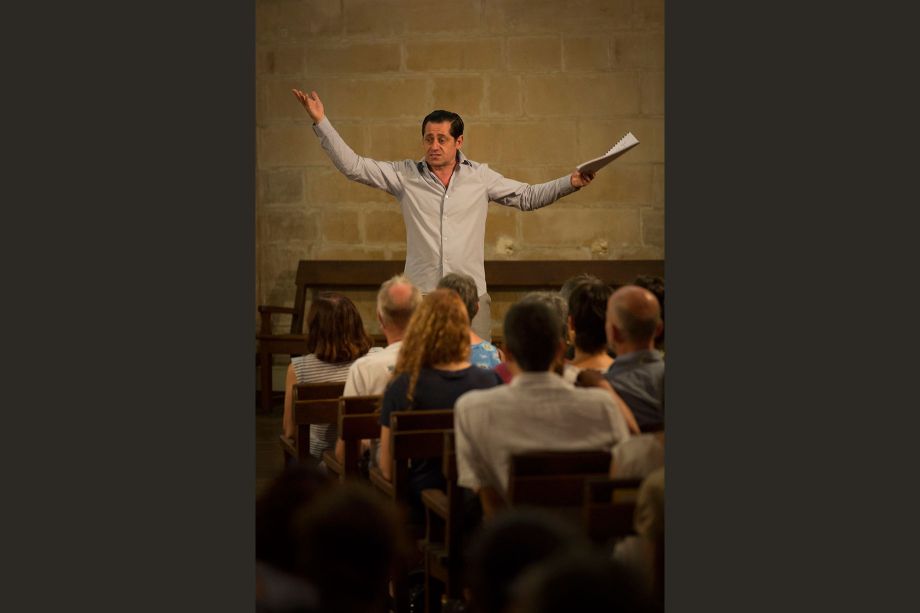
Les amants lumineux © Christophe Raynaud de Lage
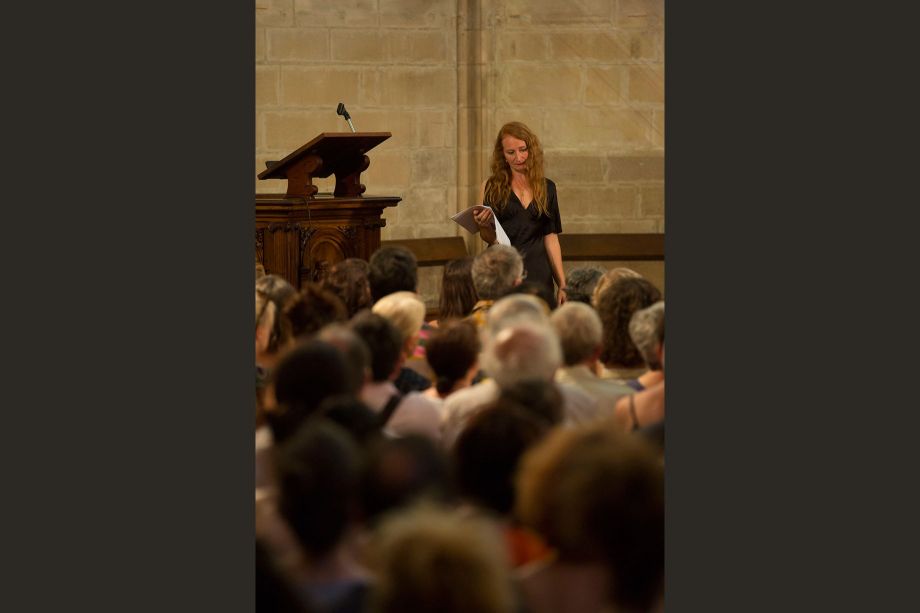
Les amants lumineux © Christophe Raynaud de Lage
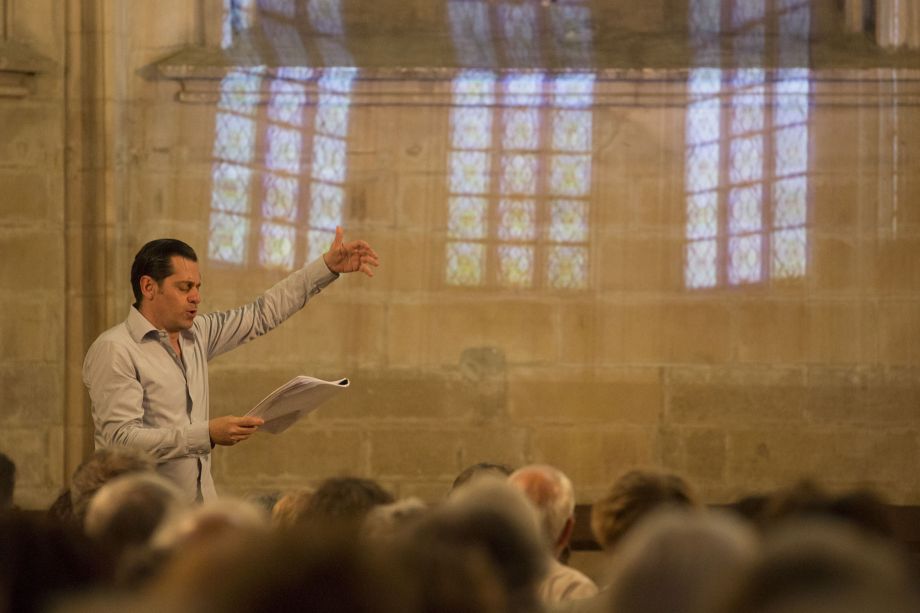
Les amants lumineux © Christophe Raynaud de Lage
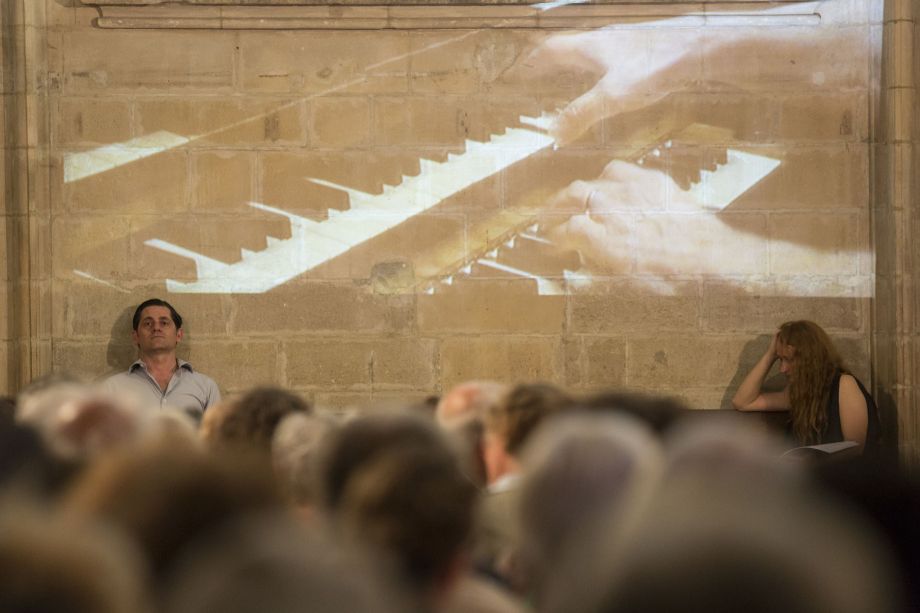
Les amants lumineux © Christophe Raynaud de Lage
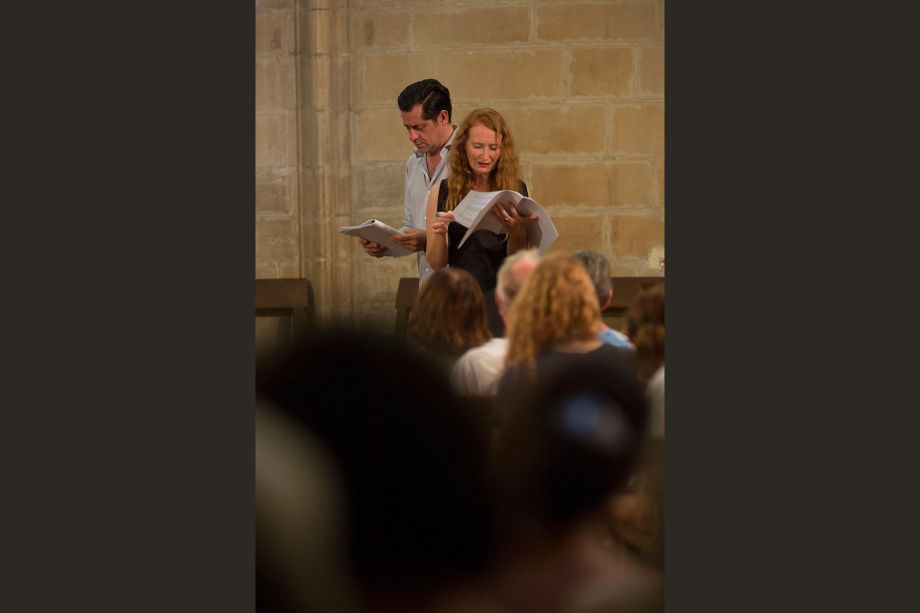
Les amants lumineux © Christophe Raynaud de Lage
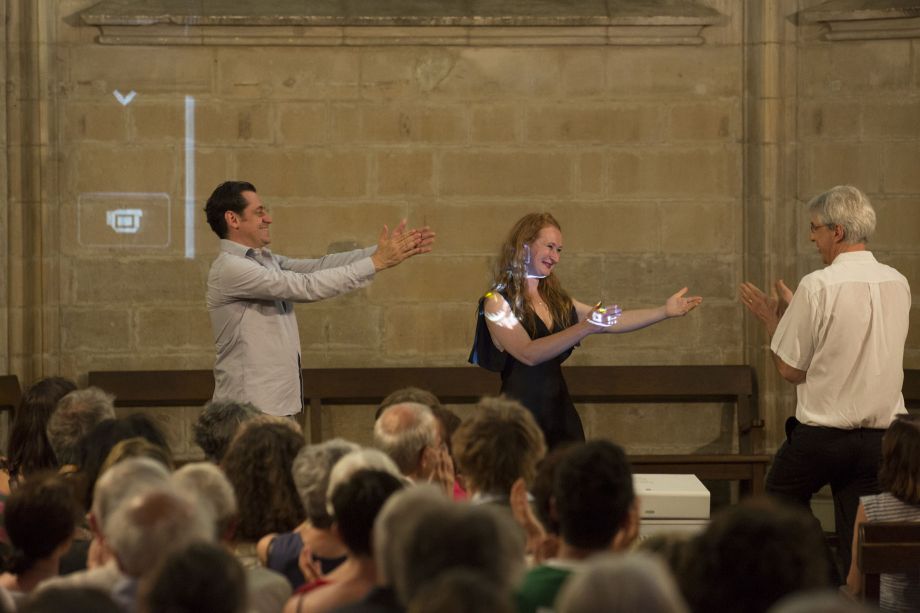
Les amants lumineux © Christophe Raynaud de Lage
Les Amants lumineux by Lydie Dattas,
in alternation with works for organ by Johann Sebastian Bach.
It sounds like a dialogue between two mystics. One, Raphaëlle, tells the other, Gabriel, of her pain at being abandoned by Mansour, with whom she had a spiritual relationship: “He was more precious to me than a brother, than a lover. He was the mirror of God. He broke: God is shattered into pieces.” But slowly we learn the circumstances of this separation, and the tragic of dereliction gives way to the prosaic, and even the comic, quality of the break-up.
Dominique Féret, April 2014
Johann Sebastian Bach (1685-1750)
Extrait de la Messe en si mineur BWV 232, choeur n°17 Crucifixus (transcription pour orgue à 3 mains de Michel Bouvard)
Les Amants lumineux I
Extrait des 45 Chorals de l'Orgelbüchlein, n°9
Vom Himmel kam der Engel Schaar – Du ciel est venu une légion d'anges – BWV 607
Les Amants lumineux II
Extrait des 18 Chorals de Leipzig, n°3
An Wasserflüssen Babylon – Près des fleuves de Babylone – BWV 653 (première partie)
Les Amants lumineux III
Extrait des 18 Chorals de Leipzig, n°3
An Wasserflüssen Babylon – Près des fleuves de Babylone – BWV 653 (deuxième partie)
Les Amants lumineux IV
Extrait de La Passion selon Saint Matthieu BWV 244, choeur final, Wir setzen uns mit Tränen nieder – Nous nous asseyons en pleurant (première partie) (transcription pour orgue de Luc Antonini)
Les Amants lumineux V
Extrait des 18 Chorals de Leipzig, n°14 Trio super Allein Gott in der Höh sei Ehr – Gloire à Dieu au plus haut des cieux – BWV 664
Les Amants lumineux VI
Extrait de la Clavierübung, n°19 Aus tiefer Noth schrei'ich zu dir – Des profondeurs de l'abîme, je crie vers toi – BWV 687
Les Amants lumineux VII
Extrait des 18 Chorals de Leipzig, n°4
Schmücke dich, o liebe Seele – Réjouis-toi, ô mon âme – BWV 654 (extrait)
Les Amants lumineux VIII
Ach Gott und Herr – Ah, mon Seigneur et mon Dieu – BWV 714
Les Amants lumineux IX
Extrait des 18 Chorals de Leipzig, n°8
Von Gott will ich nicht lassen – De Dieu, je ne veux pas me séparer – BWV 658
Les Amants lumineux X
Extrait de la Clavierübung, n°9 Fughetta super Allein Gott in der Höh sei Ehr – Gloire à Dieu au plus haut des cieux – BWV 677
Les Amants lumineux XI
Extrait des 45 Chorals de l'Orgelbüchlein, n°27 Christ lag in Todesbanden – Christ gisait dans les liens de la mort – BWV 625 pour la Résurrection
Lydie Dattas is twenty when her poems are discovered by the poet Jean Grosjean, who works as a reader for Gallimard. The letters they start exchanging eventually lead to the publication in 1970 by Mercure de France of a first book, Noone. It is only in 1999 that Lydie Dattas relates her first meeting with poetry and light when, only three years old, having fallen sick, she was entrusted to the care of a nun whose kindness saved her (The Experience of Kindness). The daughter of a virtuoso organist, she starts wondering very early about the absence of women in the history of art. She does, however, have a very clear vision of what a great actress is, as her mother is a tragedian. In La Foudre (Lightning), published in 2011, she paints the portrait of her first family, that of her childhood, and of the adoptive gipsy family she chose for herself, the family of the lion tamer Alexandre Romanès, with whom she founded the Lyida Romanès circus. After their break-up, she published Les Amants lumineux (The Luminous Lovers) and Le Livre des anges (The Book of Angels), before starting work on La Chaste vie de Jean Genet. Published in 2006, this isn't the first book the famous author prompted her to write. At the very start of their long friendship, in 1977, his taunts led to her writing a cutting and deep poem, La Nuit spirituelle (The Spiritual Night), a powerful response which started as a letter to Genet and ended up being its own book.
Marion Canelas, April 2014
Stage adaptation Dominique Féret
Narrators Céline Chéenne, Olivier Py
Organ Luc Antonini
The play of the organist will be projected on big screen.
with Musique Sacrée en Avignon
Programme of the Sacred Musics Cycle
Download the pdf
More informations about
LES AMANTS LUMINEUX on
Pearltrees